Biblical Archaeology

Kerby Anderson provides an update on recent archaeological finds that corroborate the historicity of the Bible.

One of the most important proofs for the historical accuracy of the Bible can be found in archaeology. Ancient history and archaeology should confirm the accuracy of this record. That is what we find when comparing these finds with the written record of Scripture.

download-podcastMy focus will be to summarize a few of the past archaeological finds that confirm the Bible and then provide an update on some of the newest archaeological discoveries made in just the last few years that are very significant. On the Probe website, we have an excellent summary done twenty years ago of archaeology and the Old Testament (probe.org/archaeology-and-the-old-testament/) and archaeology and the New Testament (probe.org/archaeology-and-the-new-testament/).

Archaeology not only has confirmed the historical record found in the Bible, but it also provides additional details not found in the original writings of the biblical authors. Archaeology also helps explain Bible passages by providing context of the surrounding culture as well as the social and political circumstances.

We must also admit the limitations of archaeology. Although these archaeological finds can establish the historical accuracy of the record, they cannot prove the divine inspiration of the Bible. Also, we must admit that even when we have an archaeological find, it still must be interpreted. Those interpretations are obviously affected by the worldview perspective and even bias of the historians and archaeologists.

Even granting the skeptical bias that can be found in this field, it is still amazing that many archaeologists acknowledge the biblical confirmation that has come from significant archaeological finds.

Dr. William Albright observed, “There can be no doubt that archaeology has confirmed the substantial historicity of Old Testament tradition.”{1}

Archaeologist Nelson Glueck and president of Hebrew Union College concluded, “It may be stated categorically that no archaeological discovery has ever controverted a Biblical reference. Scores of archaeological findings have been made which confirm in clear outline or exact detail historical statements in the Bible. And, by the same token, proper evaluation of Biblical description has often led to amazing discoveries.”{2}

Millar Burrows, Professor of Archaeology at Yale University, remarked that “On the whole, however, archaeological work has unquestionably strengthened confidence in the reliability of the Scriptural record. More than one archaeologist has found his respect for the Bible increased by the experience of excavation in Palestine.”{3}

Old Testament Archaeology

There are so many significant archaeological finds that confirm the historical accuracy of the Old Testament. Perhaps the most famous and most significant find is the Dead Sea scrolls. A young shepherd boy found the first of them in a cave in 1947. Eventually over 800 fragments were found. This includes a complete scroll of the book of Isaiah.

Many of these scrolls are from before the time of Jesus Christ. That is important because it provided a way to check the accuracy of the transmission of the Old Testament. The earliest copies of the Old Testament that we had before this discovery were a thousand years later. When we compare the Dead Sea scrolls to these later manuscripts, we can see that there were very few variations (mostly due to changes in spelling or grammar). The transmission through the scribe was very accurate.

Another significant find was archaeological documentation of King David. Archaeologists working at one site uncovered an inscription that means “house of David” that dates to the ninth century BC.

Another important archaeological find was the Hittite nation. The Hittites are mentioned nearly 50 times in the Old Testament, but there was no solid archaeological evidence they existed until the 20th century. Some argued that the Bible must be wrong since it mentions this nation but archaeological evidence was lacking.

The Hittites were a major force against the Jews. Israel needed to conquer them in order to enter the Promised Land (Joshua 11:3-4). King David had Uriah the Hittite killed because of his adultery with his wife, Bathsheba (2 Kings 11:3-21). Fortunately, archaeologists did uncover abundant evidence of the Hittites in Turkey. They found a temple, sculptures, a storeroom with 10,000 clay tablets. Later they even uncovered the Hittite capital city of Hattusha.

Archaeologists with the Israel Antiquities Authority digging at Tel Lachish found an ancient toilet that confirms Old Testament history. To understand its significance, we need to look at the record of King Hezekiah. We read in 2 Kings that he removed the Asherah poles from the high places and smashed the sacred stones that were used in the Canaanite cultic worship.

Archaeologists discovered large rooms that appear to be a shrine where four-horned altars were destroyed. They also found a seat carved in stone with the hole in it that was used as a toilet. It was mostly likely placed there as a form of desecration for the whole room.{4} This correlates with the biblical description in 2 Kings 10:27 that Jehu and his followers “demolished the pillar of Baal, and demolished the house of Baal, and made it a latrine to this day.”

New Testament Archaeology

Jesus spent much of his time in Capernaum by the Sea of Galilee. It is mentioned 16 times in the New Testament. Archaeologists have uncovered evidence of the fishing industry there (anchors, fishhooks), which would have been used by many of the disciples. The houses were one-story buildings, with roofs of wooden beams or branches. This explains how men carried a man to the roof and let him down in front of Jesus (Mark 2:1-4). Jesus taught in the synagogue in Capernaum (Mark 1:21-22, Luke 4:31-36). The remains of a synagogue built in the 4th century sits atop the black basalt foundations of this synagogue that existed at the time of Jesus.

In Jerusalem are many archaeological discoveries from the time of Jesus. That includes the remains of the temple as well as the pool of Bethesda (John 5:1-15) and the pool of Siloam (John 9:1-7).

Archaeology (as well as history) verifies the existence of many political leaders mentioned in the New Testament. A Denarius coin shows a portrait of Tiberius Caesar. This is also significant because Jesus asked the people whose likeness was on the coin (Mark 12:17). The name Pontius Pilate was found in an inscription at Caesarea Maritima.

Sometimes archaeology can shed light on what seems like a sharp disagreement in the Bible. In Paul’s letter to the Galatians, he recounts what he said to Peter who stopped eating meals with gentile Christians. He argued that Peter lived like a Gentile even though he was a Jew.

The answer lies in the fact that Paul was a devout Pharisee, who took kosher food laws and purity very seriously. Peter, though Jewish, was not a Pharisee and grew up in Bethsaida on the north shore of the Sea of Galilee. Archaeological excavations uncovered some non-kosher evidence. Some were eating wild boar and catfish, which were considered unclean and not to be eaten by Jew following the Torah.{5}

Archaeological finds at Corinth include the city’s bema seat, where Paul stood trial (Acts 18:12-17) and an inscription with the name Erastus, a city administrator who was an associate of Paul (Acts 19:22; 2 Timothy 4:20; Romans 16:23).

Critics have challenged the historical record of Luke because of alleged inaccuracies. Classical scholar Colin Hemer documents that Luke is a very accurate historian.{6} He identifies 84 facts in the Book of Acts that have been confirmed by historical and archaeological research. This includes nautical details, names of gods, designation of magistrates, and proper names and titles.

These are just a few of the archaeological discoveries in the past that have confirmed the Old Testament and the New Testament. In the next section we will look at some of the most recent archaeological discoveries.

Recent Archaeological Discoveries

Within the last few years, there have been major archaeological discoveries that further confirm biblical history. An article in Christianity Today provides a list of the top ten archaeological discoveries.{7} Here are just a few of these important discoveries.

The Israel Antiquities Authority announced the discovery of a limestone column on which the world “Jerusalem” was spelled out in Aramaic. This is the oldest inscription of this nature found so far. You might expect that there would be lots of such inscriptions, but that turn out to be very rare.

The inscription was found in an ancient potter’s village that must have served pilgrims making their way to the Temple in Jerusalem. A potter’s field calls to mind the one bought by the priests (Matthew 27:7) with the money Judas returned.

The Jewish tabernacle and the Ark of the Covenant were located for a time in Shiloh. Excavation there produced a clay pomegranate. In the Bible, the pomegranate was a common temple decoration (1 Kings 7:18; 2 Kings 25:17). Small pomegranates embroidered with blue, purple, and scarlet yarns hung from the hems of the priestly robes (Exodus 28:33). This discovery affirms the sacredness of Shiloh.

Scientists and archaeologists believe they made have found the site of the destruction of Sodom and Gomorrah. They found evidence that a “high-heat” explosive event north of the Dead Sea wiped out all civilization in the affected area. It killed all the people within a 25-kilometer circular area. The fertile soil would have been stripped of nutrients by the high heat. Waves of briny salt would have washed over the surrounding area and spread through hot winds.

The scientists suggest that a cosmic airburst event from a meteor was the reason for the disappearance from the site. It apparently took 600 years for the region to recover before it could once again be inhabited. This fits with the description in Genesis 19, which says that burning sulfur rained down on Sodom and Gomorrah and killed all the people and all the vegetation of the land.

Archaeologist Dr. Stephen Collins says that there was a violent conflagration that ended occupation at the site. There is “melted pottery, scorched foundation stones, and several feet of ash and destruction debris churned into a dark gray matrix as if in a Cuisinart.” He and another author in a joint paper conclude that all of this provides “signs of a highly destructive and thermal event that one might expect from what is described in Genesis 19.”{8}

Recent Archaeological Discoveries

Above we looked at a few of the most recent archaeological discoveries that confirm the historical accuracy of the Bible. Most of them were found in an article in Christianity Today. Here are a few more significant discoveries.

An inscribed piece of limestone discovered in a tomb along the west bank of the Nile was revealed to be a Semitic abecedary (alphabet in ABC order). It dates back to the time of Moses and fits with the statement that “Moses wrote down everything the Lord had said” (Exodus 24:4). It turns out he wasn’t the only one writing in a Semitic script in Egypt at that time.

When ISIS terrorists captured Mosul, they blew up the tomb of the prophet Jonah. This uncovered the remains of a palace of the Assyrian King Esarhaddon. Previous archaeological teams stopped digging in certain sites in Iraq for fear of destroying them. That was a case of the traditional tomb of Jonah, until ISIS started digging beneath it to find artifacts to sell. As one article put it, “ISIS Accidentally Corroborates the Bible.”{9} The tunnels they dug revealed a previously untouched Assyrian palace in the ancient city of Ninevah. Inscriptions found in the old city of Nineveh give an order of Assyrian kings that matches perfectly with the biblical order.

Extra careful processing of dirt from an archaeological dig in the southwest corner of the Temple Mount provided a beka weight. This was used (Exodus 38:6) to measure the silver in the half-shekel temple tax that was collected from each member of the Jewish community.

Another seal impression seems to be (a letter is missing) the name “Isaiah the prophet.” It was found near the Temple Mount near another seal impression that says “King Hezekiah of Judah” that was uncovered two years earlier.  Hezekiah and the prophet Isaiah are mentioned in the same verse 17 times. This clay seal gives the impression that Isaiah had access to the king’s palace as his adviser.

A ring with the name “Pontius Pilate” on it was excavated decades ago but only could be read recently due to advanced photographic techniques. Of course, this is not the first time that his name has surfaced in archaeology, but it is still a significant find. The ring is not fancy enough to have been worn by Pilate. It was probably worn by someone authorized to act on his authority and would use it to seal official communications.

This is an exciting time for archaeological investigation. New finds provide even more evidence of the historical accuracy of the Old Testament and the New Testament. Archaeology has provided abundant confirmation of the Bible.

Notes

1. William F. Albright, Archaeology and the Religions of Israel (Baltimore: Johns Hopkins University Press, 1956), 176.
2. Nelson Glueck, Rivers in the Desert (New York: Farrar, Strous and Cudahy, 1959), 136.
3. Millar Burrows, What Mean These Stones? (New York: Meridian Books, 1956), 1.
4. Richard Gray, “The wrong kind throne: Toilet discovered 2-800-year-old shrine,” Daily Mail, 28 September 2016.
5. Craig A. Evans, “Why Archaeology Matters for Bible Study,” Bible Study Magazine, March/April 2019, 18-19.
6. Colin J. Hemer, The Book of Acts in the Setting of Hellenistic History (University Park, PA: Eisenbrauns, 1990).
7. Gordon Govier, “Biblical Archaeology’s Top 10 Discoveries of 2018, Christianity Today, December 27, 2018.
8. Amanda Borschel-Dan, “Evidence of Sodom? Meteor blast cause of biblical destruction, say scientists,” Times of Israel, 22 November 2018.
9. “ISIS Accidentally Corroborates the Bible,” Facts and Trends, March 19, 2018.

©2020 Probe Ministries


Is Jesus the Only Way? – Part 2

Paul Rutherford explains how reason, Christ’s resurrection, and the Bible all testify that Jesus is the only way to heaven.

Coexist bumper stickerI can’t drive around town seven days straight without passing at least one car with a bumper sticker that reads, “Coexist” on the back. You know the one. It spells the word using symbols associated with the world’s faiths, ancient and modern.

download-podcast

The popularly held mantra is that “all religions are equally valid ways to heaven.” This is what’s called pluralism. So is there room in this brave new world for the words of an ancient and historically respected faith?

Jesus once said, “I am the way, and the truth, and the life. No one comes to the Father except through me.” (John 14:6) That sounds offensive and inflammatory today. I will remind you that Jesus said it, not me.

Even more important is the truth question. It is perhaps even more offensive! Are Jesus’ words true?

I fully acknowledge even the question itself may strike you as antiquated, out of date. Perhaps I sound to you like an eccentric, soured-up, fuddy-duddy. I may be. But if the words of Jesus are true, then far more than your offended sense of style is at stake here. Far, far more.

So listen up. And take note because this crazy sounding first-century Jewish rabbi made some crazy-big statements about the nature of man, the nature of reality, and how to live the good life, here, now, and forever. Does that at least sound appealing to you? If even just for the sake of a little controversy?

Explore with me the words of this rabbi. In this article we’ll think through three reasons you should agree with him. And maybe you’ll even find eternal life in the process. If you’re a long-time listener to Probe radio, or a regular listener, this may sound familiar. I have another program exploring the position that Jesus is the only way to God. This one is part two. In this one I give you three reasons Jesus is in fact the only way to heaven. In the previous program, I defended Jesus’ statement against three lines of criticism. So in the next sections I’ll explain how reason, the resurrection, and the Word all testify that Jesus is the only way to heaven.

Jesus the Only Way Because of Reason

Western culture today is more pluralistic and secular than ever before. This means at least in one small part, that people believe multiple religions lead to heaven. Western culture has been moving this way for some decades. Now it has reached mainstream. Pop culture increasingly accepts this. It is therefore so much more important to consider this exclusive claim Jesus made. He said, “I am the way, the truth, and the life. No one comes to the Father except by me.” (John 14:6)

This is an increasingly unpopular teaching. Before I defend it, allow me to clarify. It was made by the Lord Jesus himself. I didn’t make it up. I am merely defending it.

So today I want to talk about how it is reasonable to believe this statement—why it is that you should yourself believe Jesus is the only way to heaven.

Today’s reason is logic itself. I will base this conclusion on two points: first, that the belief in one God is more logically defensible than believing in multiple creator gods; and second, that the belief in Jesus Christ as God is more reasonable than claims to deity made by others.

The first point is that believing in one creator God is more reasonable than believing in multiple. The god Aristotle believed in (the unmoved mover) was eternally simple. That is, at the root of all things is ultimately one thing—one cause, one source, one origin to which all other things owe their existence.{1} This position beautifully avoids the difficulty of what philosophers call reductio ad absurdum—or the problem of infinite regression—or the problem of which came first, the chicken or the egg?  The search for the first, original, or ultimate source, does not continue on and on forever. It cannot.

The second point is that Jesus is the most reasonable candidate for divinity. I respect the Buddha. But he never claimed to be God. Neither did Mohammad. Jesus was very clear. He claimed to be God.

Consider His teachings. They have not been surpassed in excellence in the two millennia that have passed since He walked the earth. Consider His actions. History’s best biographies about the man Jesus, record Him loving His enemies, healing the sick, and showing compassion to outcasts. Jesus’ life exemplified extraordinary moral rectitude.

I conclude, therefore, that it is more reasonable to believe Jesus is the only way to God given that it is more reasonable to believe in only one creator God, and given that Jesus has the best case for divinity among man’s founders of faith.

Jesus the Only Way Because of the Resurrection

We have a saying in American culture that nothing is certain but death and taxes. So if the taxman doesn’t come to call, the grim reaper will eventually. Death finds each of us, so we must face our own mortality.

By the best historical accounts Jesus also died and was buried, just like so many of His human brothers before Him.{2} But Jesus, on the other hand, experienced something unique, declaring Him God above all others.

I speak, of course, of resurrection.{3} Jesus Christ is the only person ever to have raised up Himself from the dead of his own volition, and by His own power.

This one point may be the most compelling of the three I offer this week. It is perhaps the most intuitive case for Jesus being the only way to Heaven. If Jesus really died and raised Himself from the dead, then His power exceeds those of any other man before Him, or after, for
that matter. Surely He must be God.

No other religious figure can make that claim. In a class by Himself, Jesus reigns over all the founders of world religions. Muhammad’s burial site is a common tourist destination in Saudi Arabia for contemporary pilgrims. Buddha’s cremation site is in northern India. No such site exists today in contemporary Israel for Jesus. His body has no confirmed remains.

The tomb is empty. That much is clear. Records indicate He definitely died and was buried. The empty tomb demands an explanation. Resurrection makes the most sense. Jesus is the only way because He is the only one who has died and raised himself up to new life.

We have several excellent articles at our website devoted to just this topic.{4} Go check them out for more detail. Jesus is who He said he is, “The way, the truth, and the life.” (John 14:6)  So the question is, do you want some? Believe in Jesus today by faith.

Jesus the Only Way Because the Word Declares It

Western culture today increasingly accepts the belief that multiple religions are equally valid and they are all ways to eternal life. I propose to you today another reason to believe something
diametrically opposed to this—namely that the Jesus Christ revealed in the Bible, is the only way to eternal life. As the gospel writer John quoted Him, He is, the way, the truth, and the life (14:6). No one comes to the Father except through Him.

This third and final line of reasoning that Jesus is the only way to eternal life, springs from the Bible—from the very word of God itself.

You may not accept the Bible as God’s word. That’s ok. Just hear me out. Let me explain how this line of reasoning at least makes sense. Then after you’ve heard it, you can judge for yourself if it’s true or not.

So first, the Bible claims to be God’s word (2 Timothy 3:16). If we therefore assume the very commonly held conception that God is good and perfect, then that includes the words He speaks as well. So if He speaks good words, then those words must be true. They must accurately describe reality.

The Bible also makes this claim. Jesus in a famous prayer to the Father asks him to sanctify His disciples with the truth before stating, “Your word is truth.” (John 17:17) It’s a profound statement.

So if God’s word is true, and God says in His word that Jesus is, in fact, the only way to God—that none can come to Him except by Jesus, then that means it’s true. See how simple that is?

But this statement is also made in another part of the Bible, Acts 4:12. Peter and John have been arrested and are being examined by the Jewish leaders. Peter declares Jesus to them and explains, “There is no other name under heaven, given among men, by which we must be saved.”

I fully admit this line of reasoning rests on you acknowledging the authority of the Bible—in which case you may not have needed to be convinced in the first place. But if you had not already been convinced of the truth of God’s word, I am very sincerely relying on the power of the Spirit at work in you to believe this truth. (Isaiah 55:11)

Conclusion

In this article we considered the truth of a controversial claim. It might be one of the most hotly contested claims in religion today—that Jesus Christ is the only way to heaven.

This is not popular these days in America, Europe, anywhere in the English speaking West, or the non-English speaking West. To hear responses to criticisms against the claim, check out part one of this two part series.

Jesus was Himself no stranger to controversy. He died a criminal’s death at the hands of His enemies. He was killed and buried. The Jewish and Roman leaders were smugly satisfied they’d dispatched this unquiet voice.

But when Jesus’ enemies attempt to end his earthly ministry, they unknowingly ushered in a spiritually unending ministry of atonement and reconciliation. By his death Jesus paid the price of sin—death—satisfying the just wrath of God. Jesus made peace with God on your
behalf. Believe in Him by faith today and you can have peace with God. Would you like to have peace with him? Tell Him right now. Use your voice or pray silently. But tell Him. Go ahead.

The only thing required of you to receive eternal life is to believe Jesus is Lord. One of Jesus’ most famous sayings is, “For God so loved the world, that he gave his only Son, that whoever believes in him should not perish but have eternal life.” (John 3:16)

Confess this belief with your mouth that Jesus Christ is God and believe in your heart that God has raised up his Son from the dead. And you can be saved. (Romans 10:9)

Jesus is the only way to God because there is no other way to get to God but by Jesus. Mankind is imperfect. You are dead in your transgressions and sins. The only way to satisfy God’s holy wrath is to give Him what is due: death. Jesus died that death for you. He’s the only one who could ever have paid your debt. And He did.

Human reason leads us to this beautiful conclusion that Jesus is the only way. God has declared it himself clearly in his divinely inspired book—the Bible. His resurrection seals it.

If you believed this for the first time today you are now heir to an eternal throne. Pick up a Bible and read Jesus’ life story in the book of John. Tell a friend who’s a Christian. Make plans to join them at their church Sunday. Keep praying and reading the Bible. You can discover the wonderful adventure of life in Jesus Christ, the only way to God.

Notes

1. Metaphysics, Lambda.
2. Matthew 27; Mark 15; Luke 23; John 19
3. Matthew 28; Mark 16; Luke 24; John 20
4. Jesus’ Resurrection: Fact or Fiction? — A Clear Christian Perspective;
What Difference Does the Resurrection Make?;
The Resurrection: Fact or Fiction?
— A Real Historical Event
;
The Answer Is the Resurrection

©2020 Probe Ministries


Gender Medicine Policies

Kerby Anderson reveals some of the dirty secrets in true-gender-denying treatments of trans-identifying children and teens.

If you have been listening to my commentaries for any amount of time, you are aware of the significant concerns over the way transgenderism has been promoted by physicians, hospitals, and the government. So, it’s not surprising that the federal government issued a report critical of some of the practices with this title: “Wolves in White Coats: How Doctors and Hospitals Pushed and Profited from the Fraud of Gender Medicine.”

Most government reports usually have a title that is ambiguous and benign. When I interviewed one of the authors of the report on my radio program, I began with a discussion of the title. The title was a warning to the reader that they were going to learn about the many fraudulent practices implemented by physicians and hospitals.

One example is the deceptive use of diagnostic coding for reimbursement. They would use medical codes like “endocrine disorder” or “precocious puberty” to mask what they were doing to young people and get payment for gender transitions. Once patients underwent such transitions, they represented “lifelong revenue streams” for these groups.

Another part of the 64-page report is the section which provides “first-hand accounts from patients and parents” who were subjected to this “gender medicine.” This provides a human face to procedures that were promoted by much of the medical establishment along with federal acceptance from the Biden Administration.

During the radio interview, we also mentioned the Cass Report out of the UK from Dr. Hillary Cass that two years ago raised significant concerns about gender identity services for children and young people in the National Health Service. These two reports show that sanity and common sense are finally returning to this issue. I’m Kerby Anderson, and that’s my point of view.

www.hhs.gov/sites/default/files/hhs-wolves-in-white-coats.pdf


This blog post originally appeared at

https://pointofview.net/viewpoints/gender-medicine-policies/ on Aug. 31, 2026.


Is Jesus the Only Way?

Paul Rutherford explains why Jesus is the only way to know God.

Coexist Bumper StickerI was sitting in my car at a red light and I saw a bumper sticker on the car in front of me that said, “Coexist.” Only, the letters on the bumper sticker are religious symbols. A crescent stands in place of the letter “c,” a peace symbol in place of the letter “o,” and some of the other symbols included a cross, a Star of David, and a yin-yang, all used to create the word “coexist.”


Perhaps you’ve seen an image just like this bumper sticker, but on a t-shirt or tattoo. It represents a common sentiment in our culture that everyone should get along, or coexist peacefully. And I love that sentiment. We should get along. In fact, I’m grateful to God I live in a country in which an unprecedented number of people from all different religions, backgrounds, and ethnicities do, in fact, coexist every day, and for the most part without violent protest. The life we enjoy in the United States is historically unprecedented.

Download the PodcastBut the coexistence advocated in this bumper sticker is something more subtle. It’s a way of getting along that is more than meets the eye. It frequently calls for a peaceable lifestyle free of conflict between faiths. People hope that we can all unite in a single brotherhood and celebrate our differences, particularly religious ones. They don’t understand why we bicker over who’s right and who’s wrong.

The call to coexist is a reaction to the exclusive truth claims of religion, especially Christianity. In fact, its exclusivism is the most offensive aspect of Christianity today. “Repent. Believe. Come to Jesus. He’s the only way!” These are phrases easily associated with Christianity, especially street preaching. What should we do with Christianity’s exclusivism in a twenty-first century cosmopolitan society? Haven’t we progressed beyond such narrow-mindedness in these modern times? Isn’t claiming Jesus as the only way intolerant of other faiths? Don’t those Christians know all religions are equally valid paths to heaven? They shouldn’t force their beliefs on others!

Claiming Jesus is the only way to heaven is exclusive, I admit. It says there is no other way to God except by trust in Jesus Christ. Jesus most famously says this Himself in the Bible: “I am the way, and the truth, and the life; no one comes to the Father but through Me” (John 14:6).

Even though it’s offensive, I believe Jesus really is the only way to God. In this article we’re going to explore that question by discussing objections to it, and discover why He really is the only way.

Tolerance

As believers, when we claim Jesus is the only way, you often hear people give some variation of, “That’s so intolerant!” In doing so, they reject the claim. Often implied, but not said straight out, is the demand that the Christian “tolerate” others’ beliefs, or take back what he just said.

It’s worth pointing out that claiming Christianity to be intolerant is itself an intolerant claim. But the notion of tolerance is complex and has a long history. And rather than elaborate that contradiction, let’s begin by exploring the complexity of tolerance.

What’s usually meant by tolerance these days is including beliefs that include all others. This position generally rejects Jesus as the only way because diversity and equality are now celebrated as the highest values. “Tolerance” celebrates differences of religions and equality of opportunity to practice them. To claim Jesus is the only way squelches both equality and diversity by claiming only one religion is right. Since squelching diversity and equality are socially unacceptable, the exclusivity of Jesus isn’t tolerated.

But this issue is complex. (That might be apparent already.) Truth and tolerance are actually linked. In fact, tolerance relies on truth. In the book The Truth about Tolerance, David Couchman says, “If there is no real truth, there is no reason for me to be tolerant. Without some kind of beliefs which cause me to value you as a person, even though I disagree with you, why should I be tolerant towards you?”{1} For tolerance to exist at all, it relies upon a framework of truth. That resonates with an idea mentioned earlier, how intolerance contradicts itself.

But the rabbit hole goes even deeper. Truth also relies upon tolerance. “[I]t is also the case that truth as a reflective goal for individuals and communities. . .needs a context of right-minded toleration to flourish in.”{2} Without tolerance, truth likewise becomes the hammer of oppression. We find then that truth and tolerance go hand in hand.

Nevertheless, tolerance is the hammer of choice in culture today. Too often suppression of Christians sharing the truth that Jesus is the only way of salvation is justified in the name of tolerance. Don’t be taken captive by this distortion. Genuine tolerance acknowledges all positions, even those that are exclusive. A biblical worldview holds only one truth, Jesus is the only path to heaven, while maintaining respect and dignity for those who disagree. That’s genuine tolerance.

Absolutes Don’t Exist

Here is another objection you might hear: Christians can’t claim Jesus is the only way because there are no absolutes. What Christians claim is an absolute truth. And there simply are no absolute truths.

Their justification goes like this. We know from study, from reason, from the postmodern era, that society has moved beyond absolutes. There is no absolute truth. There is no overarching metanarrative (or idea of truth) which can transcend culture, nation, or time. Truth is a construct created by each man, each culture, and bound by the strictures of the time in which it was created.

This objection shares a similar weakness to the tolerance objection. Denying absolutes is also self-defeating. It contradicts itself. If we were to ask this objector if she really believed what she was saying was true, we could ask her, “You believe no absolute truth exists, right? Are you absolutely sure of that?” This objector would have to agree. That’s what the position holds, thus contradicting her own claim.

This objection often comes out of the postmodern school of thought, which says there is no such thing as objective truth, such as 2 + 2 always equals 4. Postmodern thought also denies the meaningfulness of history along with the ability to interpret literature in a unified and meaningful way. The unfortunate consequence is that we’re left with a bleak reality stripped of purpose or meaning, which frankly, isn’t very appealing. Without truth, meaning, history, or purpose, what’s the point?

The great irony of it all is that postmodern thought arrives at its conclusions by way of reason, which it then concludes isn’t true, and then holds it in contempt. It calls into question reason itself and the whole Enlightenment project along with it. So there’s a healthy dose of despair that frequently accompanies adherents to postmodern thought, including our friends who don’t believe Jesus can be the only way to God because there are no absolutes. But that’s the lie to which I don’t want you to be taken captive. Jesus really is the only way. He’s the only way to find peace in a wrecked world. He is meaning for a confused life. And He leads us home to heaven out of a world where we don’t belong. The remedy to that despair is Jesus.

Despair at the failure of reason to improve mankind is the sad but ultimate end of every god which usurps the rightful place of the one true God: Jesus Christ. The truth is, all gods fail, disappoint, and leave us desperate. The only one who is faithful is Jesus. (cf. Deut. 7:9; 2 Thess. 3:3) But we won’t find that satisfaction until we rest assured in the truth that Jesus really is the only way.

Pluralism

There is another category of objectors to Christ’s claim to exclusivity. A difficult but less in-your-face objection is pluralism. Pluralism is the belief that any variety of beliefs and values are all equally true and valid.

When I claim Jesus is the only way, some calmly object. Pluralists tend to be more laid-back. Typically they affirm my right to follow Christ, even celebrate it. These folks calmly share their belief that all religions are right: they all lead to god. Often they cite the Eastern proverb that there are many paths to the top of the mountain.

First, I’d like to point out that pluralism is intellectually lazy. It doesn’t take seriously the law of non-contradiction. (This law says that two opposite things cannot both be true at the same time and in the same way.) When a Christian claims the path is exclusive, that Jesus is the only way, the pluralist might think, “That’s nice, but actually, I know that all religions lead to heaven.” He doesn’t accept the Christian’s position as true. He says he believes Christianity is true while at the same time denying its central tenet, which is that Jesus is the only way.

But this response is not unique to Christianity. A conservative Jew sincere about his faith won’t say any path leads to heaven; neither will a Sunni Muslim. Pluralism attempts to make peace where there is none, and only succeeds in agreeing with no one.

Second, Christians who hold to exclusivism are sometimes falsely accused of pushing their beliefs on others. In condemning the exclusivist claims of Christianity, the pluralist imposes her beliefs on the Christian. It contradicts the very intended principle.

We all have beliefs or actions we want others to take seriously. There’s nothing wrong with that. From my experience, pluralism is usually based on fear, which is completely understandable. The other person disagrees but fears conflict. They fear the relationship might be at stake if they express their true belief. As believers we still accept and honor people even if they don’t agree with us. This is how we alleviate fear, demonstrating acceptance for those with whom we disagree. (And that’s the true meaning of tolerance, by the way.)

When someone throws up this smokescreen in conversation, it can feel scary—alarming. Suddenly, the person you’re talking to gets defensive. We can wonder, “Where did this come from?” In that moment it’s probably not wise to press. Ask them why they believe that way, or affirm them. Certainly no one has a right to force compliance on another unwillingly. Communicate that we don’t have to agree to be accepted. Further, don’t fall prey to this area where culture takes many believers captive. Jesus is the only way. Stand fast.

The Only Way

Is Jesus the only way? Yes. Multiple scriptures teach this truth. Let’s consider a few.

Matthew 11:27 says, “All things have been handed over to Me by My Father; and no one knows the Son except the Father; nor does anyone know the Father except the Son, and anyone to whom the Son wills to reveal Him.” Jesus is claiming that God his Father has handed everything over to Him. This is an indirect claim to be God Himself. But Jesus also makes it clear He is the only one, since no one knows the Father but the Son.

Let’s also consider John’s gospel. Before Jesus even began his ministry John the Baptist responds to Jesus’ identity. “The next day he saw Jesus coming to him and said, “Behold, the Lamb of God who takes away the sin of the world!” (John 1:29) In Hebrew culture at the time, calling someone the Lamb of God was a claim to the Messiah who was prophesied (Isaiah 53:7). Further, only God has the power to take away sin. This was an unmistakable claim to divinity. It’s interesting also that Jesus doesn’t correct him, or deny Godhood. On the contrary, a short time later, Jesus picks up his first two disciples and encourages them, saying, “Come and you will see” (John 1:39).

It’s one thing to claim divinity and yet another to claim to be the only divinity. So, where does the Bible say Jesus is the only way? As we mentioned earlier, by Jesus’ own admission He is the only way to God in John 14:6—”I am the way, the truth and the life; no one comes to the Father but through Me.” Peter also explains the meaning of Jesus’ exclusivity in Acts 4:12, “Salvation is found in no one else, for there is no other name under heaven given to men by which we must be saved.”

Believers, take heart. Jesus Christ is the one and only way. Questioning Jesus’ exclusivity is a recent historical phenomenon. That question is commonly asked in the 20th century West, a culture increasingly influenced by postmodern thinking and multiculturalism. Take courage. We who accept the exclusivity of Christ are in a historical majority. Repudiation for Christians as being intolerant, exclusive, or uneducated is a recent occurrence. These are the current trends of our culture. Don’t be taken captive. Jesus is the only way.

Notes

1. David Couchman, quoted in The Truth about Tolerance, Brad Stetson and Joseph G. Conti, (InterVarsity Press, 2005), 75.

2. Brad Stetson and Joseph G. Conti, The Truth about Tolerance, (InterVarsity Press, 2005), 75.

© 2013 Probe Ministries


Socialist Surge

Kerby Anderson exposes the faulty thinking behind the pro-socialism messaging that is making alarming inroads in the U.S.

download-podcast
News articles proclaim, “socialism is on the march.” The writers focus on the several Democratic Socialist candidates who are winning Democratic primaries. We already have socialist mayors in New York City and Seattle, Washington. Soon, we will have one in Washington, D.C.

American voters seem to be changing their minds about socialism. A 1942 Roper/Fortune survey found that 40 percent described socialism as a bad thing and 25 percent a good thing. The latest Gallup poll found that 43 percent of Americans believe socialism would be a good thing.{1} Also, two thirds (62%) of adults under 30 had a favorable view of socialism. For many young people, the term is associated with social safety nets and healthcare access rather than government control of the means of production.

Why the Interest in Socialism?

Socialist candidates have run for office in the past and rarely won. Why are these candidates winning in these midterm elections? Jim Geraghty has a suggestion that comes from a book he was reading by Mark Manson.{2}

The book talked about the strategy used by perennial presidential candidate Lyndon LaRouche. His youth movement attracted many disaffected and agitated college students. Their tactic was simple. Tell these young people that the problems they faced weren’t due to their parents or even the government. They explained that “it’s the system’s fault.” If they could just overthrow the system, everything would be okay. “No more war. No more suffering, No more injustice.”

Does this sound like what we are hearing from these candidates and the young people voting for them? Your problems are the fault of “the system.” This movement of young people are yearning for a vision of a better future. They want control over their lives but have been told that you need to overthrow “the system” to usher in utopia.

Of course, the system they want to overthrow is our constitutional republic and our free market economy. Granted, there are political and economic changes that need to be made, but overthrowing the current system for a socialist fantasy isn’t the answer. It will make their problems worse, not better.

Any student of history should be able to see that defunding the police, opening the border, abolishing jails and prisons, and having government take over the means of production will be a disaster. Unfortunately, too many young people haven’t studied history and have been seduced by the siren song of socialism.

In this article we look at the sad history of socialism, its failed economic claims, and even the question of whether the Bible teaches socialism.

Socialism and Tyranny

Socialism is more than an economic theory. Socialism is an all-encompassing view of the world. In his acceptance speech, Zohran Mamdani proclaimed, “We will prove that there is no problem too large for government to solve, and no concern too small for it to care about.” One historian compared it to the famous statement by Benito Mussolini: “All within the state, nothing outside the state, nothing against the state.”

Socialism is based on Marxist principles. The first is the abolition of private property. This is one of the foundational tenets of the Communist Manifesto by Karl Marx: “The theory of Communism may be summed up in one sentence: Abolish all private property.” Many candidates state matter-of-factly that one of their goals is to “seize the means of production” in America.

The second principle is the end of religion. Karl Marx explained, “My object is to dethrone God and destroy capitalism.” He added, “The first requisite for the happiness of the people is the abolition of religion.” And a third is taxation. Karl Marx wrote, “A heavy or progressive or graduated income tax is necessary for the proper development of Communism.” Every socialist candidate proclaims they will raise taxes on the rich. They will have to levy very heavy taxes on everyone to pay for all the promises made in their campaigns.

Ben Shapiro warns, “Socialism is bad because socialism is tyranny. It’s not an aspect of tyranny. Socialism itself is tyranny.” As one commentator put it, “Socialism is based on oppression. Oppression is not a bug of socialism. It’s a feature.”{3}

This can best be illustrated by the list Dinesh D’Souza details in his book about the many countries have tried socialism and all failed.{4} The first socialist experiment was the Soviet Union, then came lots of countries in eastern Europe (Poland, Yugoslavia, Albania, Czechoslovakia, Hungary, Romania, and East Germany). Add to that, countries in Asia (Vietnam, Laos, Cambodia, -North Korea, and China) and countries in South America (Cuba, Nicaragua, Bolivia, and Venezuela) and Africa (Angola, Ghana, Tanzania, Benin, Mali, Mozambique, Zambia, and Zimbabwe). By his count, there are 25 failed experiments in socialism.

Many years ago, I did a week of Probe radio programs on Friedrich Hayek’s book The Road to Serfdom.{5} It is perhaps the best critique of socialism that very few have read. As the title of his book implies, the road to socialism may have good intentions, but it always leads to serfdom and tyranny.

Failed Economic Claims of Socialists

Margaret Thatcher famously observed, “The problem with socialism is that you eventually run out of other people’s money.” Democratic socialists are already running out of other people’s money. They make economic claims that fall apart when given scrutiny. Here are just a few of the failing claims of politicians who propose socialist solutions to significant social and economic problems.

First, the economy is not a fixed pie. In a recent podcast, Alexandria Ocasio-Cortez claimed, “Capitalism . . . is the absolute pursuit of profit at all human, environmental and social cost. That is not a redeemable system.” She added that, “No one ever makes a billion dollars. You take a billion.” In other words, there is a fixed supply of wealth. If you have more wealth, you are taking it from others.

One YouTube channel (Secular Talk) developed AOC’s argument by saying that Jeff Bezos “made his wealth by making a lot of people poor.” He argues that “because we have a finite amount of money.” We do not have a finite amount of money. We do not have a finite amount of wealth. Entrepreneurs increase the amount of wealth by producing products and services that increase wealth in a society. Moreover, this wealth and value are increased by voluntary interaction in a free market.

Second, Sweden is not a model for socialism. Above, we listed the 25 failed experiments in socialism. The typical response from socialists is that these economic disasters were not implemented correctly. If you ask them about Cuba or Venezuela, they will instead point to democratic socialism in Sweden or other similar countries.

In a short video, Anders Hagstrom points out that the policies that Bernie Sanders and AOC want go far beyond what you find in the Nordic countries.{6} Moreover, these countries have tiny populations of less than 10 million. In the past, they were successful and then had huge economic problems because they adopted socialist redistributive policies.

Now Sweden has come back to a free market. Sweden’s market-oriented reforms have transformed it into an investment hub. The wealthy are flocking back to Sweden, and they’re taking their capital with them. Swedish per capita GDP is the envy of the European Union, and the country has become a hub of tech and telecom innovation. One commentator concluded, “The Democratic Socialists Need a New Model.”{7}

Does the Bible Teach Socialism?

Progressive and socialist candidates argue that the Bible teaches socialism. Some even argue that Jesus was a socialist. That is not surprising since many people “want Jesus on their team.” Environmentalists argue that Jesus wouldn’t drive an SUV. Gay activists maintain that Jesus said nothing about homosexuality. What does the Bible say?

If you have ever taught through the book of Acts, you know the question of socialism will likely surface. In Acts 4, we find a statement that the believers in Jerusalem “had all things in common.” It also says that those who possessed land or houses sold them and brought the proceeds to the apostles’ feet. They distributed these gifts to anyone in need. This looks like socialism to many who are already predisposed to believe it should be the economic system of choice.

First, we need to realize that this practice was only done in Jerusalem. As you read through the rest of the book of Acts and read the letters of Paul and Peter, you see that most believers in other parts of the Roman world had private property and possessions. Paul calls upon them to give voluntarily to the work of ministry.

Second, the word voluntary applies not only to Christians in other parts of the world, but it also was a voluntary act by the believers in Jerusalem to give sacrificially to each other in the midst of persecution. This one passage in the book of Acts is not a mandate for socialism.

If you keep reading in the book of Acts, you can also see that the believers in Jerusalem owned the property before they voluntarily gave the proceeds to the apostles. The next chapter (Acts 5) clearly teaches that. When Peter confronted Ananias, he clearly stated that “While it remained, was it not your own? After it was sold, was it not in your own control?”

Owning property contradicts one of the fundamental principles of socialism. In the Communist Manifesto, “the abolition of property” is a major item in the plan for moving from capitalism to socialism and eventually to communism.

By contrast, the Ten Commandments assume private property. The eighth commandment forbidding stealing and the tenth commandment about coveting both assume that people have private property rights.

In fact, we can use biblical principles to evaluate economic systems like capitalism and socialism. Although the Bible does not endorse a particular system, it does have key principles about human nature, private property rights, and the role of government. These can be used to evaluate economic systems.

Socialism Is Not Biblical

Although the Bible doesn’t endorse any economic systems, it does provide us with principles to judge economic systems. For example, the Bible clearly teaches that we are created in the image of God (Genesis 1:27-28) and are made a little lower than the angels (Psalm 8:5). We can find noble characteristics in human beings such as empathy and altruism. We can make rational choices about goods and services in an economy.

But we also know that there is a flaw in human beings. The Bible teaches that all are sinful (Romans 3:23) and that the heart of man is deceitful above all things (Jeremiah 17:9). People can be greedy and ambitious. We need an economic system that protects us from anyone who might have too much power. In my Probe radio program on capitalism and socialism, I document that a free market is a system in which “bad people can do least harm, and good people have the freedom to do good works.”{8}

Socialism also derives its philosophical foundation from Marxism. That philosophy is a direct attack on private property rights. God has given us dominion over the creation (Genesis 1:28). In the Old Testament, we see the book of Exodus establishing the rights of property owners. In fact, removing landmarks that protect property is clearly forbidden (Deuteronomy 19:14; 27:17, Proverbs 22:28).

Government should protect citizens and their rights in society. We are to obey government (Romans 13:1-7) and submit to civil authority (1 Peter 2:13-17). But we should not implement a government and economic structure that fails to protect those rights from leaders with an authoritarian impulse.

How to Respond

As we have mentioned, many young people are enamored with socialism. How can we respond? I would recommend you ask young people how much they like having other people telling them what to do. In a socialist economy, the leaders are constantly telling you and the economy what to do. Usually, they have never thought about how oppressive a socialist economy might be.

You might also ask them how effective committees are in planning. A small group of bureaucrats would be making most of their economic decisions. Ask them if they have ever tried to get anything done with a committee. Now expand that to the millions of economic decisions that committee of bureaucrats needs to make.

And you might ask them to do the math. It is easy to argue for free college tuition when you aren’t paying for it. It is easy to let the government pay for everything until you realize you are the government.

If you would like more information, please check these additional articles on socialism and capitalism:

A Biblical Point of View on Socialism

Capitalism and Socialism

Socialism and Society

Poverty and Wealth

Can the Just Succeed?

Wealth and Poverty

Notes
1. news.gallup.com/poll/257639/four-americans-embrace-form-socialism.aspx.
2. www.nationalreview.com/the-morning-jolt/no-politician-is-coming-to-save-you/
3. John Stonestreet, “Why Socialism Always Fails,” colsoncenter.org/breakpoint/why-socialism-always-fails
4. Dinesh D’Souza, United States of Socialism, New York: All Points Books, 2020.
5. Kerby Anderson, “Hayek and the Road to Serfdom,” probe.org/hayek-and-the-road-to-serfdom/
6. Anders Hagstrom, “When you are forced to argue socialism with a liberal,” www.facebook.com/watch/?v=234493017230024.
7. Noah Rothman, Democratic Socialists Need a New Model,” www.nationalreview.com/corner/the-democratic-socialists-need-a-new-model/
8. Kerby Anderson, “Capitalism and Socialism,” probe.org/capitalism-and-socialism/

©2026 Probe Ministries


The Book of Enoch

Tom Davis provides an overview of the interesting but not-inspired apocryphal Book of Enoch, written during the “silent years” between the Old and New Testaments.

Old Testament history ends with the post-exilic people of Judah returning to the land from Persia, rebuilding the temple in Jerusalem, and resuming ceremonies and sacrifices. The last book of the Old Testament, Malachi, was written around 450–400 B.C. The period between the end of the Old Testament and the birth of Jesus is sometimes called “the silent years” because no prophetic writings were added to Scripture during that time. Yet this 400-year period was anything but silent: it included wars, political upheaval, and a large body of Jewish literature. One of those works is the Book of Enoch, also known as First Enoch.

The Book of Enoch is apocalyptic literature, like Revelation. Apocalyptic literature gives readers a “look behind the curtain” by revealing the spiritual realm, the defeat of evil, the restoration of humanity, and final judgment. The book is framed around Enoch, who appears in Genesis 4 and 5 and is also named in Luke’s genealogy of Jesus. The Book of Enoch was written in stages between roughly 135 B.C. and 50 A.D., including the Book of the Watchers, the Book of Parables, the Book of Luminaries, the Book of Dreams, the Apocalypse of Weeks, and the Epistle of Enoch.

The Protestant, Catholic, and Eastern Orthodox Churches do not accept the Book of Enoch as part of the Bible. However, the Ethiopian Orthodox Church does accept the Book of Enoch as a canonical book. For the Ethiopian Orthodox Church, the Book of Enoch connects Genesis to the prophetic books, links creation to the apocalypse, explains the origin of evil in the world, and complements Jubilees, an apocryphal book that retells the Genesis story and connects the Genesis narrative to the Jubilee year in the Old Testament. While the Book of Enoch is not authoritative Scripture for most Christians, reading it helps us understand how Second Temple Jews understood the origins of evil.

The Structure and Summary of the Book of Enoch

This overview argues that the Book of Enoch is valuable not because it carries biblical authority for most Christian traditions, but because it shows how some Second Temple Jews interpreted Genesis, evil, angels, judgment, and messianic hope before and during the time of the New Testament.

The Book of Enoch is commonly discussed in five major sections:

  • The Book of the Watchers
  • The Book of Parables
  • The Book of the Luminaries
  • The Book of Dreams
  • The Epistle of Enoch

The Book of the Watchers (Chapters 1-36)

The Book of the Watchers begins with a statement that Enoch “took up a parable” and was blessed, and he saw “the Holy One in the heavens” (1 Enoch 1:2). Enoch is told to watch the heavens and see how God has organized them. God points out that He ordered the seasons and nature.

Chapters 6 through 11 discuss the fall of the angels. An angel named Semjaza leads the angels, known as the Watchers, as they decide to take human women as their wives. They descend at Mount Hermon and choose wives. The descendants of these marriages are giants, like Goliath, who later appear in the Old Testament. An angel named Azazel, who is mentioned in Leviticus 16 where one goat is sacrificed and another is sent into the desert (see ESV, NASB, and NET translations), teaches men how to make weapons of war and teaches women the use of cosmetics. First Enoch 6–16 expands Genesis 6:1–4, implying that the “sons of God” in Genesis 6 are the angels described in First Enoch. First Enoch 15:8–12 states that when the giants, or Nephilim, died in the flood, their spirits became demons.

Four angels—Michael, Uriel, Raphael, and Gabriel—see what the Watchers are doing and report it to God. God sends Michael and his angels to seize the Watchers, make a pit in the desert, and throw the Watchers into the pit. The sins of the Watchers are presented as worse than the sin of Adam.

The Watchers ask God if they can bring a petition before Him, but their request is denied. This section ends with God saying that He will cleanse the earth of the wickedness the Watchers created.

The term “watcher” is also found in Daniel 4, where a watcher appears in Nebuchadnezzar’s dream. Daniel tells Nebuchadnezzar that the dream means the Most High has passed judgment on him. This language shows a possible connection between Daniel’s use of “watcher” and the Watchers tradition in Enoch.

This section also influenced the thought of Jude and Peter. Jude 1:14–15 quotes First Enoch 1:9 in his epistle. Jude uses Enoch to show that people who behave like Cain, who killed his brother Abel, will be judged by God just as the Watchers are judged. While Peter does not quote the Book of Enoch directly, his language shares a common theme with Enoch. We can see this in 2 Peter 2:4, where Peter states that angels who sinned were cast into hell until judgment. This is not a direct quote, but Enoch says that the angels will be chained until the day of judgment (1 Enoch 10:11–13). The influence of Enoch on the thought of Peter and Jude is clear.

The Book of Parables (Chapters 37-71)

The Book of Parables introduces three figures: the Holy One, the Son of Man, and the Lord of Spirits. The Son of Man is presented as a human and heavenly figure who existed before the creation of the world. His role is to mediate knowledge and judgment. When Jesus uses the term “Son of Man,” He draws on Old Testament prophetic language from books such as Ezekiel and Daniel, as well as broader Jewish expectations that works like the Book of Enoch helped shape.

The Holy One defends the righteous from the wicked. This figure resembles the Holy One found in Isaiah, especially in the Servant Songs in chapters 40–55. The author of Enoch borrows from the Old Testament to show that the Holy One will protect Israel and defend God’s righteous people.

This section also refers to the Battle of Armageddon. Revelation has parallels to this battle with the main difference being the location of the battle. In Revelation the Battle of Armageddon is in Megiddo, while the location of the battle in the Book of Enoch is in Jerusalem.

The Book of Luminaries (Chapters 72-82)

The purpose of the Book of Luminaries is to show that time is not arbitrary. Time is set and controlled by God. Creation is divided into four quarters of ninety-one days. Each quarter includes three months of thirty days and a fourth month of thirty-one days. This pattern is considered sacred, and breaking from it is treated as a departure from God’s order. Living according to this pattern is considered living in harmony with God.

The Book of Dreams (Chapters 83-108)

In “The Book of Dreams,” Enoch sees a series of dreams that cover history from Adam to the end of the age. The vision symbolically presents creation, the period between the end of the Old Testament and the coming of the Messiah, the appearance of the new Adam, and the gathering of the heavenly assembly. The righteous are chosen and restored, while the Watchers are judged.

Together, these sections show why Enoch mattered to many ancient Jewish readers: it retells biblical themes through visions of cosmic order, angelic rebellion, judgment, and restoration.

Conclusion

The Book of Enoch is one of the most important books from the Second Temple period. As apocalyptic literature, it helps us understand the symbolic world that also appears in Revelation. New Testament authors were familiar with the Book of Enoch, especially in discussions of angelic sin, judgment, and the Son of Man. The Book of Enoch addresses the sin of the angels through its account of the fall of the Watchers (2 Pet. 2:4; Jude 6, 14–15), and the Gospels’ references to Jesus as the Son of Man use language that overlaps with themes found in Enoch.

The Book of Enoch is not Scripture and is not authoritative. However, that does not mean reading it is useless. The Book of Enoch helps us understand how Old Testament ideas developed and how those ideas were later used in the New Testament. For that reason, the Book of Enoch remains important reading for biblical scholars.

©2026 Probe Ministries


A Biblical Point of View on Socialism

socialismSocialism is more popular today than anyone would have predicted a few years ago. A significant number of socialist characters can be found in Congress. Universities have many professors who are promoting socialism. And more young people than ever believe socialism is superior to capitalism.

The Promise of Socialism

Why is socialism so appealing to so many Americans? Young people are drawn to the siren song of Bernie Sanders and Alexandria Ocasio-Cortez. Part of the reason is that it appeals to their sense of
fairness. Another reason is that it promises lots of free stuff. Before we address those issues, it’s worth mentioning why socialism and communism appealed to so many in the 19th century.

When Karl Marx first proposed the concepts of socialism and communism, he enjoyed an intellectual advantage. He could talk about the problems with capitalism the modern world was going through as they were adapting to the difficult process of industrialization. He could contrast the reality of capitalism with the utopian ideal of socialism.

Utopian visions will always win out over the harsh reality of the world. But we now have the terrible record of socialism. Unfortunately, socialism’s death toll never quite gets factored into any equation. The late columnist Joseph Sobran said, “It makes no difference that socialism’s actual record is terribly bloody; socialism is forever judged by its promises and supposed possibilities, while capitalism is judged by its worst cases.”{1}

Dinesh D’Souza reminds us that many countries have tried socialism and all failed. The first socialist experiment was the Soviet Union, then came lots of countries in eastern Europe (Poland, Yugoslavia, Albania, Czechoslovakia, Hungary, Romania, and East Germany). Add to that countries in Asia (Vietnam, Laos, Cambodia, North Korea, and China) and countries in South America (Cuba, Nicaragua, Bolivia, and Venezuela) and Africa (Angola, Ghana, Tanzania, Benin, Mali, Mozambique, Zambia, and Zimbabwe). By his count, there are 25 failed experiments in socialism.{2}

The typical answer to these failures is that each of these wasn’t done correctly. The failure of these socialist experiments was a failure of implementation. But this time, they say, we will get it right. Believing in socialism apparently means never having to say you’re sorry.

On the other side are all the promises of socialism that are so appealing to young people. Free college tuition and student loan forgiveness are examples. The millennial generation (Generation Y) and the iGen generation (Generation Z) have lots of student debt. They see the need but forget that someone would have to pay for this new massive entitlement. And they rarely stop and think about why someone who didn’t go to college and took a blue-collar job should pay for their university education. These may be the most educated generations in history, but they don’t seem to spend too much time reflecting on what they supposedly learned in economics.

The cost of some of these policies is enormous. Just covering the cost of tuition at public colleges and universities is estimated at $70 billion a year. One study of the cost of government-run health care (called “Medicare for All”) was estimated to cost $32 trillion during the first ten years. Some estimate the cost of the “Green New Deal” to be $93 trillion. We can certainly debate how accurate some of those estimates are, but we can’t ignore that these programs would be very expensive once implemented.

A Different Kind of Socialism

Proponents of socialism not only argue that it was not implemented correctly in the past but also argue that what they are proposing is “democratic socialism.” They usually point to the Scandinavian countries as examples.

In one of his videos, Anders Hagstrom asks, “What does socialism mean to him?” He says that conversations about socialism often go like this: “A liberal says we should be socialist. A conservative points to Venezuela, and says socialism doesn’t work. A liberal says, What about Sweden and Norway? The conservative then points out that those countries aren’t actually socialist.”{3}

He says that even if we accept the comment by liberals, there is a problem. “Nordic countries have tiny populations of less than 10 million. And copying and pasting their policies to a country of 330 million isn’t going to work.” These Nordic countries were successful before they adopted the redistributive policies they have now. Here’s a reality check: if Sweden were to join the US as a state, Sweden would be poorer than all but 12 states.

Hagstrom also explains that the policies of true socialists like Senator Bernie Sanders and Alexandria Ocasio-Cortez go far beyond what the Nordic countries have. For example, Bernie Sanders wants a planned economy. None of the Nordic states have this. Alexandria Ocasio-Cortez wants to abolish profit. None of the Nordic countries have done that. And both of them want a universal minimum wage.

None of the Nordic states have that.

There’s another problem with the argument. These countries aren’t socialist. John Stossel, in one of his videos, interviewed a prominent Swedish historian.{4} Johan Norberg makes it clear that “Sweden is not socialist—because the government doesn’t own the means of production. To see that, you have to go to Venezuela or Cuba or North Korea.” He does admit that the country did have something that resembled socialism a few decades ago. The government heavily taxed the citizens and spent heavily. That was not a good period in Swedish history, especially for the economy.

One example he uses is Astrid Lindgren, author of the popular children’s books, Pippi Longstocking. Because her books were popular and sold well, she experienced something Americans cannot even imagine. She had to pay a tax of 102 percent on any new book she sold.

Yet even with the high Swedish taxes, there was simply not enough money to fund Sweden’s huge welfare state. Norberg explains that “People couldn’t get the pension that they thought they depended on for the future.” At this point, the Swedish people had enough and began to reduce the size and scope of the government.

John Stossel says, “They cut public spending, privatized the national rail network, abolished certain government monopolies, eliminated inheritance taxes and sold state-owned businesses like the maker of Absolut Vodka.” While it is true that Sweden does have a larger welfare state than the US and higher taxes than the US, there are many other areas where Sweden is actually more free market.

Nevertheless, the argument persists that these Scandinavian countries demonstrate the success of socialism. That is one reason why Dinesh D’Souza dedicated an entire chapter in his book on the subject of socialist experiments, Venezuela, and the Scandinavian illusion, in order to answer the arguments and rebuttals used to advance the idea of democratic socialism.{5}

Doesn’t the Bible Teach Socialism?

If you have ever been teaching through the book of Acts, you know when this question will surface. In Acts 4, we find a statement that the believers in Jerusalem “had all things in common.” It also says that those who possessed land or houses sold them and brought the proceeds to the apostles’ feet. They distributed these gifts to anyone in need. This looks like socialism to many who are already predisposed to believe it should be the economic system of choice.

First, we need to realize that this practice was only done in Jerusalem. As you read through the rest of the book of Acts and read the letters of Paul and Peter, you see that most believers in other parts of the Roman world had private property and possessions. Paul calls upon them to give voluntarily to the work of ministry.

Second, the word voluntary applies not only to Christians in other parts of the world, but it also was a voluntary act by the believers in Jerusalem to give sacrificially to each other in the midst of persecution. This one passage in the book of Acts is not a mandate for socialism.

If you keep reading in the book of Acts, you can also see that the believers in Jerusalem owned the property before they voluntarily gave the proceeds to the apostles. The next chapter (Acts 5) clearly teaches that. When Peter confronted Ananias, he clearly stated that “While it remained, was it not your own? After it was sold, was it not in your own control?”

Owning property contradicts one of the fundamental principles of socialism. In the Communist Manifesto, “the abolition of property” is a major item in the plan for moving from capitalism to socialism and eventually to communism.

By contrast, the Ten Commandments assume private property. The eighth commandment forbidding stealing and the tenth commandment about coveting both assume that people have private property rights.

In fact, we can use biblical principles to evaluate economic systems like capitalism and socialism. Although the Bible does not endorse a particular system, it does have key principles about human nature, private property rights, and the role of government. These can be used to evaluate economic systems.

Socialism and Equality

One of the moral arguments for socialism is that it creates a society with more social and economic equality. Proponents want us to consider the fairness argument when applied to a free market. How fair is it that basketball star Lebron James makes more than $37 million when a social worker starting out only makes about $30,000? Even more extreme is the estimate that Jeff Bezos makes more than $320 million a day while the average Amazon salary is around $35,000 a year.

Of course, this is what happens in a free society where people with different skills, different abilities, and different motivations are allowed to participate in a free market. You will get inequality, but you also have a free society where people can use their gifts to pursue their calling and still receive a good income.

We don’t have to guess what will happen in a socialist economy because we have lots of historical examples. In a desire to bring equality, socialism doesn’t bring people up out of poverty. Instead, it
drives them into poverty. Consider two test cases (Germany and Korea).

After World War II, Germany was divided into two countries: West Germany was capitalist, while East Germany was socialist. Throughout the time they were divided, there was a striking difference between the two countries. When the two countries were reunified, the GDP of East Germany was a third of the GDP of West Germany. In fact, even the poorest parts of West Germany (Schleswig-Holstein) were more than twice as wealthy as the richest region of East Germany (Saxony).

An even better example is North and South Korea, because it has lasted longer and continues to this day. South Korea is now more than 20 times richer than North Korea. Of course, people in South Korea are also freer than North Korea. They are also taller and live about 12 years longer than people in North Korea.{6}

By contrast, capitalism provides every person a chance to influence the society. In his book, United States of Socialism, Dinesh D’Souza doesn’t ignore the issue of justice but actually embraces it. Capitalism, he says, “far more than socialism, reflects the will of the people and expresses democratic consent.” A consumer is like a voter. As a citizen, we get to vote in an election every two to four years. But a consumer gets to vote every day with his or her dollar bills. That money represents the time and effort put in to get those dollar bills.

Citizens participate in a system of representative democracy (where their views are filtered through politicians who represent them). But a consumer votes in a system of direct democracy. You can choose Coke or New Coke or Pepsi or Dr. Pepper. You choose Fox over MSNBC and prefer an iPhone to another cell phone. You exercise your preferences by paying for it yourself.

The free market provides you a level of popular participation and democratic consent that politics can never provide. You get to vote every day with your dollars and send economic signals to people and companies providing goods and services. Essentially, capitalism, like democracy, is a clear form of social justice.

These are just a few arguments used to promote socialism. If we are to win the war of ideas, we need to understand how to respond to these arguments and make a convincing case for the free market. This booklet, and the previous one on A Biblical View on Capitalism and Socialism, are resources to use in that battle over these economic ideas.

Additional Resources

Kerby Anderson, A Biblical View on Capitalism and Socialism, 2018.
Dinesh D’Souza, United States of Socialism, New York: All Points Books, 2020.
F.A. Hayek, The Road to Serfdom: Text and Documents, the Definitive Edition, ed. Bruce Caldwell. Chicago: University of Chicago Press, 2007.
Jay Richards. Money, Greed, and God. New York: Harper One, 2009.
Kevin Williamson, The Politically Incorrect Guide to Socialism, Washington, DC: Regnery Publishing, 2011.

Notes
1. Joseph Sobran quoted by Robert Knight, “Bernie’s siren song of socialism,” Washington Times. September 13, 2015, www.washingtontimes.com/news/2015/sep/13/robert-knightbernie-sanders-siren-song-of-sociali/
2. Dinesh D’Souza, United States of Socialism, New York: All Points Books, 2020, 3.
3. Anders Hagstrom, “When you are forced to argue socialism with a liberal,” www.facebook.com/watch/?v=234493017230024.
4. John Stossel, “Sweden is not a socialist success,” www.facebook.com/watch/?v=407319650027595.
5. Souza, 135-217
6. Ibid., 5.

Point of View Ministries • PO Box 30 • Dallas, TX 75221
800-347-5151
A Biblical View on Socialism
© Point of View Ministries 2021

Used by permission


Grace and Truth About LGBT

Sue Bohlin provides a compassionate, biblically based look at what is happening as LGBT ideology has taken root in the culture.

What Does God Think About LGBT?

This article is about grace and truth in the context of LGBT, those who identify as lesbian, gay, bi-sexual or transgender. What does God think about people for whom this is their primary (or even secret) identity?

download-podcast
After 20-plus years of walking with dear friends dealing with unwanted same-sex attraction, the very first thing that comes to my mind is the deep compassion and tenderness of our God toward wounded and deceived people that He loves very much. I am reminded of Isaiah’s words (42:3), “A bruised reed he will not break, and a smoldering wick he will not snuff out.”

People discover attractions toward those of the same sex. They don’t initially choose them. These disordered feelings are like the warning lights on the dashboard of a car. They are saying, “Something’s wrong under the hood; check it out!” So in the beginning, same-sex attractions constitute temptation rather than sin, but it easily crosses over to sin when people choose to feed and nurture thought patterns that God’s word says are sin.

And God’s word has always called sexual behavior outside of marriage between a man and woman, sin. That’s because sex is deeply spiritual as well as physical, and He wants to protect us from the harmful consequences of sexual sin. His word will last forever, and it doesn’t change. So I believe God is grieved when people reject His clear biblical statements about sexual sin, as is now happening in many churches and individuals.

God’s word calls us to be transformed by the renewing of our minds. An important part of the Kingdom message is that God changes believers more and more into the likeness of Jesus. That means that God endorses change, which makes sense since growth and change are an intrinsic part of life.

But the cultural narrative says that your sexuality can’t be changed. If people don’t want their broken same-sex attractions, and seek help recovering God’s intended design for them, it is becoming illegal to do that. It’s labeled as “conversion therapy.” But if someone says they’re transgender and seeks to inject their healthy body with artificial hormones and mutilate it with surgery to pretend they are something they’re not, that’s called “gender affirmation.” Yes, it’s backward.

God addressed this backward thinking in Isaiah 5:20—“Woe to those who call evil good and good evil, who put darkness for light and light for darkness, who put bitter for sweet and sweet for bitter.”

Back to the cultural narrative says that your sexuality can’t be changed. That’s not what some social scientists have found, which is that sexuality can be quite fluid and changeable.{1} There is no magic switch to flip from homosexual to heterosexual; but when people invite God into the woundings and deficits of their earlier life and receive healing in their souls, some can develop attractions to the opposite sex. I have personally seen this happen multiple times. The problem is that people aren’t telling their stories, or when they try, they aren’t believed.

Disordered thinking and unnatural desires are not too hard for God to handle. Remember, He can raise the dead!

Cultural Lies vs. God’s Truth

There is a massive clash between the lies of our sex-saturated culture, and the eternal truth of God’s word.

CULTURE’S LIE: Who I am is a sexual being. Whether it’s a culture or an individual, when God is left out of the equation, sex is elevated to the #1 most important spot because it’s so powerful and a source of such intense pleasure (or can be). So people define themselves by their sexuality.
GOD’S TRUTH: Who I am is God’s beloved creation. Made in the image of God, created for intimacy and fellowship with Him, my worth proven by what the Son was willing to pay for me: His very life.

CULTURE’S LIE: Sex is a need and a right for everyone to experience. Many people believe it is on the same level of necessity as food, water and sleep.
GOD’S TRUTH: Sex is so powerful it is to be contained only within marriage between one man and one woman. The mingling of bodies and souls through sex is deeply spiritual as well as physical. God’s prohibitions against sex outside of marriage are His gift to us, meant for our protection from the painful consequences of sexual sin. They are like guard rails on a treacherous mountain road, intended to keep us from going off the cliff to pain and destruction.

CULTURE’S LIE: I create my own identity depending on what I feel. Untethered from a connection to God as Creator, people live out the sad, repeated description of Israel in the book of Judges, where “all the people did whatever seemed right in their own eyes.” (Judges 17:6, for one).
GOD’S TRUTH: My identity is who my Creator says I am. All of us exist because God wanted us and hand-crafted each of us (Psalm 139). Feelings are real but they’re not reliable. Jeremiah 17:9 instructs us on why our feelings can’t be trusted: “The heart is more deceitful than all else and is desperately sick; who can understand it?”

CULTURE’S LIE: Gender is whatever we want it to be. Biological sex has been separated from gender (how one feels about maleness and femaleness). (Personally, this strikes me as illegitimate as proclaiming that the white keys on a piano are bad and the black keys are good.)
GOD’S TRUTH: God created man in His own image, in the image of God He created him; male and female He created them. (Genesis 1:27) The first words in the room when a baby is born are still, “It’s a girl!” or “It’s a boy!” Gender is still binary because God still creates only male and female.

 6-year-old transgender manCULTURE’S LIE: I can create my own reality. For example, recently a man abandoned his wife and seven children, announcing his chosen identity of a 6-year-old girl.{2}

dragon transgenderAnother man, deciding his identity is a female dragon, cut off his ears and nose, dyed his eyes, and inserted horns in his forehead.{3}
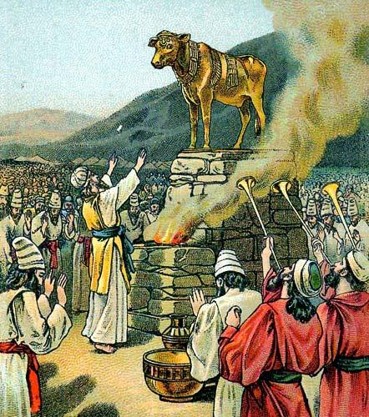
GOD’S TRUTH: There is objective truth and objective reality because God is real and true. We do not have the freedom to dismiss what is objectively true and real; 2 + 2 will always be 4, not 7 or 200, and gravity will always be operational on the planet. These things are real and true because a real and true God rooted His creation in His own nature.

CULTURE’S LIE: “Born this way.” This lie has so much traction because it’s repeated so often people assume it to be true.
GOD’S TRUTH: No Evidence. There is actually no scientific evidence of a gay gene or any other determiner of same-sex attraction. And in identical twins (who share the same DNA), when one identifies as gay or lesbian, the other one only identifies as gay or lesbian about 11% of the time. If homosexuality were a genetic issue, the correspondence would be 100%.

American culture continues to pump out the illusion—the fantasy, the myth—that sexuality is the most important thing about life and about us, and that sexual identity and expression is where life is found.

Life is found in Jesus, and nowhere else.

Transgender: The Emperor’s New Clothes

In the old story of the Emperor’s New Clothes, scam artists appeal to the pride of a conceited emperor, claiming they can create a magical outfit for him that is invisible to anyone who is unfit for their position, stupid, or incompetent. He parades his new suit of clothes before his subjects, which of course no one can see because it’s a scam. But no one will say they don’t see it lest they be seen as stupid. Finally a little boy pipes up and blurts out the truth: “But he isn’t wearing anything at all!”{4}

The transgender narrative is the equivalent of the Emperor’s New Clothes. The objective truth is that there is no such thing as magical clothes, and there’s no such thing as changing genders. People can only deceive themselves (and others), damage their bodies, and mutilate themselves—but our God-ordained maleness and femaleness, our biological sex, is stamped into every cell of our bodies.

It’s especially alarming when parents, educators and other authorities feed a child’s fantasy that they are the other gender. We would never do that if a child declared herself to be a cat or a unicorn; we would gently and lovingly correct her wrong thinking by speaking the truth to her. But if a boy insists he’s a girl or vice versa, many progressive-minded adults are so proud of their “wokeness” that they rush to board the child on the transgender train.

Most often, children who reject their gender are reacting to gender stereotypes. Girls can think that boys get to do cooler stuff than girls, and sensitive boys who love pink and purple sparkly things can think it’s better to be a girl. Both sexes who experience abuse can believe that it would be safer to be the opposite sex.

Children never see the big picture—that’s why God gives them parents to help them see their world more accurately. One little boy told his parents he wanted to be a girl but no one inquired why, they just jumped on the transgender bandwagon. Turns out that when his baby sister was born and consumed a lot of attention because she was very sick, he concluded that if he were a girl, he would get the same attention.

Transgender – Part 2

When a person experiences a conflict between their biological sex and their internal sense of whether they are male or female, that’s called gender dysphoria. Various studies have shown that this very painful emotional state resolves itself about 85% of the time simply by going through puberty. It appears to reset things. So the best and wisest treatment is no treatment at all, but of course wise parents and other adults will continue to speak truth about a child’s identity—especially the truth that God who is good, loving and wise chose their gender for them, so we need to receive it as His gift.

This whole transgender phenomenon has ignited where children have access to the internet on their smart phones. The illusion of transgender is easily spread by social contagion. Children and teens talk about their beliefs that they are transgender on social media, and their impressionable peers are influenced to start thinking and feeling the same way. The popularity of social media has sped up the spread of this fantasy, especially on the Tumblr platform. One academic who studied the reports of parents alarmed by sudden changes in their children coined the term “rapid onset gender dysphoria.”{5}

Anyone who has been around adolescents for any length of time doesn’t need to be surprised by this dynamic. Teens copy each other in all kinds of ways.

Many adolescents who identify as transgender suffer from anxiety, depression, and self-injury.{6} There is a whole constellation of painful mental health struggles all bound up together. We are also finding that a disproportionate number of teens who explore the transgender identity are on the autism spectrum.{7}

They already feel the shame of being different, of being “other than,” and it’s easy for them to mislabel themselves as transgender instead of just different.

One final note on transgender: we must not go along with the Emperor’s New Clothes story that athletes can compete as the opposite sex just by declaring themselves so. It’s not just heartbreaking, it’s wrong for teenage boys to rob girl athletes of scholarships{8}, not to mention dignity, by unfairly competing against them and demanding to use their restrooms and locker rooms.{9}

Why Have So Many Christians and Entire Churches Become Pro-Gay?

More and more individuals and churches have come out in support of homosexuality and gay marriage. Why is that?

I think there are two big reasons so many confessing believers in Christ have allowed themselves to be more shaped by the culture than by the truth of God’s word, drifting into spiritual compromise and even into apostasy, which means abandoning the truth of one’s faith.

Reason One: Rejecting the Authority of God’s Word

The first reason is that millions of people are rejecting the authority of God’s word.

The bitter fruit of several decades of shallow preaching, teaching and discipleship is that many believers have been especially vulnerable to Satan’s deceptive question to Eve in the Garden of Eden: “Did God really say . . .?” When Christians ignore or flat-out reject the unmistakably clear biblical statements condemning homosexual behavior, they are playing into the enemy’s temptation to justify disobedience by making feelings and perceptions more important than God’s design and standards.

There are now two streams of thought on same-sex relationships and behavior: the Traditional, Biblical View and the Revisionist View.{10} The Revisionist View basically says, “It doesn’t matter what the Bible actually says, it doesn’t mean what 2000 years of church history has said it means, it means what we want it to say.” And we want it to say that God endorses all relationships that invoke love.”

Reason Two: Snagged by the Gay Agenda

When people don’t submit themselves to the truth of the Word of God, they are easily shaped and swayed by the six points of a brilliantly designed “Gay Manifesto” spelled out in a book called After the Ball: How America Will Conquer Its Fear and Hatred of Gays in the 90s.{11} This gay agenda has been executed perfectly in the United States. (Note: these are the authors’ words, not mine.)

1. Talk about gays and gayness as loudly and often as possible.

2. Portray members of the LGBTQ community as victims. Indoctrinate mainstream America that members of the LGBTQ community were “born this way.”

3. Give protectors a just cause: anti-discrimination.

4. The use of TV, music, film and social media to desensitize mainstream Americans to their plight as gay people.

5. Portray Gays and Lesbians as pillars in society. Make gays look good.

6. Once homosexuals have begun to gain acceptance, anti-gay opponents must be vilified, causing them to be viewed as repulsive outcasts of society.

This is how I see how we got to this place where so many people have been deceived. They didn’t anchor themselves to the Truth of the Word of God, and they opened themselves to the cultural brine of Kirk and Madsen’s plan to overhaul straight America.

I will close with four personal observations about this situation:

1. Christians have bought into the culture’s worship of feelings over God’s unchanging revelation

2. People love how making themselves an ally and protector of the underdog makes them feel, despite God’s design and standards for sexuality and marriage.

3. Not enough of us Christ-followers are living lives that demonstrate the beauty and satisfaction of abiding in Christ.

4. The church has been dismal at loving those who struggle with their sexuality and showing them the grace that is in God’s heart toward them. It’s essential to both speak the truth in love (Ephesians 4:15), and seek to show love filled with truth.

Notes

1. www.sciencealert.com/sexual-orientation-continues-to-change-right-through-our-teens-and-into-adulthood
2. www.dailymail.co.uk/femail/article-3356084/I-ve-gone-child-Husband-father-seven-52-leaves-wife-kids-live-transgender-SIX-YEAR-OLD-girl-named-Stefonknee.html
3. unbelievable-facts.com/2016/04/transgender-dragon-lady.html
4. en.wikipedia.org/wiki/The_Emperor%27s_New_Clothes
5. https://en.wikipedia.org/wiki/Rapid_onset_gender_dysphoria_controversy
6. www.usnews.com/news/health-news/articles/2020-04-10/transgender-teens-have-high-rates-of-depression-suicidal-thoughts
7. www.com/science/article/pii/S1750946719301540
8. www.usatoday.com/story/opinion/2020/06/19/transgender-athletes-robbing-girls-chance-win-sports-column/4856486002/
9. www.dailysignal.com/2015/12/21/why-these-high-school-girls-dont-want-transgender-student-a-in-their-locker-room/
10. bible.org/article/reformation-church-doesn-t-need-answering-revisionist-pro-gay-theology-part-i
11. Marshall Kirk and Hunter Madsen, After the Ball: How America Will Conquer Its Fear and Hatred of Gays in the 90s (New York: Doubleday, 1989).

©2020 Probe Ministries


The Golden Calf

Golden Calf

Kyle Skaggs muses about one of his favorite online series and how it relates to our common temptation to seek comfort from idols like the Israelites’ golden calf.

I’ve been watching YouTube’s series “The Promised Land” (think Exodus meets “The Office”), which has inspired me to revisit the law-related section of the Pentateuch: Numbers, Deuteronomy, and Leviticus. Any good Christian media should encourage you to do that. My favorite character in the show is Chisisi, an Egyptian soldier who got washed up on the other side of the Red Sea and is awkwardly pretending to be a Hebrew.

One of my favorite moments in the show is taken straight from Exodus, where the people convince Aaron to make them a new god. Many of us know how that goes. He makes a golden calf. The people worship it, and then Moses comes down and flies into a rage. This got me thinking.

Regarding the calf, I (and commentators more skilled than I) have noted the significance that the idol was a calf of all other possible shapes. It may have a connection to Apis, the son of Hathor, an Egyptian god represented by a bull. His worship began in the city of Memphis. Widespread worship of the bull began in the First Dynasty (2925-2775 BC), meaning the cult of Apis was around at least 1,300 years before the Hebrews left Egypt if we use the early date for the exodus.

The Hebrews spent around four hundred years in Egypt. The only other gods they knew were well established Egyptian deities. In the absence of Moses’ leadership, the people grew restless and returned to what they were comfortable with, something they could see, touch, and manipulate rather than waiting for Moses to return with God’s word.

When we face difficulty, we are often tempted to go our own way rather than waiting on God. And when we do things without God, we run back to our sin. We all have a golden calf of our own, something we turn to for stability instead of God. It can be something serious like pornography, smoking, or gambling; it can even be something less obvious like over-eating or spending too much time on social media. We are comforted by our sin even if we know it’s wrong.

To mature as a Christian, one takes on the mindset that they were set free from sin and made slaves to righteousness (Romans 6:18). That which the world holds in regard—wealth, power, pleasure, and all self-serving things—are dead to us. So when it becomes hard to see God, don’t settle for the shiny calf from your old life. Trust in God’s timing. Don’t be like the Hebrews.

©2026 Probe Ministries


Worldviews Through History – Compared to a Christian View

Kerby Anderson provides a summary of how mankind has viewed the world from the Romans until today. This summary provides us a perspective against which to compare and contrast a Christian, biblical worldview based on New Testament principles.

Roman Worldview

On the Probe Web site we often talk about worldviews. I want to explain how the worldviews we talk about developed through history. We will be using as our foundation an excellent book written by Professor Glenn Sunshine whom I have met and also had the privilege of interviewing. His book is Why You Think the Way You Do: The Story of Western Worldviews from Rome to Home.{1}

Glenn Sunshine is a member of the church that Jonathan Edwards attended when he was at Yale. Professor Sunshine gave a lecture about Jonathan Edward’s worldview at a conference they held, and Chuck Colson invited him to teach with the Centurions program. He gave a talk about “How We Got Here” and then later turned it into Why You Think the Way You Do.

Since we will be talking about worldview, it would be good to begin with Glenn Sunshine’s definition. “A worldview is the framework you use to interpret the world and your place in it.”{2} You do not need to be a philosopher to have a worldview. All of us have a worldview.

Although Glenn Sunshine begins with the worldview of the Roman world, he quickly takes us back to neo-Platonism. It was the religion and philosophy based upon Plato’s ideas. Neo-Platonism was the belief that the fundamental ground of reality is non-physical. Instead it is found in the world of ideas (and is known as idealism). These ideas cast shadows that cast other shadows until they arrive at the physical world.

According to this worldview, the whole universe exists as a hierarchy. The spiritual is superior to the physical. This provides a scale of values for the world, but also provides a scale for humanity. In other words, those who are superior should rule over those who are inferior because they have demonstrated their ability to rule or conquer.

This view of hierarchy led to the idea of the father having superiority over all members of the family. It led to the idea that men are superior to women. It led to the idea that the emperor should rule and be worshipped. And it led to the idea that slaves are inferior to free people and nothing more than “living tools.”{3}

This explains not only the success of Rome but also its ugly underside. Essentially there are two pictures of Rome: “the glittering empire and the rotten core.”{4}

In Rome, human life did not have much value. While it is true that Romans abandoned human sacrifice, they engaged in other practices equally abhorrent. “They picked up the Etruscan practice of having people fight to the death in games in honor of the dead.”{5}

Slavery provided the economic foundation for the empire. Abortion and infanticide were regularly practiced. “Roman families would usually keep as many healthy sons as they had and only one daughter; the rest were simply discarded.”{6} And Roman law required that a father kill any visibly deformed child.

Transformation of the Pagan World

How did Christianity transform the pagan world? In AD 303, the Roman emperor Diocletian began a severe persecution of Christians. But because Christians were faithful and even willing to go to their deaths for their beliefs, their credibility increased. Eventually they were accepted and allowed to exercise their faith. Constantine even legalized the Christian faith by AD 313.

Once that took place, Christian ideas were allowed to percolate through society. One of the most important ideas was that human beings are created in the image of God. This idea has a profound impact. First, it meant that people are fundamentally equal to each other. No longer were there grounds for saying that some people are superior to others. In fact, “Christians were the first people in history to oppose slavery systematically.”{7}

Christians (who believed that all are created in the image of God) treated the sick differently. They believed that even those who were deathly ill still deserved care. Dionysius of Alexandria reported that Christians (often at great risk to their own lives) “visited the sick fearlessly and ministered to them continually.”{8} They would rescue babies abandoned in an act of infanticide. They would oppose abortion.

In economics, we can also see the influence of Christianity. The idea that God created the universe and then rested showed that God worked. That would mean that human beings (made in the image of God) are expected to work as well. God gave Adam and Eve intellectual work (in naming the animals) and physical work (in tending the Garden). Contrast this with the Roman world where physical work was seen as something that only slaves would do. Christians saw labor as something that was intrinsically valuable.

Labor is good; drudgery is bad. Drudgery is a result of the Fall (Genesis 3). So Christians were the first to develop technology to remove drudgery from work. Other civilizations had technology, but the West uniquely applied such things as water power to make work more valuable and worthwhile by eliminating the drudgery and repetitive nature of certain tasks.

Property rights were also well-developed during this period. “The medieval world under the influence of Christianity has a much stronger emphasis on property rights than other cultures had.”{9}

These ideas come from a biblical worldview and began to be developed during the Middle Ages. This led to a complete transformation of western society and set it on a trajectory to our modern world.

Christianity and Politics

Glenn Sunshine points out that in the West, the dynamic between church and state is unique. Christianity was originally a persecuted minority religion. Even when Christianity was declared a legal religion, the church did not depend upon the state. So the question of the relationship between church and state has been an open question.

During the Middle Ages, two men helped shape political thinking. The first was Augustine, who described two realms: the City of God and the City of Man. He argued that human government is the result of sin. He believed that it is based upon selfishness. Government itself is corruption. In the absence of government, anarchy reigns. So government is a necessary evil.

The City of God is different in that it is not based upon force or coercion. It is based upon love, charity, and repentance. That doesn’t mean that the City of Man and the City of God cannot work together. But overall, Augustine had a more pessimistic view of government.

Aristotle had a different view of government. As people in the Middle Ages began to rediscover Aristotle, they began to develop a different view of government. They saw government as a necessary institution that God has placed in the world. It had positive and legitimate functions.

Aristotle believed that government had a more positive role in society. But the Christian theologians had to also deal with the problem of original sin. They wanted to find a way to prevent original sin from corrupting the government. The tension between these two views is what drives the discussion of western political theory.

Sunshine notes that “another check on civil government involved the idea of rights.”{10} We normally associate the idea of rights, especially inalienable rights, with eighteenth century political theorists. However, John Locke’s idea that we have inalienable right to life, liberty, and property is already found in the writings of medieval theologians. The basis for this is a belief that all are created in the image of God. Therefore, all of us have a number of natural rights that the state cannot remove. Natural law was the idea that God wove moral laws into the fabric of the universe.

There also was the belief that there should be limitations on the jurisdiction of civil government and church government. One example is the Magna Carta, that stated that the English church was to be free and its liberties unimpaired by the crown.

The Renaissance and Enlightenment

What about the transformation into the modern world? In the early modern period, starting with the Renaissance in the fifteenth century to the seventeenth century, there are a whole series of events that shook the worldview consensus that developed in the Middle Ages.

Previously there were certain beliefs about truth: (1) that truth was absolute, (2) that truth is knowable to the human mind, and (3) that truth is necessary for society (a society could not be based upon a lie). The best good guide for truth would be the great civilizations of the past that lasted for so long and thus must have been based upon truth.

The idea was to go to the past to find truth. During the Renaissance scholars were very successful in collecting manuscripts and finding ancient sources. Unfortunately, they found so many sources that they discovered there was not a coherent perspective. The ancient writers disagreed with each other. In a sense, the Renaissance was a victim of its own success. There was too much information. The more ancient sources they found, the less likely they would find agreement in the perspectives. Once it became obvious that this grand synthesis was not possible, the entire purpose of intellectual activity was thrown into question.

Then there were the wars of the Reformation in which various factions fought over who was the true follower of the prince of peace. The devastation of the religious wars left many people wondering if there really was religious certainty. No longer was the question “is Christianity true” but rather “which Christianity is true?” Now you had a multiplicity of options that left people confused. This also generated questions about the role of religion in society.

Then you also had the discovery of the New World and whole people groups that had never heard the gospel. Some began to ask questions like: Is it fair of God to send them all to hell because they had never heard of Christianity? Or, in light of biblical history, where did they come from? How do these people fit with the story of Noah? These discoveries called into question biblical morality and biblical history.

Also, people started using a new way of looking at knowledge. They began to use the scientific method to evaluate everything. This begins a significant shift in how we understand the world. There is a movement away from certainty toward probability. There is also a movement away from studying ancient authors toward scientific experimentation.

In the modern world, therefore, truth is not found in the past but in the present and future. With this is also questioning of biblical authority.

The Modern World and Christianity

Let me conclude by talking about our modern world and how Christians should respond. Sunshine concludes his book with chapters on “Modernity and Its Discontents” and “The Decay of Modernity.” Essentially the modern world has left humans with a loss of truth, certainty, and meaning in life. “Materialism provides a ready answer to the question of the meaning and purpose of life: there is none.”{11} From a Darwinian perspective, our only purpose is to pass our genes on to the next generation.

This rejection of spirituality and meaning has ushered in various other worldviews as alternatives. These would be such worldviews as postmodernism, neo-paganism, and the New Age Movement. Sunshine argues that in many ways we have been catapulted back to Rome.

Like Rome we value toleration as the supreme virtue. Rome believed that toleration was important because it kept the empire together. If you go beyond the lines of toleration, you are persecuted. This is similar to the mindset today. The highest value in a postmodern world is toleration. Toleration so defined means that we will embrace any and all lifestyles people may choose.

The Romans lived in an oversexed society.{12} So do we. Rome practiced abortion. So does our society. Rome was antinatal and made a deliberate attempt to prevent pregnancy. They focused on sexual enjoyment and did not want to bother with kids. In our modern world, birthrates in most of the western democracies are plummeting.

Western civilization is a product of ancient Roman civilization plus Christianity. Sunshine argues that once you removed Christianity, modern society reverted back to Roman society and a recovery of the ancient pagan worldview.

So how should Christians live in this world? Of course, we should live out a biblical worldview. Every generation is called to live faithfully to the gospel, and our generation is no exception.

This is especially important today since we are facing a society that is not willing to accept biblical ideas. In many ways, we face a challenge similar to the early church, though not as daunting. From history we can see that the early church did live faithfully and transformed the Roman world. Christians produced a totally new civilization: western culture. By living faithfully before the watching world, we will increase our credibility and earn the respect from those who are around us by living in accordance with biblical principles.

Notes

1. Glenn Sunshine, Why You Think the Way You Do: The Story of Western Worldviews from Rome to Home (Grand Rapids, MI: Zondervan, 2009).
2. Ibid., 13.
3. Ibid., 31
4. Ibid., 20
5. Ibid., 30
6. Ibid., 33-34
7. Ibid., 43
8. Ibid., 44
9. Ibid., 76
10. Ibid., 91
11. Ibid., 177
12. Ibid., 33

© 2010 Probe Ministries