“Your Position Against Stem Cell Research Disregards Diabetics”

I know that you don’t think it’s right to use stem cells and you have that right, it’s granted to you in the constitution. But do you have diabetes? Do you know what it’s like to have to get blood 4 times a day to know what your blood sugar is so that you can make good decisions so you don’t die and every time you get in a car to drive? Then have to stick a needle into your skin to give yourself insulin to survive because your body does not produce insulin anymore. Do you know what that’s like? Do you? The way I see it from your webpage you’re not looking at the 16 million Americans with diabetes that have to live with this. If the stem cell research was to succeed then there would be no more Diabetes, Parkinson’s and many other diseases.

I appreciate your passion for a desire to cure diabetes. It is a difficult disease, and I am sorry to learn that you suffer from it. However, allow me to reframe the argument.

We need to make a distinction between embryonic stem cells and adult stem cells. We have no problem with using adult stem cells to research treatment and cures of disease. What if embryonic stem cell research doesn’t succeed? There are no guarantees. We haven’t even cured a mouse, let alone treated any human disease with embryonic stem cells. Then we have will have wasted thousands of human embryos for nothing. Not to mention all the women who had to endure hormonal treatments to obtain their eggs to make the embryos. How much is their sacrifice worth to you?

What if adult stem cell research (research with no ethical questions and much hope of success) achieves a treatment before embryonic stem cell research? Again, we will have wasted thousands of human embryos for nothing.

I have a genetic disease myself, hemochromatosis, excess iron in the blood and organs. When left untreated it can lead to liver disease and cancer. I simply need a pint of blood withdrawn every 2-3 months to keep my iron levels under control. This is not the inconvenience of diabetes. But I am not without understanding of the issues. My health and convenience is not worth the sacrifice of human embryos who have no option of informed consent. I refuse to sacrifice the next generation in any way for my convenience. It’s always been the other way around, the current generation sacrificing for the next.

You are also entitled to your opinion. But don’t assume I have callously tossed aside the suffering of others. I simply choose the life of human embryos, embryos who have every potential to form a human being if left in their natural surroundings, over my convenience. To suggest that these early embryos are simply reproductive cells like sperm and egg is disingenuous and medically incorrect.

Respectfully,

Ray Bohlin
Probe Ministries


Christian Environmentalism – A Biblical Worldview Perspective on You and the Earth

Dr. Bohlin applies a biblical point of view in determining a concerned Christian relationship to environmentalism.  As Christians, we know we have been made stewards of this earth, having a responsibility to care for it.  Understanding our relationship to God and to the rest of creation gives us the right perspective to apply to this task.

Spanish flag This article is also available in Spanish.

Is There an Environmental Problem?

download-podcastThe news media are full of stories concerning environmental disasters of one kind or another, from global warming to endangered species to destruction of the rain forests to nuclear accidents. Some are real and some are imaginary, but it’s not hard to notice that the environmental issue receives very little attention in Christian circles. There are so many other significant issues that occupy our attention that we seem to think of the environment as somebody else’s issue. Many Christians are openly skeptical of the reality of any environmental crisis. It’s viewed as a liberal issue, or New Age propaganda, or just plain unimportant since this earth will be destroyed after the millennium. What we fail to realize is that Christians have a sacred responsibility to the earth and the creatures within it. The earth is being affected by humans in an unprecedented manner, and we do not know what the short or long term effects will be.

Calvin DeWitt, in his book The Environment and the Christian,{1} lists seven degradations of the earth. First, land is being converted from wilderness to agricultural use and from agricultural use to urban areas at an ever-increasing rate. Some of these lands cannot be reclaimed at all, at least not in the near future.

Second, as many as three species a day become extinct. Even if this figure is exaggerated, we still need to realize that once a species has disappeared, it is gone. Neither the species nor the role it occupied in the ecosystem can be retrieved.

Third, land continues to be degraded by the use of pesticides, herbicides, and fertilizers. While many farmers are rebelling against this trend and growing their produce organically or without chemicals, the most profitable and largest growers still use an abundance of chemicals.

Fourth, the treatment of hazardous chemicals and wastes continues as an unsolved problem. Storing of medium term nuclear wastes is still largely an unsolved problem.

Fifth, pollution is rapidly becoming a global problem. Human garbage turns up on the shores of uninhabited South Pacific islands, far from the shipping lanes.

Sixth, our atmosphere appears to be changing. Is it warming due to the increase of gases like carbon dioxide from the burning of fossil fuels? Is the ozone layer shrinking due to the use of chemicals contained in refrigerators, air conditioners, spray cans, and fire extinguishers? While I remain skeptical of the global threat that many see, pollution continues to be a local and regional concern prompting ever more stringent emission controls for our automobiles.

Seventh, we are losing the experiences of cultures that have lived in harmony with the creation for hundreds or even thousands of years. Cultures such as the Mennonites and Amish, as well as those of the rain forests, are crowded out by the expansion of civilization.

Never before have human beings wielded so much power over God’s creation. How should we as Christians think about these problems?

The Environmental Ethics of Naturalism and Pantheism

Some people have blamed Western culture’s Judeo-Christian heritage for the environmental crisis. These critics point squarely at Genesis 1:26-28, where God commands His new creation, man, to have dominion over the earth and to rule and subdue it.{2} This mandate is seen as a clear license to exploit the earth for man’s own purposes. With this kind of philosophy, they ask, how can the earth ever be saved? While I will deal with the inaccuracy of this interpretation a little later, you can see why many of the leaders in the environmental movement are calling for a radical shift away from this Christian position. But what are the alternatives?

The need to survive provides a rationale for environmental concern within an evolutionary or naturalistic world view. Survival of the human species is the ultimate value. Man cannot continue to survive without a healthy planet. We must act to preserve the earth in order to assure the future of our children.

The evolutionary or naturalistic view of nature is, however, ultimately pragmatic. That is, nature has value only as long as we need it. The value of nature is contingent on the whim of egotistical man.{3} If, as technology increases, we are able to artificially reproduce portions of the ecosystem for our survival needs, then certain aspects of nature lose their significance. We no longer need them to survive. This view is ultimately destructive, because man will possess only that which he needs. The rest of nature can be discarded.

In the fictional universe of Star Trek, vacations are spent in a computer generated virtual reality and meals are produced by molecular manipulation. No gardens, herds, or parks are needed. What value does nature have then?

Another alternative is the pantheistic or New Age worldview. Superficially, this view offers some hope. All of nature is equal because all is god and god is all. Nature is respected and valued because it is part of the essence of god. If humans have value, then nature has value.

But while pantheism elevates nature, it simultaneously degrades man and will ultimately degrade nature as well. To the pantheist, man has no more value than a blade of grass. In India the rats and cows consume needed grain and spread disease with the blessings of the pantheists. To restrict the rats and cows would be to restrict god, so man takes second place to the rats and cows. Man is a part of nature, yet it is man that is being restricted. So ultimately, all of nature is degraded.{4}

Pantheism claims that what is, is right. To clean up the environment would mean eliminating the undesirable elements. But, since god is all and in all, how can there be any undesirable elements? Pantheism fails because it makes no distinctions between man and nature.

The Christian Environmental Ethic

A true Christian environmental ethic differs from the naturalistic and pantheistic ethics in that it is based on the reality of God as Creator and man as his image-bearer and steward. God is the Creator of nature, not part of nature. He transcends nature (Gen. 1-2; Job 38-41; Ps. 19, 24, 104; Rom 1:18-20; Col. 1:16-17). All of nature, including man, is equal in its origin. Nature has value in and of itself because God created it. Nature’s value is intrinsic; it will not change because the fact of its creation will not change.{5} The rock, the tree, and the cat deserve our respect because God made them to be as they are.{6}

While man is a creature and therefore is identified with the other creatures, he is also created in God’s image. It is this image that separates humans from the rest of creation (Gen. 1:26-27; Ps. 139:13-16).{7} God did not bestow His image anywhere else in nature.

Therefore, while a cat has value because God created it, it is inappropriate to romanticize the cat as though it had human emotions. All God’s creatures glorify Him by their very existence, but only one is able to worship and serve Him by an act of the will.

But a responsibility goes along with bearing the image of God. In its proper sense, man’s rule and dominion over the earth is that of a steward or a caretaker, not a reckless exploiter. Man is not sovereign over the lower orders of creation. Ownership is in the hands of the Lord.{8}

God told Adam and Eve to cultivate and keep the garden (Gen. 2:15), and we may certainly use nature for our benefit, but we may only use it as God intends. An effective steward understands that which he oversees, and science can help us discover the intricacies of nature.

Technology puts the creation to man’s use, but unnecessary waste and pollution degrades it and spoils the creation’s ability to give glory to its Creator. I think it is helpful to realize that we are to exercise dominion over nature, not as though we are entitled to exploit it, but as something borrowed or held in trust.

Recall that in the parable of the talents in Matthew 25, the steward who merely buried his talent out of fear of losing it was severely chastised. What little he did have was taken away and given to those who already had a great deal.{9} When Christ returns, His earth may well be handed back to Him rusted, corroded, polluted, and ugly. To what degree will you or I be held responsible?

This more thoroughly biblical view of nature and the environment will allow us to see more clearly the challenges that lie ahead. Our stewardship of the earth must grapple with the reality that it does not belong to us but to God though we have been given permission to use the earth for our basic needs.

Abuse of Dominion

While God intended us to live in harmony with nature, we have more often than not been at odds with nature. This reality tells us that man has not fulfilled his mandate. The source of our ecological crisis lies in man’s fallen nature and the abuse of his dominion.

Man is a rebel who has set himself at the center of the universe. He has exploited created things as though they were nothing in themselves and as though he has an autonomous right to do so.{10} Man’s abuse of his dominion becomes clear when we look at the value we place on time and money. Our often uncontrolled greed and haste have led to the deterioration of the environment.{11} We evaluate projects almost exclusively in terms of their potential impact on humans.

For instance, builders know that it is faster and more cost effective to bulldoze trees that are growing on the site of a proposed subdivision than it is to build the houses around them. Even if the uprooted trees are replaced with saplings once the houses are constructed, the loss of the mature trees enhances erosion, eliminates a means of absorbing pollutants, producing oxygen, and providing shade, and produces a scar that heals slowly if at all.

Building around the trees, while more expensive and time-consuming, minimizes the destructive impact of human society on God’s earth. But, because of man’s sinful heart, the first option has been utilized more often than not.

As Christians we must treat nature as having value in itself, and we must be careful to exercise dominion without being destructive.{12} To quote Francis Schaeffer, We have the right to rid our house of ants; but what we have no right to do is to forget to honor the ant as God made it, out in the place where God made the ant to be. When we meet the ant on the sidewalk, we step over him. He is a creature, like ourselves; not made in the image of God, it is true, but equal with man as far as creation is concerned.{13}

The Bible contains numerous examples of the care with which we are expected to treat the environment. Leviticus 25:1-12 speaks of the care Israel was to have for the land. Deuteronomy 25:4 and 22:6 indicates the proper care for domestic animals and a respect for wildlife. In Isaiah 5:8-10 the Lord judges those who have misused the land. Job 38:25-28 and Psalm 104:27-30 speak of God’s nurture and care for His creation. Psalm 104 tells us that certain places were made with certain animals in mind. This would make our national parks and wilderness preserves a biblical concept. And Jesus spoke on two occasions of how much the Father cared for even the smallest sparrow (Matt. 6:26, 10:29). How can we do less?

Christian Responsibility

I believe that as Christians we have a responsibility to the earth that exceeds that of unredeemed people. We are the only ones who are rightly related to the Creator. We should be showing others the way to environmental responsibility.

Christians, of all people, should not be destroyers, Schaeffer said.{14} We may cut down a tree to build a house or to make a fire, but not just to cut it down. While there is nothing wrong with profit in the marketplace, in some cases we must voluntarily limit our profit in order to protect the environment.{15}

When the church puts belief into practice, our humanity and sense of beauty are restored.{16} But this is not what we see. Concern for the environment is not on the front burner of most evangelical Christians. The church has failed in its mission of steward of the earth.

We have spoken out loudly against the materialism of science as expressed in the issues of abortion, human dignity, evolution, and genetic engineering, but have shown ourselves to be little more than materialists in our technological orientation towards nature.{17} All too often Christians have adopted a mindset similar to a naturalist that would assert that simply more technology will answer our problems. In this respect we have essentially abandoned this very Christian issue.

By failing to fulfill our responsibilities to the earth, we are also losing a great evangelistic opportunity. Many young people in our society are seeking an improved environment, yet they think that most Christians don’t care about ecological issues and that most churches offer no opportunity for involvement.{18} For example, in many churches today you can find soft drink machines dispensing aluminum cans with no receptacle provided to recycle the aluminum, one of our most profitable recyclable materials.

As a result, other worldviews and religions have made the environmental issue their own. Because the environmental movement has been co-opted by those involved in the New Age Movement particularly, many Christians have begun to confuse interest in the environment with interest in pantheism and have hesitated to get involved. But we cannot allow the enemy to take over leadership in an area that is rightfully ours.

As the redeemed of the earth, our motivation to care for the land is even higher than that of the evolutionist, the Buddhist, or the advocate of the New Age. Jesus has redeemed all of the effects of the curse, including our relationship with God, our relationship with other people, and our relationship with the creation (1 Cor. 15:21-22, Rom. 5:12-21). Although the heavens and the earth will eventually be destroyed, we should still work for healing now.

For Further Reading

Beisner, E. Calvin. Prospects for Growth: a Biblical View of Population, Resources, and the Future. Westchester, Ill.: Crossway Books, 1990.

DeWitt, Calvin B., Ed. The Environment and the Christian: What Can We Learn from the New Testament? Grand Rapids , Mich.: Baker Book House, 1991.

Schaeffer, Francis. Pollution and the Death of Man: a Christian View of Ecology. Wheaton, Ill.: Tyndale, 1970.

Notes

1. Calvin DeWitt, ed., The Environment and the Christian: What Does the New Testament Say About the Environment (Grand Rapids: Baker, 1991).
2. Lynn White, “The Historical Roots of Our Ecologic Crisis,” Science, 155 (1967):1203-07.
3. Francis Schaeffer, Pollution and the Death of Man: The Christian View of Ecology (Wheaton, Ill.: Tyndale House Publishers, 1970), 26-27.
4. Ibid, 30-33.
5. Ibid, 47-49.
6. Ibid, 54-55.
7. Ibid, 49-50.
8. Ibid, 69.
9. Ibid, 69-70.
10. Ibid, 71.
11. Ibid, 83.
12. Ibid, 74-75.
13. Ibid, 74.
14. Ibid, 74.
15. Ibid, 90-91.
16. Ibid, 92-93.
17. Ibid, 85.
18. Ibid, 85.

© 2005 Probe Ministries


“Help Me Understand the Genetics of Skin Color”

Ray,

I’ve got a genetics question for you. A pastor friend posed the following for me, which he says is the argument of some creationists he knows. He sums up their argument this way:

1. Adam and Eve were the first parents of all the races.

2. Adam and Eve contained all the genetic information from which eventually all the races came.

3. From Adam to Noah, all descendants of Adam and Eve were probably all a mid-brown color since Adam and Eve were also mid-brown.

4. After the global flood and the tower of Babel incident, descendants of Noah separated into people groups according to their own languages and traveled to different parts of the world.

5. As different “people groups” were exposed to different environments, natural selection occurred resulting in certain genetic traits to be enhanced for adaptability (for example: darker skin pigmentation for environments with more intense sunlight due to the genetic “potential” to increase more melanin).

6. As the “people groups” were isolated and intermarried with each other with a certain group, they eventually lost certain genes that were not needed for adaptability. (That would explain, from this point of view, why African Negroes who move to different northern environments or European Whites who move down to Africa, do not change back to another color because over time they previously lost the genetic potential to do so.)

Ray, from your knowledge of genetics, does this hold water? Or is it speculation? Thanks.

Your pastor friend is essentially correct. This scenario as regards to skin color is emminently workable genetically. There are at least three and perhaps four genes involved in skin color and several alleles at each gene producing differing amounts of melanin. It would not take long for these to segregate out into different inbred populations creating true-breeding lines for particular skin color shades. I even discussed this back in the late 70s with my genetics professor and he saw no genetic problem with this scenario.

The only change I would make in the scenario would be to emphasize the critical role of the wives of Noah’s three sons. They are actually more important than Adam and Eve. Noah’s sons would most likely be very similar genetically so the major variation would need to originate with their wives since the world is repopulated from these three pairs. The full genetic range could easily be incorporated into these individuals. Adam and Eve would not necessarily need to possess the entire range of skin gene possibilities since there is some time for accumulation of mutations between them and Noah’s sons. With that said, since Adam and Eve would both possess two copies of each gene, that means a possible total of at least 4 different alleles at each gene and if there are 3 different genes, that means 12 different alleles which could be combined 144 different ways. This would seem more than adequate to accomodate the full range of human skin color.

Respectfully,

Ray Bohlin

Probe Ministries


“The Creation/Evolution Controversy is Keeping Me From Believing”

Dear Ray Bohlin,

I read your article Christian Views of Science and Earth History, and at the end it said about how you have been researching about this for twenty years, but still haven’t come to a conclusion about it. If (macro)evolution isn’t proved true, then why would people involved in science treat it as a fact? Two people who come to my mind are Michael Behe and Phillip Johnson. I guess Behe believes in macroevolution and Johnson doesn’t, but they still both support Intelligent Design theory. Does Johnson just not know enough about science, or is Behe perhaps wrong? Maybe I’ve just become way too skeptical. I don’t like being like this, but it’s hard not to be! How can I not let this controversy about evolution keep me from believing? How do you do it? Maybe you just have more faith than I do. I don’t know.

Basically, my only question is concerning the age of the earth and universe. I do not consider this the critical issue so I am willing to live with a certain amount of tension here. There are many good Christians, both theologians and scientists who disagree on the time frame of Genesis, so you are not alone.

Macroevolution is treated as fact primarily because it is necessary for a naturalistic world view. If there is no God then some form of evolution must be true. This is why so many evolutionists are not troubled by evolution’s problems. They are firmly convinced that some form of evolution has occurred and the problems will be solved some day. Here their faith is in their world view and not necessarily science. Phil Johnson does a good job of talking about this in his first two books, Darwin on Trial and Reason in the Balance.

Being skeptical is OK. If Christianity is really true, then it can stand up to the scrutiny. I encourage you to continue to ask your questions and seek for answers. I have never been disappointed when I have felt the need to dig a little deper. The Lord won’t disappoint you either.

An excellent book you may want to pick up is by Lee Strobel called The Case for Faith (Harper Collins/Zondervan). It’s a series of interviews with top Christian scholars looking for answers to the toughest challenges to faith. One of the interviews is with Dr. Walter Bradley from Texas A & M about evolution and the origin of life. Because each chapter is a retelling of an interview it’s not overly technical but extremely helpful and honest.

I certainly don’t feel I have all the answers about the evolution question either. I am convinced however, that evolution certainly doesn’t have all the answers and some of the missing answers are to the most crucial questions such as a workable and observable mechanism of change.

In the past when I was feeling threatened as you are I would frequently need to return to the basics which I knew were true. The facts of Jesus historical existence, the reliability of the New Testament, the historical reliability of his resurrection, and God’s clear direction and presence in my life. Then I would combine this with Jesus own confirmation of the historicity of Genesis (see Matt. 19:3-6, Matt. 23: 29-37, and Matt. 24:37-39 and “Why We Believe in Creation”) and Paul’s clear statement of the creation exhibiting his character in Romans 1:18-20 and it was obvious that something was very wrong with evolution and somehow God’s creative fingerprints are evident in the natural world. That would keep me going. Now the more I have studied and probed, the more bankrupt evolution has become and the reasonableness and scientific integrity of design becomes more and more self-evident.

Hope this helps.

Respectfully,

Ray Bohlin

Probe Ministries


“Why Won’t You Take a Stand on the Age of the Earth?”

Dr. Bohlin,

I just read over your article on the Age of the Earth to get Probe’s stand on the issue. Apparently, the official stand is officially no stand.

I was wondering after I read this statement of yours: “Biblically, we find the young earth approach of six consecutive 24-hour days and a catastrophic universal flood to make the most sense. However, we find the evidence from science for a great age for the universe and the earth to be nearly overwhelming. We just do not know how to resolve the conflict yet.”

How do you (we) know for sure that the earth is millions if not billions of years old? I have been looking into this issue for a while, and I have found that ALL dating methods suffer from one major problem. They are ALL based on Fallible (un-testable) Assumptions. Now that is a major problem to probe into because it seems that the main reason why Probe is not willing to hold to and defend the clear written revelation in Genesis is because you believe those dating methods are more trustworthy than Genesis 1.

I believe Rich Milne and I qualified our statement sufficiently. To say that we think the young earth position makes the most sense Biblically does not intend to suggest we believe it is the “clear” written revelation of Genesis 1. There are many conservative evangelical Old Testament scholars who do not hold to it. Men who certainly understand the OT and Hebrew much more than this molecular biologist. If I believed it was the clear revelation of Genesis, I would accept it regardless of the scientific evidence.

What you refer to in the assumptions of dating methods is true especially of the radioactive dating methods. But we explain one of our hesitations in the problem of starlight in the body of the paper. I also find it significant that most young earth geologists and physicists (Russ Humphreys is my source from personal conversations during our ICR Grand Canyon trips together) recognize that radioactive dating methods consistently portray an older-to-younger sequence when going from the bottom to the top. So much so that they are searching for a way incorporate this into their flood model. They don’t accept the actual dates but the sequence seems real. Therefore the dating methods are not totally without merit. This is more than just suggestive.

I do understand that an international group, meeting through ICR, is working on a paper concerning dating methods which I anticipate with eagerness.

Respectfully,

Ray Bohlin, Ph.D.


Dr. Ray Bohlin

RAYMOND G. BOHLIN, PH.D.

Vice President of Vision Outreach
Suite 2000
2001 W. Plano Parkway
Plano, TX 75075
Phone: (972) 941-4562
E-mail:[email protected]
Probe Web Site: www.probe.org

Raymond G. Bohlin is Vice President of Vision Outreach with Probe Ministries. Dr. Bohlin was born and raised in Chicago, IL and is a graduate of the University of Illinois (B.S., zoology, 1971-1975), the University of North Texas (M.S., population genetics, 1977-1980), and the University of Texas at Dallas (M.S., Ph.D., molecular and cell biology, 1984-1991). He has been with Probe Ministries since 1975 and has lectured and debated on dozens of college and university campuses. He has addressed issues in the creation/evolution debate as well as other science-related issues such as the environment, genetic engineering, medical ethics, and sexually transmitted diseases. Dr. Bohlin was named a Research Fellow of the Discovery Institute’s Center for the Renewal of Science and Culture in 1997, 2000 and 2012. He and his wife Sue, an associate speaker and Webmistress for Probe Ministries as well as a professional calligrapher and Christian speaker, live in Plano, Texas, a suburb of Dallas, and they have two grown sons. He can be reached via e-mail at [email protected].

PUBLICATIONS

  • Bohlin, Raymond G. and Beitinger, Thomas L., 1979. Heat exchange in the aquatic salamander, Amphiuma means. J. Thermal Biology 4:63-67.
  • Bohlin, Raymond G. 1981. “Sociobiology: Cloned from the Gene Cult.” Christianity Today, January 23, 25(2):16-19.
  • Bohlin, Raymond G. 1981. “Evolution Society Digs In Against the Creationists.” Christianity Today, September 18, 25(16):41.
  • Bohlin, Raymond G. and Zimmerman, Earl G. 1982. Genic differentiation of two chromosome races of the Geomys bursarius complex. Journal of Mammalogy 63:218-228.
  • Anderson, J. Kerby and Bohlin, Raymond G. 1983. Genetic Engineering: the Evolutionary Link. Creation Research Society Quarterly, 19: 217-219.
  • Bohlin, Raymond G. and Anderson, J. Kerby. 1983. The Straw God of Stephen Gould. Journal of the American Scientific Affiliation 35(1): 42-44.
  • Lester, Lane P. and Bohlin, Raymond G. 1984. The Natural Limits to Biological Change. Probe Books, Richardson, TX 75081.
  • Bohlin, Raymond G. 1991. Complementation of a defect in complex I of the electron transport chain by DNA-mediated gene transfer. Ph.D. dissertation, University of Texas at Dallas.
  • Bohlin, Raymond G. 1996. Up a River Without a Paddle: A Review of “River Out of Eden: A Darwinian View of Life” by Richard Dawkins. Creation Ex Nihilo: Technical Journal. 10(3): 322-327.
  • Bohlin, Raymond G. 1999. The Possibilities and Ethics of Human Cloning. Chapter 17 in Genetic Engineering: A Christian Response, Timothy Demy and Patrick Stewart, editors, Kregel Press, Grand Rapids, MI, pp. 260-277.
  • Bohlin, Ray. 2000. Ed., Creation, Evolution, and Modern Science: Probing the Headlines that Impact Your Family, Kregel Publications, Grand Rapids, Mich., 192 pp.
  • Bohlin, Ray, book review of The Design Inference: Eliminating Chance through Small Probabilities by William Dembski, Cambridge: Cambridge University Press, 1998 in Philosophia Christi Vol. 2 (2), 2000, p. 142-144.
  • Linda K. Bevington, Bohlin Ray G., Stewart, Gary P., Kilner, John F., and Hook, C. Christopher. 2004. Basic Questions on Genetics, Stem Cell Research, and Cloning: Are these Technologies Ready to Use? Kregel Publications, Grand Rapids, Mich., 125p.
  • Sebastian, Sharon and Bohlin, Raymond G. 2009. Darwin’s Racists: Yesterday, Today and Tomorrow. Virtual Bookworm.


    PROBE RADIO TRANSCRIPTS


  • Darwin on Trial
  • Christian Environmentalism
  • Sociobiology: Evolution, Genes, and Morality
  • How to Talk to Your Kids about Creation and Evolution (with Sue Bohlin)
  • The Grand Canyon and the Age of the Earth
  • The Epidemic of Sexually Transmitted Diseases
  • The Five Crises of Evolutionary Theory
  • Human Cloning
  • Human Fossils: Just So Stories of Apes and Humans
  • The Natural Limits to Biological Change  
  • Why We Believe in Creation
  • The Sanctity of Human Life
  • The Worldview of Jurassic Park
  • Sexual Purity
  • Defending the Faith Philosophically (with Don Closson, Rich Milne, and Jerry Solomon)
  • Men Are from Mars, Women Are from Venus (with Sue Bohlin)
  • Evolution’s Big Bang: The Cambrian Explosion
  • The Battle for Life: Physician-Assisted Suicide
  • Up A River without a Paddle: A Darwinian View of Life
  • Life on Mars: Are We Alone in the Universe?  
  • Can Humans Be Cloned Like Sheep?
  • Darwin’s Black Box
  • Campus Christianity
  • The Star of Bethlehem
  • Contact: A Eulogy to Carl Sagan
  • Christian Views of Science and Earth History (with Rich Milne)
  • Cloning and Genetics: The Brave New World Closes In
  • Why Does the University Fear Philip Johnson?
  • Darwinism Takes a Step Back in Kansas
  • Mere Creation: Science, Faith, and Intelligent Design  
  • Genetic Engineering
  • The Coming Revolution in Science
  • Human Genetic Engineering
  • Human Genome Project
  • Icons of Evolution
  • Global Warming
  • The Controversy Over Stem Cell Research
  • PBS Evolution Series
  • Stem Cells and the Controversy over Therapeutic Cloning
  • Where Was God on 9/11?
  • The Galapagos Islands: Sacred Ground of Evolution  
  • Are We Alone in the Universe?
  • The Controversy Over Stem Cell Research
  • Is the Tender Warrior Wild at Heart?
  • Genetic Engineering
  • Human Genetic Engineering
  • The Controversy of Evolution in Biology Textbooks
  • Redesigning Humans: Is It Inevitable?
  • The Continuing Controversy Over Stem Cells
  • Total Truth
  • Was Darwin Wrong?  
  • The Impotence of Darwinism
  • The Case for a Creator
  • The Privileged Planet
  • Is Intelligent Design Dead?


    ORIGINS LECTURE TOPICS

    Amoeba to Man: You Can’t Get There From Here
    An analysis of the various examples of evolutionary change today and the evidence for the concept of the created kind. Video and Power Point on video projector.


    Creation/Evolution: What Can We Know About the Origins of the Universe and Life?
    A fast-paced presentation outlining the major tensions in the origins debate and what conclusions we can draw. Summarizes the evidence for the origins of the universe and life, the origin of complex adaptations and the evidence for design and intelligence. Requires 1 hour and 15 minutes. Video and Power Point on video projector.


    Christian Views of Science and Earth History
    A description of the three most prevalent Christian views of Genesis: Literal or Recent Creation, Progressive or Day Age Creation, and Theistic Evolution. Strengths and weaknesses of each one are analyzed and discussed. Power Point on video projector.


    Early Man and Human Fossils
    This presentation analyzes the fossil evidence for human evolution from a creationist perspective. The scarcity of fossils, the twists of interpretation, and the fossils that are out of place are discussed. Power Point on video projector.


    Evidence of Intelligence
    Evidence for an intelligent creator from molecules to the universe. Video and Power Point on video projector.


    The Grand Canyon and the Great Flood
    This presentation takes you on a hike into the Grand Canyon with the Institute for Creation Research. You’ll see some of the fabulous sites in the Grand Canyon as well as an explanation as to how ICR believes the Canyon may have been formed in conjunction with the flood of Noah. Slide illustrated.


    In the Beginning: A Study of Genesis One
    This is a verse by verse discussion of the first chapter of Genesis.


    The Influence of the Evolutionary Worldview on Society
    More and more evolutionists are calling for a new society based on the principles of evolution. What do they want? Power Point on video projector.


    Life’s Origins
    A critique of the general scheme of chemical evolution and evidence for the hand of God in living cells. Video and Power Point on video projector.


    Why We Believe in Creation
    A biblical apologetic for a creationist position based primarily on the nature and character of God and the centrality of creation in the Bible.

    NON-ORIGINS LECTURE TOPICS

    A Christian Environmental Ethic
    Christianity provides the only real basis for ecological concern. It should not take a crisis for Christians to be environmentally aware. Video and Power Point on video projector.


    Abortion: The Destruction of the Innocents
    Abortion is an unjustifiable intrusion on the safety of the womb. What is the logic behind the abortion movement and how should we respond. Power Point on video projector.


    A Defense of Christianity: Can Christianity Be Trusted?
    This presentation will defend Christian Theism as a worldview and examine historical evidence for the truth of Christianity. Power Point on video projector.


    Campus Christianity: How Should We Live?
    Four principles (Think Christianly, Cultivate a Teachable Spirit, Pursue Excellence, and Faithfulness) are presented for effective Christian witnessing in the classroom (or any sphere of life) are addressed. Also presented as Being Christian in a Post-Christian Societyfor adult audiences. Video and Power Point on video projector.


    Human Nature: Who Are We?
    Various views of the nature of man and their consequences are examined and contrasted with the Christian view. Video and Power Point on video projector.


    Infanticide and Euthanasia: Gateway to the Death Camps of the 21st Century
    The legacy of abortion is an ever decreasing value of human life in our society. The slippery slope is becoming steeper. Video and overhead projector.


    Genes, Cloning, and Genetic Engineering: A Christian Perspective
    How will these new technologies be used? Is it a Pandora’s Box or a miracle cure? Power Point on video projector.


    The Worldview of Jurassic Park
    Scenes from the movie Jurassic Park are viewed with the intent of discovering the some of the obvious and also some of the subtle messages contained within this incredible piece of entertainment. TV/VCR and Overhead Projector


    Guys are from Mars, Girls are from Venus
    This presentation looks at the astonishing agreement between the newfound discoveries in the secular world concerning the uniqueness of men and women and their agreement with millennia old statements from the Bible. Power Point on video projector.


    A Christian Response to Homosexuality
    This presentation investigates the problem of homosexuality in our culture today, bringing together relevant Biblical passages and scientific studies from the fields of psychology, neurology, and genetics. The goal is to understand what God says, what science knows, and how we are to respond. How can we “hate the sin, yet love the sinner”? Power Point on video projector.


    Safe Sex and the Facts
    This presentation documents the unprecedented epidemic of sexually transmitted diseases. Primary to the discussion is the clear medical evidence that abstinence followed by monogamy is the only way to stay reproductively healthy throughout one’s adult life. Slide Projector.


    Science and Worldview
    This presentation explores the roots of modern science from a Christian world view and why other worldviews failed to produce science as we know it. Power Point on video projector.


    Worldviews: What Is True?
    The major “isms” (theism, naturalism, and pantheism) in our culture and their influence are discussed. Power Point on video projector.


    POSITION STATEMENT ON CREATION/EVOLUTION

    1. That God is Creator is clearly taught in Scripture: Genesis 1 and 2, Job 38-41, Psalm 104, Romans 1:18-20, and Col. 1:16,17. The suggestion that life and man are the result of chance is incompatible with the biblical concept of intelligent creative activity. Theistic evolution is not a viable option in my opinion.

    2. The data from astrophysics, astronomy, and mathematics do not support the concept of an eternal universe with no beginning. Something, indeed, has always existed, but it is not matter and energy. There is a definite requirement for a transcendent energizing existence which is outside the material universe.

    3. The data from geology, chemistry, biochemistry, and molecular biology do not support the theory that life arose from non-life by some process of chemical evolution. There is a definite requirement for intelligence in organizing and ordering living systems.

    4. The data from paleontology, genetics, ecology, and molecular biology do not support the theory of descent with modification from single-celled organisms to man. The elements of intelligent design in nature point to a Supreme Designer that possesses a sense of beauty, form, function, and even humor. Though organisms do change over time, there appears to be genetically built-in limits to the amount and type of biological change that is possible.

    5. The plain language of Genesis 1 seems to teach a recent literal six-day creation. There is much data from science, however, that indicates the universe and earth are billions of years old. I do not believe that certainty regarding the age of the earth is either necessary or possible at this time. Tension in areas of conflict between science and biblical interpretation should not necessarily be viewed as either questioning the inerrancy of scripture or a lack of faith. This issue should not be the focus of the creation/evolution debate at this time.

    6. The plain language of Genesis 6-8 teaches a violent universal flood which would be expected to leave discernible scars on the earth. However, it is difficult to assimilate all geological formations into a model of a single worldwide flood only 5,000 years ago. There is also a significant amount of geological data that is not easily explained by uniformitarian principles. Research of a water canopy/universal flood model should be vigorously pursued, but belief in such should not be made a litmus test of true Christian belief.

    PHILOSOPHY OF MINISTRY

    The creation/evolution debate is not only a divisive issue between the conservative Christian community and the scientific establishment, but it also divides Christians as well. The tension between both sets of groups often arises because people are talking with no one listening, and hearing without understanding. Strict adherence to a position is more important than understanding another’s point of view. This lack of communication only intensifies the confrontation due to internal biases.

    I believe that a reasonable and calm presentation of the evidence can defuse the emotional bullets, especially if questions are answered straightforwardly and with integrity. As a result, the level of learning on both sides is drastically increased. While there are some points in which I believe strongly and will defend them rigorously, there are other issues which still require much study and discussion between all parties before a firm commitment can be taken. Part of my overall purpose is to increase the level and depth of communication between differing camps of the creation/evolution debate while reducing the level of suspicion, contempt, and confrontation. This approach is aimed first of all at bringing Christians together and secondly towards increasing the level of communication between creationists and evolutionists outside the church.

    We must take up the Lord’s invitation to the nation of Israel through the prophet Isaiah when He said, “Come now, and let us reason together” (Is. 1:18).


    What is Probe?


    Probe Ministries is a non-profit ministry whose mission is to assist the church in renewing the minds of believers with a Christian worldview and to equip the church to engage the world for Christ. Probe fulfills this mission through our Mind Games conferences for youth and adults, our 3-minute daily radio program, and our extensive Web site at www.probe.org.

    Further information about Probe’s materials and ministry may be obtained by contacting us at:

    Probe Ministries
    2001 W. Plano Parkway, Suite 2000
    Plano, TX 75075
    (972) 941-4565
    [email protected]
    www.probe.org


  • “How Do You View the Age of the Earth?”

    Dear Dr. Bohlin,

    As a Christian, how do you view the age of the earth? I was wondering how scientists calculate the age of the stars and the earth.

    Please see my article “Christian Views of Science and Earth History” which will give a fuller explanation of my view. Briefly, I am currently undecided or uncommitted to any particular view of the age of the earth. I continue to find the six 24-hour literal day interpretation of Genesis 1 & 2 to be the most convincing, but I find great evidence for long ages for the universe and the earth. Basically I feel that there is not sufficient evidence either biblically or scientifically to decide the issue. We need more time and more data.

    The age of the stars is principally determined by what is known as the red-shift. Light from galaxies that are moving away from us is shifted toward the red end of the light spectrum. The farther away the galaxy is the further toward the red, the light is shifted. If galaxies are moving towards us, their light would be shifted toward the blue end of the spectrum. The vast majority of galaxies are shifted toward the red and those which appear to be the youngest also demonstrate the strongest red-shift. There are Christian as well as a few non-Christian astronomers that are critics of this view of red-shifts but the majority find this explanation to be persuasive and authoritative. You may try visiting an astronomy web site from a planetarium for a fuller explanation.

    Respectfully,

    Ray Bohlin, Ph.D.


    “Where does the Bible Talk About Unmarried Sex?”

    I am a single Christian and I do believe in abstaining from sex until marriage. But I have a friend who is also a Christian and is having sex outside of marriage with her boyfriend (both are single).

    I have always believed that the Bible teaches that you shouldn’t have sex outside of marriage, but when I went to look for scriptures that teach this, I couldn’t find any. I found plenty about not sleeping with relatives and animals and such, but nothing about unmarried sex.

    Can you tell me where the Bible teaches that you shouldn’t have sex outside of marriage?

    Kerby Anderson answered:

    I typed in the word “premarital sex” on the Probe web site (www.probe.org) and got back 16 matches. I might encourage you to look at my article on “Teen Sexual Revolution” along with the article by Ray Bohlin on “Sexual Purity ” and the article by Jerry Solomon and Jimmy Williams on “Why Wait Until Marriage.”

    Perhaps the reason you are having difficulty finding verses on premarital sex is due to the fact that the Bible uses words or phrases like fornication, sexual immorality, or youthful lusts. If you put these terms in a search engine, you will find numerous verses in the Bible dealing with premarital sex.

    Thanks for writing, and stay pure.

    Kerby Anderson
    Probe Ministries

    Dr. Ray Bohlin answered:

    The term fornication, or in more modern translations, sexual immorality, simply refers to all sexual activity outside of marriage. Below is the first paragraph under “fornication” in the Zondervan Pictorial Encyclopedia of the Bible, 1975, Vol. 2, p. 601:

    “Four different NT meanings are obvious. 1. In 1 Corinthians 7:2 and 1 Thessalonians 4:3, Paul is warning unmarried people about the temptation to fornication. In both cases fornication refers to voluntary sexual intercourse of an unmarried person with anyone of the opposite sex. The meaning is specific and restricted. In four other passages fornication is used in a list of sins which includes “adultery” (Matt. 15:19; Mark 7:21; 1 Cor. 6:9; Gal. 5:19). Since adultery involves a married person, the meaning of fornication in these passages is specific and restricted, involving unchastity of unmarried people.”

    Later the same entry relates,

    “Jesus related fornication to adultery when he said “Everyone who looks at a woman lustfully (i.e. with a thought of sexual intercourse) has already committed adultery with her in his heart” (Matt. 5:28). R. C. H. Lenski interprets the “everyone” to include both men and women and both married and unmarried. Thus Jesus was saying that sexual intercourse of unmarried people (fornication) is as evil as extra-marital sexual intercourse (adultery).”

    The entry closes with this statement:

    “Those who state that the NT makes no reference to permarital sex relations and gives no advice on the personal and social problems involved are overlooking the NT use and meaning of the word fornication, esp. in such passages as 1 Corinthians 7:2 and 1 Thessalonians 4:3.”

    Please also note that Paul closes his discussion of sexual immorality in 1 Cor. 7 with verses 8 and 9. “But I say to the unmarried and to widows that it is good for them if they remain even as I (verse 8). But if they do not have self-control, let them marry; for it is better to marry than to burn (verse 9).” I’d say he felt rather strongly about it.

    While the Scripture is very clear concerning the immorality and sin of pre-marital sex, these verses also need to be shared with humility and gentleness with the end of restoring a brother and sister in Christ, not driving them away. The truth of God’s word convicts on its own. A spirit of judgment can often be counterproductive.

    Respectfully,

    Ray Bohlin
    Probe Ministries


    Stem Cell Commentary: Spinning the Terms

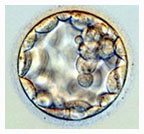
    blastocystPart of the struggle in the stem cell debate is the definition of terms. The media regularly uses the term embryo to refer to what is necessarily destroyed to obtain embryonic stem cells. The more specific term is blastocyst. The blastocyst (see picture) forms after about 5-7 days following fertilization and ends at about 14 days when further differentiation begins.

    Medical thriller author Robin Cook in his latest book, Seizure, has one of his characters, a medical researcher Dr. Daniel Lowell, testify before Congress that “Blastocysts have a potential to form a viable embryo, but only if implanted in a uterus. In therapeutic cloning, they are never allowed to form embryos… Embryos are not involved in therapeutic cloning.” (p. 32) The clear implication is that blastocysts are not embryos. This sounds extremely disingenuous to me.

    Cook further clarifies his personal opinion in the epilogue where he states, “Senator Butler [a predictably hypocritical, pompous pro-life senator–my comment], like other opponents of stem-cell and therapeutic cloning research, suggests that the procedure requires the dismemberment of embryos. As Daniel points out to no avail, this is false. The cloned stem-cells in therapeutic cloning are harvested from the blastocyst stage well before any embryo forms. The fact is that in therapeutic cloning, an embryo is never allowed to form and nothing is ever implanted into a uterus.” (p. 428) So if there are no embryos, there are no humans and there is no ethical debate. Cook is playing a semantic game. The character Daniel in the novel admits as much but says it is important semantics.

    So I checked Scott Gilbert’s fifth edition of Developmental Biology (Sinauer Assoc. Inc.), 1997. On page three Gilbert says, “The study of animal development has traditionally been called embryology, referring to the fact that between fertilization and birth the developing organism is known as an embryo.” By this definition, Cook is far off base as I suspected.

    But then I checked to see if Gilbert had a newer edition. Sure enough, I found one on Amazon.com. The year is not stated but I suspect it is at least 2002-2003. Not surprisingly, I suppose, the same definition of embryology is stated differently (some pages are available for viewing): “The study of animal development has traditionally been called embryology, from that phase of organisms that exists between fertilization and birth.” (p. 4) Note that the word “embryo” is omitted this time, yet the word “embryology” clearly means the study of embryos. So Gilbert tries to backpedal from the word embryo yet inadvertently defines embryo anyway by simply trying to define embryology at all. I wonder if Gilbert and Cook know each other. <smile> Note also that human embryonic stem cells were first harvested successfully from embryos left over in fertility clinics by researchers from the University of Wisconsin in 1998, one year after Gilbert’s 5th edition.

    Even biologists are now learning how to manipulate the language to define things however it suits them politically.

    © 2004 Probe Ministries


    “Your Critique of Sociobiology Makes No Sense”

    Perhaps I have severely misunderstood your critique on sociobiology, but as I interpreted it, it makes no sense. From the sociobiologist proposition that all human nature and behavior is shaped solely by evolutional necessity (and what promotes reproduction and survival), it does not follow, as you have asserted, that any significant hope and meaning in life is precluded. I don’t know what kind of a faculty member you were talking to, but the question you posed (“What difference does it make if I’ve reproduced once I’m dead?”) is an easy one to answer. The goal of humanity, as believed by sociobiologists, is to pass on its genetic legacy. No single organism is particularly important, but only the collaborative propagation of a species of its genes. Therefore, the difference of whether or not one has reproduced by the time of death is a crucial one. One who dies and leaves no offspring does not pass on any genetic legacy, and is truly, in an evolutionary sense, dead. Those who do leave offspring and die are able to, in an evolutionary sense, live on vicariously through the genes that they pass on to their young, and the genetic legacy continues.

    In response to the philospher’s division of life purpose into ‘small letters’ (survival/reproduction) and ‘capital letters’ (ultimate meaning and significance, whatever that means), the sociobiological assertion is that survival and reproduction is the ultimate meaning and significance of life. I think one of your crucial errors is that you assume that knowledge of the cause and origins of human nature actually change the validity of human nature itself, and somehow make our ambitions less “lofty. Well, our nature is what it is and we do what we do. We love our children and spouses with all our hearts, and if we do so only for the sake of evolutionary efficacy, than so be it, but our feelings do not therefore become false and invalid. We at times act selflessly and help others at the expense of ourselves. But if this behavior is ultimately ‘genetically selfish,’ ostensibly helping others while really benefiting ourselves, than so be it, but these feelings are nevertheless meaningful. A principal proposition of sociobiology is that we have motives to act of which we are not always consciously aware. That does not mean they do not exist, and if they do exist, then following them does not make our lives inherently worthless.

    Perhaps the sociobiological argument is not particularly aesthetically pleasing (which I think is really your main objection), but this is not by any means grounds for a scientific rebuttal.

    Sincerely and respectfully,

    ______, Ph.D.
    I believe you are the first to question my critique along these lines. I will attempt to answer your objections in the body of your initial message.

    Perhaps I have severely misunderstood your critique on sociobiology, but as I interpreted it, it makes no sense. From the sociobiologist proposition that all human nature and behavior is shaped solely by evolutional necessity (and what promotes reproduction and survival), it does not follow, as you have asserted, that any significant hope and meaning in life is precluded. I don’t know what kind of a faculty member you were talking to,

    He was the head of the department of ecology and evolution.

    but the question you posed (“what difference does it make if I’ve reproduced once I’m dead?”) is an easy one to answer.

    To be clear, my question was “Once I am dead and in the ground (implying that in a naturalistic worldview since there is no afterlife, my life is absolutely over), what difference does it make to me NOW?”

    The goal of humanity, as believed by sociobiologists, is to pass on its genetic legacy. No single organism is particularly important,

    Precisely why I made my question very personal.

    but only the collaborative propagation of a species of its genes. Therefore, the difference of whether or not one has reproduced by the time of death is a crucial one.

    Not to the species but to me, but I no longer exist.

    One who dies and leaves no offspring does not pass on any genetic legacy, and is truly, in an evolutionary sense, dead.

    So what? My genes are not me, they are just molecules. If, as E. O. Wilson summarized in Sociobiology: The New Synthesis, The organism is just DNA’s way of making more DNA, then I don’t really matter anyway. And once I am dead and no longer exist (organism), nothing makes any difference to me since I do not exist. That is why the professor said that “ultimately” it doesn’t really matter. He got the gist of my question.

    Those who do leave offspring and die are able to, in an evolutionary sense, live on vicariously through the genes that they pass on to their young, and the genetic legacy continues.

    I don’t live vicariously in my genes. They are now part of a new unique creature that combines my genes with a woman’s genes in a new and totally unique combination. Even a clone would not be exactly “me” since mutations and recombinations would have occurred, erasing my genetic identity.

    In response to the philospher’s division of life purpose into ‘small letters’ (survival/reproduction) and ‘capital letters’ (ultimate meaning and significance, whatever that means),

    Some meaning for existence beyond the mere physical.

    the sociobiological assertion is that survival and reproduction is the ultimate meaning and significance of life.

    But as I state in the article, without some meaning for life that arises outside of ourselves, there is no meaning in small letters. If we are just molecules, then that’s it! We are just molecules, nothing more can be said about us. How those molecules get arranged or persist or are annihilated is totally irrelevant to the ongoing history of the universe. Nothing cares and nothing therefore matters.

    I think one of your crucial errors is that you assume that knowledge of the cause and origins of human nature actually change the validity of human nature itself, and somehow make our ambitions less “lofty.”

    How can this not be so? From Darwin to today, evolution is said to be without direction and without purpose and we are mere accidents of history. This is not a conclusion of evidence, but of philosophy. For many it is a specific attempt to remove any form of God from the equation of who we are and where we came from. Once that is done we are free to make our own rules. When Richard Dawkins writes that Darwin made it possible to be an intellectually fulfilled atheist, he means it, at least partially, for the purpose of the freedom from any kind of imposed morality. Dawkin’s watchmaker is not only blind, but totally without sympathy to whatever outcome comes about through natural selection. Specifically as to whether I reproduce or not.

    Well, our nature is what it is and we do what we do. We love our children and spouses with all our hearts, and if we do so only for the sake of evolutionary efficacy, than so be it, but our feelings do not therefore become false and invalid.

    Certainly it becomes false and invalid, because I am only being manipulated by my genes which have been formed by thousands of generations. I am not really choosing, just reacting according the program established by natural selection.

    We at times act selflessly and help others at the expense of ourselves. But if this behavior is ultimately ‘genetically selfish,’ ostensibly helping others while really benefiting ourselves, than so be it, but these feelings are nevertheless meaningful.

    How can they be “meaningful” if they are ultimately selfish and not altruistic at all? That’s why Trivers adds the word “reciprocal” in front of the word because simple altruism no longer exists in a sociobiological world.

    A principal proposition of sociobiology is that we have motives to act of which we are not always consciously aware. That does not mean they do not exist, and if they do exist, then following them does not make our lives inherently worthless.

    Certainly they exist, but their source is crucially important. If I pull the string on a Chatty Cathy doll and she says, “I love you,” does she really love me? Of course not. But we are no different according to sociobiology. We are both complex arrangements of molecules uttering responses based on an internal program conditioned to respond to outside stimuli (pulling a string or gazing at our newborn’s cute and cuddly face).

    Perhaps the sociobiological argument is not particularly aesthetically pleasing (which I think is really your main objection), but this is not by any means grounds for a scientific rebuttal.

    Indeed, it is not aesthetically pleasing, but sometimes truth is hard to take, agreed. But that is not my problem. There is no purpose beyond survival and reproduction which is merely an illusion perpetrated on us by our brains which has been constructed by natural selection to simply aid survival and reproduction, not to recognize truth. And our entire body doesn’t really matter, just our genes which are simply reproducing themselves because that’s just what DNA does. But DNA is just a mindless molecule with no purpose or goal or direction. How then can we have any?

    Respectfully,

    Ray Bohlin, Ph.D.
    Probe Ministries