“What Is Carbon-14 Dating?”

What exactly is carbon 14 testing and what are its limitations? I will be explaining this to 7th graders.

Carbon 14 dating essentially tests how long something has been dead. In the atmosphere solar radiation transforms a predictable number of nitrogen atoms into radioactive carbon (carbon 14). Carbon 14 then becomes incorporated into carbon dioxide which is taken up by plants and used to produce sugars by photosynthesis. The carbon then moves up the food chain from herbivores to carnivores. Normal carbon is carbon 12. Therefore there is a constant ratio of carbon 12 to carbon 14 in the atmosphere and consequently in living things. There is a far greater abundance of carbon 12 than carbon 14 and the radiation is a very low level and is not hazardous in and of itself. When a creature or plant dies, the inflow of carbon 14 stops and decay begins. After 5,568 years half of the carbon 14 has reverted back to nitrogen. This is referred to as the half-life. Therefore, after every 5,000+ years, there is half-again the amount of carbon 14. Usually after 10 half-lives there is not sufficient carbon 14 left to measure. The limit of carbon 14 then is about 50,000 – 60,000 years.

This dating method is based on some crucial assumptions that are difficult to verify. First, it assumes that the rate of transformation of nitrogen to carbon 14 in the atmosphere is constant through time. It turns out that this has not been the case and scientists have found greater/lesser abundances of carbon 14 in times past yielding dates that are to young or too old respectively. Second, it assumes that there is no other source of carbon 14 in living things which has not been investigated very thoroughly.

Another complication has been recent reports that indicate that supposedly ancient sediments are producing trace amounts carbon 14 where there should be none at all. By ancient I mean sediments that are traditionally dated as being millions of years old. (see www.icr.org/research and click on the article “Measurable C14 in Fossilized Organic Materials.” Either the c14 dating method is worthless or these sediments are nowhere near as old as suspected.

Hope this helps.

Ray Bohlin
Probe Ministries


“Stop Wasting My Time About Life on Other Planets”

I have a comment on one of your recent broadcasts, Are We Alone in the Universe?.

I listen to your broadcast because it is sandwiched between two of my favorite shows on Moody Radio. I just happen to hear it because I’m too involved in my work at the time to change the channel. I find the current discussion obnoxious and a waste of radio space. I also think you’re setting yourselves up for more “see, Christians are just insecure, intellectually dishonest bigots who won’t look at ‘scientific’ evidence that their beliefs are all wrong.” In the event that evidence of life on Mars or in an asteroid, or any other source be discovered, or fabricated, you will look like idiots. If it isn’t discovered anytime soon, people will argue that we simply haven’t had enough time. What’s the point? It all depends on what people WANT to believe.

Quite frankly, the discovery of life on other planets, or the converse for that matter, won’t prove anything about God. “Possibility” is a function of probability times occurrences. The Universe is a big place. So any good evolutionist worth his salt will argue “maybe the chances are infinitesimal that life could have arisen by chance, but look how big the Universe is.” And, “See? The fact that life is so rare and hard to find only disproves the need for a designer, since we can’t find it anywhere else.”

No one is going to get saved by the “facts.” The point is whether or not the Holy Spirit has access to someone’s life and whether they chose to accept Christ or arrogantly say “Well, I have to have proof, and I have to know it ALL ahead of time.”

Please stop wasting my time with this convoluted hogwash. It’s not edifying. I’m sure the person who put the show together worked very hard on it, but it just doesn’t add anything to my day or give me witnessing tools. This discussion is Medieval. IF there is life on other planets, God put it there, He knows it’s there, He has some plan for it, and if their Genesis doesn’t have a happier start, He probably went there, died, and rose again for their salvation. IF NOT, the fact that we are alone is part of God’s plan too. My Christianity is not threatened by the prospect either way.

I am sorry you do not find our programming useful or meaningful. Our program is meant to help Christians to make sense out of the many-faceted assault on our faith in the midst of this post-Christian society. I assure you that many of our listeners find our programming stimulating and informative.

The purpose of the particular program you commented on was to help Christians see the underlying philosophical reasons behind our society’s fascination with extraterrestrials. They really are afraid of being alone because they have excluded God from the equation and if we are all there is, to them this is terrifying! I use this to engender a sense of compassion for the lost rather than condemning their beliefs. We need to see the fear behind their assertions to give us understanding and to truly be all things to all people so some may be saved. It is difficult to witness to a culture we don’t understand.

I am sorry if this intent was not clear to you, or even if it is, you still think it a waste of time. Hopefully some of our other programs can be of more redeeming value to you.

Additional comments follow.

Not sure I’m writing to the correct address, but I have a comment on one of your recent broadcasts. The series concerns whether or not there is/may be intelligent life in other parts of the universe or whether we are “all alone.” I listen to your broadcast because it is sandwiched between two of my favorite shows on Moody Radio. I just happen to hear it because I’m too involved in my work at the time to change the channel. I find the current discussion obnoxious and a waste of radio space. I also think your setting yourselves up for more “see, Christians are just insecure, intellectually dishonest bigots who won’t look at ‘scientific’ evidence that their beliefs are all wrong.” In the event that evidence of life on Mars or in an asteroid, or any other source be discovered, or fabricated, you will look like idiots. If it isn’t discovered anytime soon, people will argue that we simply haven’t had enough time. What’s the point? It all depends on what people WANT to believe.

But why do they want to believe it is the important question. I was trying to explore this very question to help Christians understand the culture around us to be more effective witnesses.

Quite frankly, the discovery of life on other planets, or the converse for that matter, won’t prove anything about God.

Agreed. But many scientists today look for life elsewhere to bolster their confidence in evolution and therefore push God even farther away.

“Possibility” is a function of probability times occurrences. The Universe is a big place. So any good evolutionist worth his salt will argue “maybe the chances are infinitesimal that life could have arisen by chance, but look how big the Universe is.” And “See? The fact that life is so rare and hard to find only disproves the need for a designer, since we can’t find it anywhere else.”

Hardly. Evolutionists currently believe that life is inevitable and must find evidence of extraterrestrials life to confirm this belief. So evidence of its rarity IS evidence for design and evidence against chance.

No one is going to get saved by the “facts.”

Agreed, but we can remove the barriers people erect so they can get a clearer look at the cross. Paul felt the “facts” of the resurrection quite important in 1 Cor. 15:1-19. He felt the facts of Creation quite important in Rom. 1:18-20. Facts don’t save anyone but they do point the way to our need of a Savior. Many are looking for that Savior in the form of an ET. We can only help them by pointing out that this hope is an illusion.

The point is whether or not the Holy Spirit has access to someone’s life and whether they chose to accept Christ or arrogantly say “Well, I have to have proof, and I have to know it ALL ahead of time.”

No one knows it all ahead of time, but to a few people, indeed, I would say most, a few facts are needed to help draw them to faith. Faith is not blind. Everybody has some kind of faith. The issue is whether our faith is placed in something we can rely on. Is the object of our faith true and reliable?

Please stop wasting my time with this convoluted hogwash. It’s not edifying. I’m sure the person who put the show together worked very hard on it, but it just doesn’t add anything to my day or give me witnessing tools. This discussion is Medieval.

All I can and will say is that I’m sorry you feel that way, but that we at Probe and most of our other listeners disagree.

IF there is life on other planets, God put it there, He knows it’s there, He has some plan for it, and if their Genesis doesn’t have a happier start, He probably went there, died, and rose again for their salvation. IF NOT, the fact that we are alone is part of God’s plan too. My Christianity is not threatened by the prospect either way.

Agreed. But it’s not your Christianity I am worried about, but the millions of misinformed fearful souls who are putting their hope and trust in extraterrestrials.

Respectfully,

Ray Bohlin, PhD

“How Does the Continental Divide Relate to Creationism?”

My 10-year-old son is studying the great continental divide in school–how does that relate to creationism? His teacher said it doesn’t affect your view of creation, even though she is claiming it happened millions of years ago.

The fact that the great continental divide exists and how it got there are two very different issues. Honestly, for a 10-year old, he can probably learn all he needs to know about the divide without needing to debate how or when it arose. If the geological development is part of the lesson, your son can always regard the timeframe a separate issue, or simply resolve to understand how most geologists explain it without committing himself to accepting their entire explanation. I would recommend he learn what is required of him and simply resolve to keep his mind open to the timeframe issue. Creationist flood-model geologists would explain the rising of the Rockies (hence the continental divide) by the same mechanisms as evolutionary geologists, just over a much shorter time frame.

Hope this helps.

Respectfully,


Ray Bohlin
Probe Ministries


“I’m Interested in Grad School in Intelligent Design”

Dear Dr. Bohlin,

Thank you for your reply to my earlier letter, and yes I am interested in graduate school. I am under a little pressure though, as I am an older student with a wife and two sons. At this time it seems I will have to pursue some type of professional or graduate school in order to use my degree to any extent. I am still trying to decide what I want to be when I “grow up.” I am tired of school simply because of the continual attacks on my beliefs. I would very much like to pursue further schooling if I could find a school and professors that are a little more user friendly. I would like to hear more of what you have to say along the lines of Intelligent Design professors. As a matter of fact, I can’t wait. I was ready to drop out this week, but between your letter and my counselor’s advice I have managed to hit my last two exams in full stride and I feel renewed about school. Thank you again and I hope that you have more good input for me.

I’m glad to hear that a few things came together to encourage you. If nothing else the list of professors below could better help direct you and fashion your goals. They may also have other suggestions for you.

Here are a few names to research for possible graduate school.

  • Mike Behe is professor of Biological Sciences at Lehigh University.
  • Scott Minnich is associate professor of microbiology at the University of Idaho.
  • Dean Kenyon is professor of biology at San Francisco State University.
  • Paul Chien is professor and Chairman of the Biology department at the University of San Francisco.

Behe, Minnich, Kenyon, and Chien are fellows of the Discovery Institute’s Center for the Renewal of Science and Culture. You can find a short bio for each at www.discovery.org/crsc/fellows/index.html.

I don’t know anything about these guys need or desire for graduate students but I do know that Minnich has an active research program utilizing graduate students. Behe has cut back some of his research to focus on promoting intelligent design, so I’m not sure where he is at in being able to support graduate students. If you haven’t read Behe’s Darwin’s Black Box you should do so ASAP.

I also understand your plight as an older graduate student with a wife and two kids. I started my Ph.D. program in 1983 when my boys were 1 and 3. It is difficult and you can’t devote the lab time that other single students can but because I knew this was where God wanted me and my wife was fully supportive, God supplied our needs. I also made sure my boys received scheduled time with Dad that I protected almost at all costs. For years I took them out individually for breakfast on Saturday mornings which they loved. We rarely had “important” conversations but time alone with Dad at least every other week helped let them know that they were important to me. In retrospect I could have scheduled a little more time. I also scheduled my nights in the lab. Everybody knew Dad wasn’t home on Tuesday and Thursday evenings. This helped keep me from disappointing them with random evenings away from home. I could schedule long experiments on those days and keep disappointments to a minimum. I also stayed away from the lab on Sundays except for occasional quick trips for maintenance of ongoing experiments. It’s tough but can be done. But total support from your wife is essential. The long term demands on your time put a big strain on her and she needs to believe this is what God wants for you and your family.

Respectfully,

Ray Bohlin
Probe Ministries


“How Do I Approach a Carl Sagan Fan?”

Dear Dr. Bohlin,

I’m a pastor that is meeting with a young man who is planning to marry a young lady that is a member of our church. This young man, who is in his twenties, said that he believed in God–much like Carl Sagan. He seems to have a postmodern view of truth, but my question is, how can I read up on the spiritual views of Sagan? Do you know any websites or critiques on Sagan? I read your article “Contact: A Eulogy to Carl Sagan“–what would be the best approach to this young man?

It sounds like you have a rather sticky situation on your hands. Believing in God “like Carl Sagan” means little more than a deistic belief in some kind of super intelligence that helped order our universe but has no personal involvement with it or you and me. Sagan had a profound dislike for any thiestic belief, particularly Christianity. His novel Contact brings this out much more strongly than the movie adaptation.

My concern would be that the young man is saying some things to help smooth things out with his bride-to-be, but is potentially hostile to her beliefs. Sagan basically believed Jesus was a good man but not God (page 167-173 of the Pocket edition of the novel Contact. The character of Ellie Arroway is basically Sagan personified, so these seven pages will give some insight into his thinking. It’s about twelve pages into Chapter 10 if you find a different edition). My fear is that he would eventually ridicule or otherwise try to undermine her faith with science and skepticism.

I would ask him if Sagan was a hero of his and do his ideas about God and religion coincide with Sagan’s. If yes, does he hold the same disdain for Christianity and clergy (yourself) as Sagan did? This will perhaps force him to come a little cleaner and bring a little more understanding to the situation. He should be concerned with devaluing the belief system of the person he says he loves. If your intuition is correct about his taking a rather post-modern view, he should be senstitive to this. After all, truth is impossible to know so if it’s true for her great, what’s it to him?

Would he ever come to church with her?

What about children, how should they be raised? As skeptics or in the church?

I agree with your suspicion I sensed from your message. These kids need some hard questions asked of them. What are her thoughts? Does she think she can convert him? This rarely works out, but if this is her intent, is she ready to follow the prescription in 1 Pet. 3:1-2? Most women find this difficult even with a saved husband who has wandered away.

There is a potentially fatal divergence of basic world views which will affect nearly all aspects of their future lives. Maybe they just need to wait a little longer and give each other some time to explore these differences before committing to marriage.

Well, I have said a lot for someone who has little knowledge of the individuals involved.

Hope this helps.

Let me know if I can be of further assistance.

Respectfully,

Ray Bohlin
Probe Ministries


“What are the Criteria for Euthanasia?”

I have a co-worker who is a fellow Christian and we are in a dispute over the issue of euthanasia. We have agreed to let you settle this dispute.

I contend that euthanasia is only considered to be “euthanasia” when there is a deliberate attempt to end a person’s life using some medical tool that speeds up the timeframe of a natural death, i.e. lethal injection. He contends that removing life support from a patient should also be considered euthanasia. I argue that removing life support allows for a natural death according to God’s timeframe. He argues that if a patient does not receive all that medical science offers to prolong life, then that is in effect killing this patient according to our own timeframe, since it is God who gives us the scientific knowledge to have access to these life support systems. He has an interesting point, but I simply don’t agree with him and can’t find anything in the scriptures that affirm either argument. Can you help us?

Regarding withholding treatment of a dying patient, you are both right depending on the circumstances. When a patient is truly and imminently dying (and we can know this since certain bodily functions can begin to irreversibly shut down such as the ability to eliminate fluids), continuing normal body maintenance such as food and water can actually increase the patient’s discomfort without altering their chances for survival. This is little more than torture for no intended purpose. Letting nature take its course and relieving as much discomfort and pain as possible is a completely humane and biblical course of action. Some may argue that prolonging life in this instance may allow God an opportunity to work a miraculous healing. We simply have to ask ourselves, How much time does God really need? If He is sovereign, then He will act in His timeframe, not ours.

However, if the person has a terminal illness but the acute death process has not yet begun and there are normal measures that offer hope and comfort without adding an unnecessary burden, then these measures ought to be pursued. But I must emphasize that this is a tricky judgement call. An Alzheimer’s patient is dying and will die relatively soon, but when do normal measures become more of a burden than a help? In Joni Eareckson Tada’s 1992 book, When Is It Right to Die?, she tells of her father who suffered a series of strokes and could no longer expel waste fluids. They chose to remove the IV (which would simply have bloated his body and not nourished it) and simply soothe his mouth and lips with ice chips as his body died. However, she strongly insists that patients in a Permanently Vegetative Stae (PVS) are severely disabled but not dying, and they deserve whatever care we can give them.

These decisions will always require a host of opinions—medical, familial, and pastoral—to arrive at the best course for this individual patient. Hard and fast rules will lead to abuses which is one of the reasons why pro-euthanasia laws are always a bad idea. They simply can’t cover all the possible contingencies, now or in the future. Regulations will be impossible to write and to enforce.

Respectfully,

Ray Bohlin
Probe Ministries


“Vegetarianism is a More Biblical Diet!”

I, as a vegetarian and a Christian, thought it important to point out that being a vegetarian is the more “natural” form of diet considering the Garden of Eden. In Genesis 1:29 we see that God gives the the fruits and seeds, vegetables etc…”as meat,” causing one to consider then obviously He (God) made a distinction between the meat of animals and the meat for humans to eat. I personally try to eat as close to Gen 1:29 as possible….this is not saying that meat is wrong–Jesus ate meat–yet Hinduism is simply ripping off God’s original plan and adding a twist of spirituality to what God intended to be natural and common sense. I am also not making a blanket statement that meat is unclean…not calling unclean what was made (or possibly created to be?) clean…considering the mass production of cattle in the U.S. and horrible sanitation we have adopted as common practice in the meat industry largely as a whole…we owe it to ourselves to consider these points that:

  1. God created man for a plant based diet
  2. That changed when sin entered the picture
  3. We are God’s temple, BODY, soul and spirit
  4. Animals being killed and eaten was symbolic also of Jesus’ sacrifice and our remembrance of Him in communion (a bit of foreshadowing). Also possibly why when meat consumption is documented it is only in special occasions–e.g.: symbolic feasts, sacrifice of the priests, celebrations of significance–but not frivolously. One would soon run out of cattle if you were eating them all the time. You wouldn’t sin too much either if you had to sacrifice cattle all the time.
  5. We are never commanded to eat meat.
  6. The meat back then and the meat now are almost two completely different things (as far as healthy content and environment are concerned.

Anyhow, I thank you for you time and on a final note…nothing in this world is the Devil’s original idea…it is simply a twist of God’s original idea…this goes for religions as well as health practices. The religions of the world have truth to them but those truths belong to Christianity and have been twisted and blown way out of proportion. May God bless you richly. Grace and Peace.

I agree with much of what you wrote but I would not go so far as to say that vegetarianism is more natural from a Biblical perspective. Clearly that was God’s initial intent, but the Fall changed many things as you indicated. Sin was not natural to our being before the Fall but is quite natural after. So it is quite possible that most of our bodies are going to struggle on a purely vegetarian diet as a result of changes wrought by the Fall. In fact, the care and knowledge needed to follow a strictly vegetarian diet and remain healthy, may indicate that in our fallen state, a diet that includes meat may be more natural. Just a thought.

Also we are clearly told that we can eat meat in Genesis 9:3, “Every moving thing that is alive shall be food for you; I give all to you, as I gave the green plant.” It is the same language and tense as in Genesis 1:29. Neither statement is strictly a command but God’s intent is made quite clear.

Respectfully,

Ray Bohlin
Probe Ministries


“Is It OK for Christians to Drink in Moderation? Didn’t Jesus Drink?”

Is all alcohol “bad,” so to speak? I thought at a point in my studies that if someone imbibed alcohol at any point that it was a sin, but recently I’ve begun to read scripture that might be interpreted differently.

I know that any form of drunkenness is a sin. However, there are illusions to a possible use of alcohol as a healing agent in “a little wine for thy stomach’s sake, and thine often infirmities” (1 Tim. 5:23). The question I have, is that the gospel of Matthew speaks about John, and how he ate sparingly and drank nothing (indicating alcohol, unless by divine favor he could exist without fluid whatsoever). Then it says that the Son of Man, which I have been told is how Jesus referred to himself, ate and drank, even going so far as to say that people called him a “winebibber” (Matt. 11:12-20). Does this mean that Jesus drank wine, meaning that it is not a sin to drink wine? For we know that Jesus did not commit sin while here on earth, therefore if he did drink wine, it is not a sin to do so, unless you cross the boundaries of gluttony or alcoholism. Or is Jesus repeating one of those slanderous terms to refer to the way that people intended to demean his name?

Then we come to another verse that states that we as Christians should not do anything that could be perceived as wrong, that we may not lead another to do the same (1 Cor. 10). Would buying and drinking alcohol fall under this category of sin? Drinking beer or wine may appear sinful to those who believe it to be so, therefore would it not be a sin for me as a Christian to go purchasing a bottle of wine or brandy, even if for cooking or celebrating a special occasion?

Your reasoning appears quite sound from my perspective. I believe that Jesus did drink wine based on the accusation you mentioned and the fact that he turned water into “good” wine at Cana. Even if this wine was of a lesser alcohol content than our current choices, the fact remains he wouldn’t have made wine that he didn’t expect people to drink with his approval.

Your concern about choices we make that concern a weaker brother or sister are valid. This is also a personal choice. However, many Christians I know who do drink alcohol, only do so in the privacy of their home or at a restaurant where they do not expect to see someone who might be offended. This may seem risky but it also has a lot to do with the church you fellowship at. If the vast majority of your fellowship believe any drinking of alcohol is sin, this would seem a large risk not worth taking. Other churches are more tolerant and there may be little risk at all. This does explain why many pastors choose not to drink alcohol and many seminaries and Bible colleges require students, faculty and staff to sign statements promising not to drink while associated with the institution. Many of their constituents would not understand.

Using alcohol in food preparation is a different issue. If there is to be cooking involved, the alcohol from the beer, brandy or wine is boiled off by the time it gets to the dinner table (alcohol boils at a lower temperature than water). It’s the flavor you’re after. Various kinds of alcohol, depending on the recipe, add just the right flavor and no alcohol is consumed.

I see nothing in Scripture which forbids the drinking of any alcohol. There are plenty of warnings for over-indulging. Sometimes the decision of whether to drink at all needs to be based on the ability to resist the temptation to drink too much. Some people never really learn to just enjoy a glass of wine or a beer without adding two or three more. Such an individual is better off not drinking at all. (If your hand causes you to sin, cut it off, Matt. 5:30.) And I do know of Christians who drink a little wine with certain meals because it actually does aid their digestion! This is not a myth. Some people have trouble digesting beef (a real uncomfortable feeling results) without some red wine. But the decision regarding a weaker brother or sister is one of individual conscience and the particular fellowship in which you reside.

I hope this helps.

Respectfully,

Ray Bohlin
Probe Ministries


“Weaknesses in Wild at Heart”

Read your article “Is the Tender Warrior Wild at Heart?” on the Probe website. I have studied Eldredge’s book in a one-on-one mentoring situation, and in a small men’s group. The book came highly recommended.

I found it interesting, but left us hanging and created unresolved gaps in thinking and process. My one big question centered around “the wound” — what about the man who has already addressed and recovered from his wound? The exploration of it only creates more anguish, not healing; more pain, not godliness.

As a pastor, teacher, and consultant, I have encountered several churches who have or are using “Wild at Heart” but finding the need to augment the material. Too bad, since there is some good material in here as well. But for many (and myself), too much to sort through and interpret, so not worth the trouble… There are other resources.

Interesting analysis you did, though. Thanks for your thinking on it.

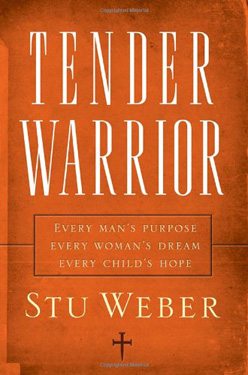
Tender WarriorThanks for your reaction and comments on Wild at Heart. I agree with much of your concerns and criticisms of the book. Hopefully you caught some of that in my article. (There is a little more in an extended footnote at the end of the article.) I too have found it valuable but incomplete. I believe the book is largely written for those men who have spent most of their lives on the sidelines. Tender Warrior continues to be my book of choice for mentoring all men on God’s intention for a man. Those who have experienced a vital walk with the Lord and a fulfilling ministry will only find Wild at Heart helpful in understanding why so many men never get to that point.

Thanks again for your input.

Respectfully,

Ray Bohlin
Probe Ministries


“Can Deacons Be Divorced?”

Please let me know what your thoughts are on the qualifications for deacons when the Bible speaks in 1 Timothy 3:12 about a husband of one wife. I know of a man that is serving as a Deacon that has been divorced 2 times and now he is married to his third wife. This has really bothered me. I have talked to a couple of people and they cannot give me answer, one of these being a minister. They say that if they go to Christ and ask for forgiveness that it is OK but I do not know what the scriptures say about being a Deacon. Thanks for your help.

I have served as an elder and as a chairman of the elders at our church and have spent a good deal of time studying the qualifications for elders and deacons. The general consensus of evangelical scholars on the phrase “husband of one wife” in both 1 Timothy 3 and Titus 1 is that it means the husband of one living woman. That is, it allows for a man to serve as an elder or deacon if his wife has passed away and he has remarried. This would seem to allow for a man to serve in these church leadership positions if he has been divorced and remarried. This is where it gets tricky. Jesus seemed to allow for divorce in the case of adultery (Matthew 5:31-32) and Paul added an allowance for divorce if left by an unbelieving spouse (1 Corinthians 7:15). If a man seeking the office of elder or deacon had an unbelieving wife who left and divorced him, I would consider him eligible for office as long as he meets the other qualifications. However, if a believing wife and husband have sought divorce and the husband has remarried and is now seeking the office of elder or deacon, this would require a much deeper investigation into the circumstances. If the grounds for divorce were not biblical, then the subsequent marriages are suspect. I would not be inclined to allow such an individual to stand in church leadership because this would reflect poorly on their character and they may indeed be married in the eyes of God to two women. Paul instructs a married woman who leaves her husband to remain ummarried unless it is to be reconciled to her husband (1 Corinthians 7: 10-11).

The question today remains when you have a remarried couple who have sought forgiveness for their sin, what then? They may be forgiven and brought fully into the fellowship of the church but that does not necessarily mean the husband is qualified for an official position of leadership in the church. Elders and deacons are held to a higher standard. If I were divorced while a believer, I would no longer consider myself eligible for official leadership in the church. I can still serve and have a ministry but not as an official elder or deacon. I believe each situation must be evaluated individually and in depth. A man who has been divorced must expect to be questioned thoroughly about the nature of the divorce and whether any sin involved has been fully repented of, if he desires to serve as an elder or deacon. Also please understand that different evangelical churches have come to different conclusions on this question.

I am not a theologian nor a pastor, but this is my opinion as I read the Scriptures and have had to deal with this question as an elder.

Respectfully,

Ray Bohlin
Probe Ministries