The Scandal of Blood Atonement: “Why All the Blood and Cross-Talk, Christian?”

The story of Jesus’ death and resurrection raises accusations that Christianity is obsessed with blood. Many believers struggle with this too. Byron Barlowe explores the biblical reasons for the focus on Christ’s blood and why its shedding was necessary.

The Bloody Cross: A Tough Thing to Handle

download-podcastEaster season is all about the death and resurrection of Christ—which centers on the blood sacrifice He endured. Christianity is called a bloody religion, focusing on the execution of Jesus Christ on a cross. Why is this true and what does it mean when we say His blood atones for our sin?

Millions of Americans—and billions of Christians around the world—celebrated the death and Resurrection of Christ during Passion Week and Easter Sunday. The topic was everywhere from sermons to a CNN docudrama titled Finding Jesus: Faith, Fact, Forgery.

You may have questions about all the talk of “the blood of Christ” and songs saying things like “Jesus’s blood washed away my sins.” This bloody theme does raise understandable concerns that are shared by believers, seekers and skeptics alike.

In fact, more and more skeptics are posting on the Internet things like this book promotion:

“Christians are obsessed with blood! They sing about it, declare they are washed in it and even drink it! In this book you will discover the crazy background to this Christian obsession and the truth about the bloodthirsty God they claim to know and serve.”{1}

In this article, we’ll discuss whether these charges are true and fair and explain the doctrine of blood atonement.

Again, even many Christians—including me—have wondered deeply about all the biblical imagery of shed blood, what some call the Crimson Thread of Scripture. I mean the grotesqueness of Old Testament animal sacrifice and the belief in Jesus’s torturous slaying as the core of salvation. Radical stuff for modern ears.

So what is blood atonement and why does it matter? In historic orthodox Christian thought, God’s Son is at the very center of history doing these things:

•  reconciling man to God,

•  ransoming humans from slavery to sin and well-deserved death and

•  justly recompensing God for the horrific offense of rebellion and disobedience to Him.

Thankfully, the gospel (or good news) is simple. The Bible claims, “Christ also died for sins once for all, the just for the unjust, so that He might bring us to God, having been put to death in the flesh, but made alive in the spirit.”{2}

The bottom line for all people is this: out of Christ’s death came the hope of eternal life—and His resurrection proved this. Our sin caused God’s Son to suffer and die. By grace, through faith, we can benefit. Otherwise, we suffer eternally for staying with the cosmic rebellion that started in a perfect Garden long ago.

Yet, this blood-centered good news is a scandal to both those who believe and those who deny it. In fact, the Greek root word skandalon is used for Christ Himself.{3} You see, Jews denied Christ as the Promised One and Gentiles thought it was all nonsense. Nothing has changed for mankind: the choices are either do-it-yourself religion, being too smart for all that, or believing in this radical hope.

The Reason Someone Had to Die

Why did anybody have to die? God’s justice and holiness demands a death penalty for the sinner.

We are all in a serious spiritual and moral pickle. Biblical Christianity declares that each person ever born is stuck under an irreversible “sindrome” for which there is no human answer. History sadly records the habitual and continual effects of sin: oppression, addictions, self-promoting power plays, deceit, war, on and on.

Now for a reality check: no moral order, either in a family, a company, military unit or society survives ambiguity or failure to enforce laws. Just ask the victims of unpunished criminals set loose to perpetrate again. If the Creator were to simply wink at sin or let people off scot-free, where would justice be? What kind of God would He be?

God is holy and He called Himself the Truth. There is no way God would be true to Himself and the moral order He created and yet fail to punish sin. Such impunity would mock justice. As one theologian puts it, “Pardon without atonement nullifies justice . . . A law without penalty is morally unserious, even dangerous.”

Ok, but penalties have levels of harshness. Why is death necessary? Scripture spells out clearly the decree that sinners must die. In God’s original command He stated, “When you eat of [the tree of the knowledge of good and evil] you will surely die” (Genesis 2:17). In Ezekiel the same formula appears slightly reworded: “The soul who sins is the one who will die” (Ezekiel 18:4, 20). Paul boiled it down this way: “For the wages of sin is death” (Romans 6:23).

God’s justice and holiness demand death for sin. Blood must be shed. Detractors of the cross tend to underestimate sin and know nothing of its offense to a holy God. Everyone wants justice—for others.

Ok, so what does a just and holy God do with impure, treasonous creatures He made to bear His image? God was in a quandary, if you will.

Yet, even in the Garden, He was already hinting at a plan to reconcile this dilemma. “God so loved the world” that he sent down His own Son as a man to pay the death penalty.{4}

Thomas Oden writes, “God’s holiness made a penalty for sin necessary . . . Love was the divine motive; holiness [was] the divine requirement. [Romans 5:8 reads] ‘God demonstrates His own love for us in this: While we were still sinners, Christ died for us’. [And as Romans 8 teaches,] This love was so great that God ‘did not spare His own Son, but gave Him up for us all’ (Romans 8:32).”{5}

Christ’s Death and Resurrection Was Unlike Other Religious Stories: It Was All for Love

God’s morally just demand for a death-payment is not the same as pagan gods, who maliciously demanded sacrifices. True for one big reason:

Isn’t this crucifixion thing simply about a grouchy god acting all bloodthirsty, as some atheists like popular author Richard Dawkins say? Should good people find this repugnant? One unbelieving critic wrote,

“Unfortunately, much of Christian art consists of depicting the sufferings and agony of Jesus on the Cross. This reflects the obsession of Christianity with the Crucifixion . . . “Crosstianity” [in the contemptuous words of one skeptic]. The obsession with ‘our sins’ having been ‘washed away by the Blood of the Lamb’ would be regarded as evidence of a serious mental illness . . . but when this is an obsession of millions of people it becomes ‘religious faith’.”{6}

Wow! Did you know that you, if you are a believer, are part of an insane global crowd? This vividly illustrates the scandal of the cross: “which is to them that are perishing foolishness” as the Apostle Paul described it.{7}

No, biblical sacrifice is not a bloodfest, but the way to deal with a sad reality. Put it this way: If God said, “Nah, don’t worry about rebelling against your Creator,” would that be a just and righteous God? Would a deity who fails to punish wrongdoing be worth following? Would His laws mean anything? Yet, we are unable to keep laws, so He steps in to pay that penalty. With His lifeblood. This storyline is utterly unique in the long human history of religions. And the resurrection Christians celebrate shows its truth in actual time and on this dirty earth.

Pagan myths of savior gods who rise from the dead have only a surface resemblance to the biblical resurrection. Such deities are more like impetuous and tyrannical people than the one and only Yahweh. The biblical God’s love fostered the unthinkable: set up a sacrificial system for a one-of-a-kind people—the Israelites—that served as a foretelling of His coup de grace: dying in man’s place as the spotless sacrificial Lamb. What a novel religious idea that only the true God could dream up! Theologian Thomas Oden says it this way: “It was God who was both offering reconciliation and receiving the reconciled.”{8}

God’s merging of perfect holiness, just retributive punishment and allowance of His Son’s execution was actually a beautiful thing. Francis of Assisi wrote that “love and faithfulness meet together [at the cross]; righteousness and peace kiss each other. Faithfulness springs forth from the earth, and righteousness looks down from heaven.”{9}

But Why a Violent, Bloody Death?

I get that death was demanded of someone to pay for sin. So why a bloody suffering and execution? Why the constant shedding of blood?

Mel Gibson’s The Passion of the Christ hit movie theaters in 2004 to mixed reviews. It earned its R-rating for gory bloodshed and, ironically, became a cultural scandal itself. Seems that the bloody realism was too much for both soft-core Christians and high-minded unbelievers. But this vividly poignant portrayal of Christ’s blood-stained Passion did raise a good question.

When it came to saving mankind, why the shedding of blood? Could God not have found another way? Church Father Athanasius believed that, if there were a better way to preserve human free will and still reconcile rebellious man to a holy God, He would have used it. Apparently, Christ’s suffering and death was the only solution.

The Apostle Paul summarized Christ’s entire earthly ministry this way: He “humbled Himself and became obedient unto death” (Philippians 2:8). At the cross, “human hate did all the damage it could do to the only Son of God.”{10} God used the realities available to Him, including the masterfully grim method of crucifixion, honed to a fine art by Roman pagans who viewed human life as dispensable.

Again, why is death demanded of God to atone for sin? The grounding for such a claim appears early in the Bible, after the murder of Abel by his brother Cain. In Genesis 9 Yahweh declares, “I will require a reckoning . . . for the life of man. Whoever sheds the blood of man, by man shall his blood be shed, for God made man in His own image.”{11} Apparently, God has put the price of a man’s life as that of another’s life.

The highlight of Christ’s death was its substitutionary sense. The Apostle Peter wrote, “For Christ also died for sins once for all, the just for the unjust, so that He might bring us to God, having been put to death in the flesh, but made alive in the spirit.”{12} Justice, fairness, reality itself demanded a bloodguilt payment for sin. Christ paid it.

Substitutionary sacrifice was nothing new for the Jews who unwittingly had the Messiah crucified. From the beginning of God’s dealings with His people, agreements were blood covenants. What else could carry the weight of such momentous things? And, as the book of Hebrews teaches, Indeed, under the law almost everything is purified with blood, and without the shedding of blood there is no forgiveness of sins.{13}

One theologian plainly said, “Through this sacrificial system, the people of Israel were being prepared for the incomparable act of sacrifice that was to come in Jesus Christ.”{14}

His suffering, death and resurrection conquered sin and neutered the fear of death. Only blood could clean sin; only God’s Son’s blood could do it perfectly and forever.

Here’s the scandal we spoke of: only a perfect sacrifice would do for washing mankind’s sins away and reconciling us back to God.

Beautiful Obsession: God Was Glad to Allow This Brutality for Us!

God said it was His pleasure to pay the death penalty with His own self, in the Person of His son. Christianity’s so-called blood-obsession is a beautiful picture of perfect divine love.

Theologian Thomas Oden summarized well our discussion of Christ’s blood atonement. He wrote, “Love was the divine motive; holiness the divine requirement. ‘God demonstrates His own love for us in this: While we were still sinners, Christ died for us’ (Romans 5:8).”

Such claims trump the understandable disgust of doubters. But the red blood leads to clean white.

Chick-fil-A restaurant employees are trained to say, “My pleasure” when serving customers. Imagine God saying that to believers regarding the cross of Christ! Paul explains in his letter to the Colossian church that “it was the Father’s good pleasure for all the fullness of deity to dwell in Him . . . having made peace through the blood of His cross . . . He has now reconciled you in His fleshly body through death . . .”{15}

God was glad to stand in as the essential scapegoat to restore us to right relations with Himself, to buy us back from slavery to sin, fear and death, and to abolish sin and its effects. This doesn’t sound like a bloodthirsty tyrannical deity demanding a whipping boy or abusing his own child, as some acidly accuse. “My pleasure” brings in new dimensions of lovingkindness and servant-heartedness.

But wait, there’s more! Scripture lists lots of wonderful effects created by the blood of Christ. These include forgiveness, propitiation or satisfaction of God’s righteous wrath, justification or being made right, reconciliation with God, cleansing, sanctification, freedom from sin, and the conquest of Satan.

Yes, you could say that Christianity is blood-obsessed. As accused, even its hymns often focus on the benefits bought at the highest of prices: the life of the God-Man Himself. One famous hymn goes:

For my pardon, this I see,
Nothing but the blood of Jesus;
For my cleansing this my plea,
Nothing but the blood of Jesus.

This beautiful blood obsession finds its highest hope in Revelation. The following is a prophecy about persecuted believers:

“These are the ones coming out of the great tribulation. They have washed their robes and made them white in the blood of the Lamb . . . For the Lamb in the midst of the throne will be their shepherd, and he will guide them to springs of living water, and God will wipe away every tear from their eyes.”{16}

Maybe the revelations here are as crazy as skeptics say. The foolishness of God. We believe they are the most glorious story ever told.

Notes

1. Promotion at Amazon.com for Obsessed with Blood: The Crazy Things Christians Believe, Book 1, by Ex-Preacher.
2. 1 Peter 3:18, NASB.
3. Romans 9:33, 1 Corinthians 1:23, 1 Peter 2:8.
4. John 3:16.
5. Oden, Thomas, Classic Christianity: A Systematic Theology (New York: Harper Collins, 1987), 405.
6. Meyer, Peter, “Why I Am Not a Christian”. Serendipity blog. Accessed 2-27-17, www.serendipity.li/eden/why_i_am_not_a_christian.htm.
7. 1 Corinthians 1:18.
8. Ibid., 414.
9. Ibid., 405.
10. Ibid., 389.
11. Genesis 9:4-6.
12. 1 Peter 3:18.
13. Hebrews 9:22-23, emphasis mine.
14. Oden, Classic Christianity, 413-414.
15. Colossians 1:19.
16. Revelation 7:14b-17, emphasis mine.

©2017 Probe Ministries


The Answer Is the Resurrection

Steve Cable shows us that the resurrection is the key apologetic for those seeking to evangelize. As we share our faith, understanding the evidence for the resurrection helps prepare us to answer questions raised by a seeker after the truth.

Making a Defense for Your Living Hope

A key verse for our ministry at Probe is 1 Peter 3:15 where Peter writes, “Sanctify Christ as Lord in your hearts, always being ready to make a defense to everyone who asks you to give an account for the hope that is in you, yet with gentleness and reverence.”{1}

download-podcastI want to encourage you to make this verse a motivator for your own walk as an ambassador for Christ. You might say, “I am not equipped to make a defense. Surely, this verse is talking to pastors and people like the researchers at Probe.” A deeper look at Peter’s letter shows us that this is not the case. Peter makes it clear that these instructions are for all Christians.{2} In addition, Peter wrote this verse in the imperative tense, meaning that it is a command, not a suggestion.

Okay. I want to be ready to give an account for the hope that is in me, but I need be clear on what that hope is. Fortunately, Peter answers that for us in chapter 1 where he writes, “Blessed be the God and Father of our Lord Jesus Christ, who according to His great mercy has caused us to be born again to a living hope through the resurrection of Jesus Christ from the dead, to obtain an inheritance which is imperishable and undefiled and will not fade away, reserved in heaven for you.”{3}

So, our hope is a living hope for an eternal inheritance reserved for us in heaven. If I am to make a defense for this hope of eternal life, I need to be able to explain why I believe that the source of this hope has both the capability and the motivation to follow through on this offer.

How do we get this living hope? Our hope comes “through the resurrection of Jesus Christ from the dead”! Jesus’ resurrection is the basis for our hope. If Jesus is not resurrected from the dead, we are of all men most to be pitied.{4} So, any defense of the hope that is within us begins with explaining why someone should believe in the resurrection. The empty tomb is the cornerstone to answering most other objections raised up against the gospel.

In the remainder of this article, we will look at evidence for the resurrection and how a defense of the resurrection is the foundation for answering many of the objections raised against Christianity.

Evidence for Jesus’ Resurrection

Giving an account for our belief in Jesus’ resurrection is the key to defending the hope within us. Several books have been written on this topic, and you can find a list of them in the transcript of this radio program on our Web site. The evidence for the resurrection as an historical event is so strong that even Dr. Antony Flew, until recently a noted proponent of atheism, had to admit, “The evidence for the resurrection is better than for claimed miracles in any other religion. It’s outstandingly different in quality and quantity, I think, from the evidence offered for the occurrence of most other supposedly miraculous events.”{5}

One help to remembering the overwhelming evidence is to think of the ten A’s attesting to Jesus’ resurrection:

1. Accurate predictions. Both the Old and New Testaments contain predictions of Jesus’ death and resurrection. Numerous times in the Gospels, Jesus told his disciples and the Jewish authorities that He would rise to life after three days in the earth. In John 2, at the very beginning of His ministry, Jesus told this to the Jewish leaders. It made such an impression on the disciples, that verse 22 tells us, “So when He was raised from the dead, His disciples remembered that He said this; and they believed the Scripture and the word which Jesus had spoken.”

2. Attesting miracles. Jesus’ resurrection was not a sudden miraculous cap to an otherwise unremarkable life. Jesus had consistently demonstrated His authority over the material universe from turning water into wine, to walking on the water, to healing the sick, to raising Lazarus from the dead. His resurrection is consistent with the power He demonstrated during His earthly ministry.

3. Agonizing death. Jesus had numerous opportunities to avoid a fatal confrontation with the Jewish leaders and Roman authorities. No one is going to go through a Roman scourging and crucifixion as a hoax. Jesus submitted to the cross because it was necessary to pay for our sins and He knew that He had the authority to conquer death.

4. Angry authorities. After word of Jesus’ resurrection began to spread, the Jewish authorities wanted to put a stop to people believing in Him. Producing the body of Jesus would have been the best way to do this. Even with support from the Roman authorities, they were never able to produce a body.

5. Absent body. The chief priests set a guard around Jesus’ tomb to make sure the body was not stolen by his disciples. Those guards knew their lives could be at stake if they failed in their duty, but on the third day Jesus was gone. Once they regained their senses, the guards “reported to the chief priests all that had happened.”{6} Why did they take this risk? Because they knew that there was no body to recover. No one has ever found any credible evidence that the body of Jesus was anywhere to be found on this earth.

6. Amazed disciples. After Jesus’ arrest, most of His disciples fled. It is clear from their reaction that they despised the cross and were not anticipating the resurrection. Two of his disciples did not recognize the risen Jesus even as He was teaching them the Scriptures related to Himself.{7} Their skepticism and shock showed that they clearly were not part of some preplanned hoax.

7. Agreeing eyewitnesses. After His resurrection, Jesus appeared to over five hundred people. They testified to His resurrection. We do not have a record of anyone disputing their testimony, saying “I was there with them and it was a hoax.”

8. Apostolic martyrs. People don’t die for something they know to be a hoax. Yet, many of these eyewitnesses accepted death rather than deny the resurrection of Jesus.

9. Agnostic historians. Contemporary, non-Christian historians reported that Jesus was reputed to have risen from the dead and that his followers were willing to die rather than recant their belief in Jesus.

10. Attesting Spirit. Over the centuries, the Holy Spirit continues to convict unbelievers and assure believers that Jesus is the risen Son of God.

We don’t have to believe in the resurrection in spite of the facts. Instead, we believe in the resurrection in light of the facts. If you can defend your belief in the resurrection, then you are already positioned to respond to other questions people may have about your faith. In fact, you can respond to objections by asking, “Do you believe in the resurrection of Jesus?” If the answer is no, then you may want to focus on the evidence for the resurrection as a foundation for addressing their other concerns.

Tearing Down Objections Through the Resurrection

The evidence for Jesus’ resurrection is the key to making a defense for our living hope. Let’s consider some common objections to Christianity, and see how the resurrection can be the starting point for a reasoned response.

1. Is there a God still active in this universe?

Jesus’ resurrection shows there is a power that transcends the physical universe. A transcendent God is the only power that can override decay and death. As the apostle Peter wrote, “[God] raised [Jesus] from the dead and gave Him glory, so that your faith and hope are in God.”{8}

Jesus’ resurrection declares God’s active involvement in this world. He planned it from the beginning and He performed it at the appointed time.{9}

2. What difference does God make to my life?

Jesus’ resurrection shows that He lives into eternity and that we have the prospect of life beyond this world.{10} Knowing we have a soul that continues beyond this world impacts our perspective on life. As Paul points out, “If the dead are not raised, let us eat and drink, for tomorrow we die.”{11}

But if the dead are raised, then we need to live with eternity in mind. It becomes a top priority to know the one who controls eternity, God.

3. Is the Bible really God’s revelation? Every religion has their holy books.

Jesus’ resurrection confirms that Jesus is the source of truth. He knows which holy book is actually a revelation from God. Jesus affirmed the inspiration of the Old Testament. He promised that the Holy Spirit would lead the apostles as they shared His teaching through the New Testament. The Gospel of John states, “So when He was raised from the dead, His disciples remembered that He said this; and they believed the Scripture and the word which Jesus had spoken.”{12}

If Jesus’ resurrection caused His disciples to believe the Bible, it is certainly sufficient to cause me to believe.

4. I am too insignificant for God to love.

Jesus’ resurrection shows the depth of God’s love for you. Without the crucifixion there would be no resurrection. His crucifixion cries out “God loves you!” Romans tells us that “God demonstrates His own love toward us, in that while we were yet sinners, Christ died for us.”{13}

Being singled out for God’s love makes you very significant in His universe.

5. How can anyone know the truth about life and death?

Jesus’ resurrection gives Him firsthand knowledge. He has been beyond death and returned. His knowledge transcends this physical universe. Jesus gives us an eyewitness for eternal life. He told Pilate, “My Kingdom is not of this world. . . . For this I have been born, and for this I have come into the world, to testify to the truth.”{14}

Jesus testifies to the truth regarding eternal life. We can trust His testimony because of the resurrection.

6. Why should I believe that Jesus is God’s divine Son?

Jesus’ resurrection conquered the grave. No mortal can claim victory over decay and death.

He said that “I and the Father are one.” His victory over death confirms His claim, crying out through the ages “He is God!” As Paul proclaims in Romans, “[Jesus] was declared the Son of God with power by the resurrection from the dead.”{15}

7. Aren’t there many ways to God? Can Jesus be the only way?

Jesus’ resurrection puts Jesus in a class by Himself. His crucifixion and victory over death clearly show that He is a the only way to God. If there were multiple ways, Jesus would not have gone to the cross. He allowed himself to be subjected to death because it was necessary for our redemption. In addition, Jesus clearly stated that no one comes to the Father except through Him.{16}

8. How can I possibly be forgiven for my sins?

Jesus’ resurrection validates His claim to have victory over sin and death. The ultimate result of sin is death, and Jesus conquered death.{17} In Romans chapter 10 we learn “that if you confess with your mouth Jesus as Lord, and believe in your heart that God raised Him from the dead, you will be saved.”{18}

Belief in Jesus’ resurrection is a central part of saving faith.

9. Why should I believe God is involved in His creation? I don’t see God making much difference in this world.

Jesus’ resurrection demonstrates God’s active involvement in this world. He predicted it, He planned it, He performed it. Peter writes, “[you are redeemed] with precious blood, as of a lamb unblemished and spotless, the blood of Christ. For He was foreknown before the foundation of the world, but has appeared in these last times for the sake of you.”{19}

10. How can a loving God allow all of the evil in this world?

Jesus’ resurrection demonstrates a loving God redeeming a world degraded by evil. If there were no evil, Jesus would not have had to conquer death through the cross. If God was not loving, He would not have sent Jesus into the world to redeem us.{20} Looking at His death and resurrection, we know without a doubt that there is evil in this world, yet we are still loved by a God with power over death. Evil and love coexist because God valued us enough to create us in His image with a genuine capability to choose to turn our backs on Him. Making us unable to choose evil would have made us unable to love removing the greatest attribute of His image.

Once someone accepts the resurrection, many other barriers to accepting Christ are torn down. Whatever the question, the answer is the resurrection of Jesus Christ our Lord.

May what John said of the disciples be true of us as well: “So when He was raised from the dead, . . . they believed the Scripture and the word which Jesus had spoken.”{21}

Notes

1. Scripture references are taken from the NASB95.
2. 1 Peter 1:1-2, 3:8.
3. 1 Peter 1:3-4.
4. 1 Corinthians 15:17-19
5. Gary Habermas, “My Pilgrimage from Atheism to Theism: An Exclusive Interview with Former British Atheist Professor Antony Flew.” Available from the Web site of Biola University at www.biola.edu/antonyflew/.
6. Matt 28:11.
7. Luke 24:13-32
8. 1 Peter 1:21.
9. 1 Peter 1:18-21.
10. 1 Cor. 15:54-57.
11. 1 Cor. 15:32.
12. John 2:22.
13. Rom 5:8-11.
14. John 18:37-38.
15. Rom 1:4-5.
16. John 14:7.
17. James 1:15; 1 Cor. 15:54-57.
18. Rom 10:9-10.
19. 1 Peter 1:18-20.
20. John 3:16.
21. John 2:22.


Resources on Evidence for Jesus’ Resurrection

Copan, Paul, and Ronald Tacelli, eds. Jesus’ Resurrection: Fact or Figment? A Debate Between William Lane Craig & Gerd Ludemann, Downers Grove: InterVarsity Press, 2000.

Habermas, Gary, and Michael Licona. The Case for the Resurrection of Jesus , Grand Rapids, Mich.: Kregel Publications, 2004.

McDowell, Josh. More Than a Carpenter, Carol Stream, Ill.: Tyndale/Living Books, 1977.

—. The New Evidence That Demands a Verdict, Nashville, Tenn.: Thomas Nelson, 1999.

Strobel, Lee. The Case for Christ: A Journalist’s Personal Investigation of the Evidence for Jesus. Grand Rapids: Zondervan, 1998.

—. The Case for Easter. Grand Rapids: Zondervan, 2004.

© 2007 Probe Ministries


Biblical Reliability

Kerby Anderson provides classic reasons the bible can be believed and trusted as a divine book from God.

Is the Bible historically reliable? That is an important question that deserves an answer since so many people today believe that the Bible is not accurate or reliable. We will look at various tests we can use to evaluate any book and will discover that the Bible is reliable and trustworthy. But before we look at the Bible’s reliability, it is worth mentioning its uniqueness.
download-podcast
No doubt you have heard people say they don’t read the Bible because it is merely another book. That is not true. Josh McDowell and Sean McDowell spend pages in their book, Evidence That Demands a Verdict, listing all the many ways the Bible is unique.

First, it is unique in character. This includes the fact that it is unique in time span, geographical production, authorship, literary genres, and languages. Professor F.F. Bruce, in The Books and the Parchments, summarized it this way: “The Bible, at first sight, appears to be a collection of literature—mainly Jewish. If we enquire into the circumstances under which the various Biblical documents were written, we find that they were written at intervals over a space of nearly 1400 years the writers wrote in various lands, from Italy in the west to Mesopotamia and possible Persia in the east.”

He goes on to remind us that “The writers themselves were a heterogeneous number of people, not only separated from each other by hundreds of years and hundreds of miles but belonging to the most diverse walks of life . . . The writings themselves belong to a great variety of literary types. They include history, law, religious poetry, didactic treatises, lyric poetry, parable and allegory, biography, personal correspondence, personal memoirs and diaries, in addition to the distinctively Biblical types of prophecy and apocalyptic.”

The Bible is also unique in its theology. There are teachings in the Bible that are not found in any other religious book. And the Bible is certainly unique in its impact (art, literature, history) and circulation (best-selling book of all time).

The Bible is unique, but it is reliable? The Bible makes significant claims about itself, and events recorded in the Bible. These are historical events and can be tested by the same criteria used to evaluate other historical documents.

There are three specific tests scholars, researchers, and archaeologists use to determine the authenticity of historical material. There are three basic principles of historiography: the internal test, the external test, and the bibliographic test. We will apply these three tests to the Bible to determine its reliability as an accurate historical source.

Internal Test

The internal test looks at a document to first see what the document claims for itself, and then to see if there are internal contradictions. What does the Bible claim for itself?

The Bible makes some very significant claims. It claims to be the Word of God. “All Scripture is inspired by God and profitable for teaching, for reproof, for correction, for training in righteousness” (2 Timothy 3:16). Just because the Bible claims to be inspired is not enough to accept that claim, but it does serve to remind us about the unique nature of the Bible. Jesus made an even more significant claim: “But it is easier for heaven and earth to pass away than for one stroke of a letter of the Law to fail” (Luke 16:17).

The Bible is unique in another significant way: its unity. Consider that the Bible was written over a 1400-year period, by over 40 authors, from many walks of life. It was written in three languages, on different continents, under different circumstances. And it addresses numerous controversial topics, and yet we have unity and consistency throughout the Bible. Imagine if you had three people living at the same time, same place, speaking the same language writing on one controversial topic. Would they agree? They would not. The unity of the Bible suggests its inspiration.

But this raises another question. Skeptics often like to point to contradictions in the Bible. My quick answer often is to merely point to the number of books written over the last few centuries that provide reasonable answers to apparent contradictions. These many books illustrate that these difficult biblical texts can be resolved.

Professor Gleason Archer has written about Bible difficulties and concludes, “As I have dealt with one apparent discrepancy after another and have studied alleged contradictions between the biblical record and evidence of linguistics, archaeology, or science, my confidence in the trustworthiness of Scripture has been repeatedly certified and strengthened.”

The reliability of the gospels is also supported by what is called undesigned coincidences. Professor Tim McGrew has been on my radio program to talk about these, and his wife Lydia has written a book on the subject. The writer in one gospel provides part of a testimony, while the writer of another gospel provides another key fact. These are not planned but give a fuller picture of the event. They are like pieces of a puzzle and provide yet another important piece of evidence for the internal test.

External Test

The external test looks at how the document aligns itself with facts, dates, and persons from its world. The facts from archaeology and history validate the historical accuracy of the Bible. In previous articles, we have provided many examples of archaeological verification of the historical accuracy of the Bible.{1}

Dr. William Albright concluded, “There can be no doubt that archaeology has confirmed the substantial historicity of the Bible.” Yale professor and expert on the Dead Sea Scrolls, Millar Burrows explained, “Archeological work has unquestionably strengthened confidence in the reliability of the scriptural record. More than one archaeologist has found his respect for the Bible increased by the experience of excavation in Palestine.”

One of the most famous and most significant archeological finds was the Dead Sea Scrolls. Over 800 fragments were found, including a complete scroll of the book of Isaiah. It has provided a way to check the accuracy of the transmission of the Old Testament.

Another archaeological find occurred in 1993 when a stone monument fragment was discovered near the border of Israel and Syria. It mentions the “House of David” and implies a victory by Ben-Hadad, king of Damascus (1 Kings 15:20).

More recently, archaeologists uncovered a Curse Tablet found in Joshua’s altar on Mount Ebal (Joshua 8:30). This ancient Hebrew inscription is centuries older than any known Hebrew inscription from ancient Israel. This is the earliest recorded Divine name in Israel and supports the biblical date of the Exodus.

There are also archaeological finds that validate the New Testament. In 1961, archeological work at Caesarea Maritima discovered a stone with the name “Pontius Pilate.” He was a prefect of the Roman province of Judea and was responsible for ordering the crucifixion of Jesus.  More recently, a ring was found at the Herodium (a desert palace outside of Bethlehem) with the inscription “Pontius Pilate.” The ring was not fancy enough to have been worn by Pilate and was likely used for official communications.

Classical scholar and historian Colin Hemer chronicles Luke’s accuracy in the book of Acts. With painstaking detail, he identifies 84 facts in the last 16 chapters of the Book of Acts that have been confirmed by historical and archaeological research. This includes nautical details, names of gods, designation of magistrates, and proper names and titles.

Bibliographic Test

Now we will look at the bibliographic test. Since we do not have the original documents of any ancient literature, this test is used to evaluate the transmission from the original document to the manuscripts we possess today. The Bible is far superior to any ancient historical book in its- manuscript evidence with respect to time and the number of manuscripts.

Sir Frederic Kenyon observed, “In no other case is the interval of time between the composition of the book and the date of the earliest manuscripts so short as in that of the New Testament.”

Many of the books on apologetics or biblical reliability provide a chart of the gap between the original manuscript and the earliest copy that we have: Plato (1200 years), Thucydides, History (1300 years), and Tacitus, Annals (1000 years). That smallest gap is Homer’s Iliad (500 years). By contrast, the gap for the New Testament is just a few decades.

Above, we mentioned the importance of the Dead Sea Scrolls. Until their discovery, there was a significant gap between the original and the earliest copy (around AD 900). The discovery allowed us to now see there was an accurate transmission over a 1000-year period.

The number of manuscripts is also important. When we have more manuscripts, we can compare them and have a better understanding of what was written in the original document. We have seven copies of Plato, eight copies of Thucydides, and twenty copies of Tacitus. There are over six hundred copies of Homer’s Illiad.

By contrast, the number of manuscripts for the Bible is significant. The total number of Greek and non-Greek New Testament manuscripts is nearly 24,000. The number of Old Testament scrolls is more than 42,000. F.F. Bruce concludes, “There is no body of ancient literature in the world which enjoys such a wealth of good textual attestation as the New Testament.”

The early church fathers also quoted from the New Testament as they wrote to each other. We have more than 36,000 scripture citations from them as well.

John Warwick Montgomery concluded, “To be skeptical of the resultant text of the New Testament books is to allow all of classical antiquity to slip into obscurity; for no documents of the ancient period are as well attested bibliographically as the New Testament.”

One Last Test: Prophecy

We have discussed three tests that show the reliability of the Bible, especially when compared to other literature of antiquity. The Bible passed the internal test because of its unity and cohesion. The Bible passed the external test because of the history and archaeology that confirm its accuracy. And the Bible passes the bibliographic test because of the number of manuscripts and the short time gap between the original and its copies.

But there is an additional test that only the Bible can meet. More than one-fourth of the Bible’s content was prophetic at the time that it was originally written. More than half of these 1000+ prophecies have been fulfilled down to the minutest detail. No other book (religious or secular) can make this claim.

Fifty years ago, J. Barton Payne compiled the Encyclopedia of Biblical Prophecy. It lists 1,239 prophecies in the Old Testament and 578 prophecies in the New Testament, for a total of 1,817. These encompass 8,352 verses.

In previous articles we have discussed the prophecies of the Messiah. Hundreds of prophecies written down in the Old Testament are literally fulfilled in the person of Jesus Christ.  For example, Zechariah records prophecies about the Messiah that were fulfilled by Jesus during the week He entered Jerusalem and was crucified. He predicted that the Messiah would enter Jerusalem riding a donkey (Zechariah 9:9). That was fulfilled during what we often call “Palm Sunday” (Matthew 21:5; Luke 19:32-37).

The price of his betrayal would be thirty pieces of silver (Zechariah 11:12-13) and the money would be cast onto the floor of the Temple. That was fulfilled by Judas and the chief priests (Matthew 27:3-10). Also, he predicted that the betrayal money would be used to buy a potter’s field- (Zechariah 11:13). We read about its fulfillment in Matthew 27:6-10.

Prophecy is history written before it happens and is another indication of the inspiration of the Bible. It can also give us confidence that prophecies that have not been fulfilled will be fulfilled in the future.

The Bible is historically accurate, and it also shows in many ways that it is also the inspired word of God.

Additional Resources

F. F. Bruce, The Books and the Parchments: How We Got Our English Bible, Old Tappan, NJ: Revell, 1984.

F. F. Bruce, The New Testament Documents: Are They Reliable? Downers Grove, IL: InterVarsity Press, 1964.

Colin Hemer, The Book of Acts in the Setting of Hellenistic History, Eisenbrauns reprint edition 1990.

Josh McDowell and Sean McDowell, Evidence That Demands a Verdict, Nashville, TN: Thomas Nelson, 2017.

Lydia McGrew, Hidden in Plain View: Undesigned Coincidences in the Gospels and Acts, Deward Publishing, 2017.

J. Barton Payne, Encyclopedia of Biblical Prophecy, London: Hodder and Stoughton, 1973.

Chauncey Saunders, Introduction to Research in English Literary History, New York: Macmillan, 1952.

Notes

1. probe.org/biblical-archaeology/, probe.org/archaeology-and-the-old-testament/,
probe.org/archaeology-and-the-old-testament/

©2024 Probe Ministries


Mind Games Camp (radio transcript)

Mind Games Camp 2025

Camp Overview

There’s one thing we do here at Probe that is my favorite part of ministry. Our Mind Games Camp is a week-long, total immersion, give-it-all-we’ve-got experience for high school and college students that changes minds and hearts forever.

download-podcast Beautiful Camp Copass in the Dallas-Ft. Worth area is surrounded by a lake on three sides and it feels very seclude—even though it’s not far from the Dallas-Ft. Worth airport, so students can easily fly in. We teach Christian students how to think biblically on a wide range of subjects: understanding how others think as they understand their worldviews, how they can know that Christianity is true, creation and evolution, human nature, the differences between guys and girls, the problem of evil and the value of suffering, campus Christianity, and even how to watch a movie with their brain turned on. They learn about a compassionate but biblical view of LGBT, different views of science and Earth-history, and genetic engineering.

Returning campers get to experience what is always a highlight for our students, a special alumni track with new lectures in an intimate, personal setting. The alumni always tell the first-timers what an amazing difference it makes to come back a second or even third time, because they get so much more out of the conference than they ever thought possible.

The Probe teachers don’t just give the lectures, though; we continue conversations at meals where we eat and visit with the students instead of each other. We break up into discussion groups to help the students process what they’re learning in the sessions. There is free time every afternoon and evening to hike, swim, play basketball or card games, read or nap. Or of course, just hang out with new friends. The students are delighted to meet other thinking Christians from all over the country, students eager to think and grow in their faith as they learn to love God with their minds together. They enjoy getting to know us as the instructors, too. We’re not only available the whole week; we look for opportunities to engage in conversations that will encourage and affirm what God is doing in the minds and hearts of these precious young people.

We talk about Mind Games in this article, but you can go to our website, MindGamesCamp.com, and check out our videos, a typical week’s schedule, and lots of other information. In the next sections you’ll hear a little bit from several instructors, and also from several of our Mind Games alumni.

Sneak Peek of Probe Lectures

Here are snippets from lectures of four of our Probe Mind Games instructors:

Here’s Dr. Ray Bohlin speaking on “Christian Views of Science and Earth History”:
So, what are these three views we’re going to talk about? Well first, there is the recent, or literal, view, then there’s what I call Progressive Creation, then there’s what I call Theistic Evolution or what is now, the term now used is Evolutionary Creation. OK . . . so what kind or form of analysis we going to apply here?

Sue Bohlin on “God, Gender and Transgender”:
Masculinity reflects the strong Father heart of God, to use His strength to love us by protecting us and providing for us. So I love this idea of the Father heart of God, especially when you have a father wound, because of a father either not being there, or not loving you well, not connecting with you well. So often God our Father says, ‘I will be your Father. Come to Me, let Me show you what a father is supposed to be.”

Todd Kappelman on “How to Watch a Film”:
The Need for Interpretation, Matthew Arnold: this is where we start getting some of our rules that we look at when we look at a film. When interpreting a film, one should ask these following questions: first, number one. How important is life to the director, writers, etc., and are the tough issues dealt with or avoided? This goes to the seriousness of a film. I mean, are we watching a romantic comedy, are we watching a film, drama, of somebody overcoming heroin?

Tom Davis on “The Deity of Christ”
Are all religions basically the same? And we have a law of logic called the law of non-contradiction. To kind of put this in somewhat symbolic terms, A cannot be non-A. You can evaluate the consistencies of things, you can tell if all religions are the same with this law.

Comments from Alumni, Part 1

This week we’re talking about our memorable, life-impacting, week-long summer Mind Games Camp. But you don’t have to take our word for it. Consider what some of our alumni have to say:

Anna:
Mind Games is a brilliant camp. It has wonderful professors who are very knowledgeable in so many subjects like philosophy and science and theology, and it’s so wonderful to get their perspectives on the Bible, and to hear about their spiritual walks, and to hear things that you wouldn’t normally hear in your Sunday School class or in church. It’s very spiritually enriching not only because of the sessions you’ll be going to, but also because of the environment you’re in. You’re surrounded by like-minded Christians who also love the Lord, so you’re with people that can sharpen you as iron sharpens iron. All the sessions have so much information that you can learn things from; they help you with evangelism, they help you with confidence in your own faith, they help you with discipleship. It’s so helpful, there’s so many things I’ve learned every single year, I’ve learned a new thing-so many new things every single year at Mind Games.

Jona:
Looking at the topics, I was terrified because I would be putting myself in a position where I could be wrong, put myself in a position where I challenge all my worldviews, even worse I’ll be surrounded by people who are way smarter than me, or have way more experience than me. And what I realized this year is that there is nothing more liberating than being ready to be wrong.

Blaine:
Out of all the events that I’ve had this year, this was probably one of the ones I looked forward to the most. Last year I had such an great time and made amazing memories and connected with tons of people, and I got to see some of them this year, and as I was going through the camp I learned a lot more as we dove deeper into the topics and revisited them, and as I grew closer and gained connections with some new people and some alumni, it felt like I was growing closer to a family. And it was just really fun overall.

Comments From Alumni, Part 2

Aiden and Gideon keep coming back because they love it so much!

Aiden:
This is my third year. Every year always blows me out of the water because there is a certain level of connection, a certain level of deepness and humanity that you don’t get to see outside of this camp. It’s incredible to me just how deep you can get with complete strangers in a week. it’s just really powerful to me, that God has blessed this camp, that God has blessed the teachers and the professors (I don’t know what you prefer to go by) but like the continuing and consistent level of love and care and just connection is what draws me to this camp and what keeps me coming. And so if I had to say one thing about this camp, that this camp was probably one of the most impactful things in my life

Gideon:
This has been my fourth year attending Mind Games and this has impacted my life so many facets, seen and unseen. It has been a really great experience to get to know people my age, have peers, because in my life I really haven’t had very many peers of equal anything it’s been more mature and spiritual-and it’s been rather difficult just being a person who loves God and striving for more, and this camp has really let me be able to become who I want to be and not just who I would have been. And this camp has really allowed me to become more like Jesus. I truly believe that, and I’m convinced of that.

Why Go to Mind Games?

We now know that three out of four high school seniors who had been part of a church youth group drop out of church within a year.{1} One reason for this is that they don’t own their faith; they don’t know that Christianity is true, and they don’t know why it’s true. They tend to equate faith with a warm fuzzy feeling that doesn’t stand up to the challenges of life. Many students are afraid to express their doubts so they never learn that there are good, solid answers to their questions. They are sensitive to the disconnect that happens when those who profess to be Christ-followers act no differently from unbelievers.

For over thirty years, Probe’s Mind Games conferences have been preparing young people for the challenges to their faith. In that time, we have witnessed firsthand the incredible thirst for a reliable trustworthy faith. Again and again we hear that some had despaired of ever finding something like Mind Games. The conference consistently exceeds expectations, and students often tell us they wish they had brought their friends.

Alumni from these summer conferences have gone on to become leaders on their campuses, the government and the military. This week-long immersion truly changes lives, giving them a new confidence in their God, His Word, and in their role as His ambassadors. We know this because some of them come back as alumni a second or third year, and because they contact us years later and let us know how Mind Games continues to impact them.

Mornings start with an informal devotional by Probe staff and a time of prayer. They receive twenty-five hours of instruction using video clips, role play, Q and A, and other teaching techniques. They connect with each other and process what they’re learning in small groups. We as staff get to know and truly love them.

Mind Games Camp is best for those who have finished their junior or senior years of high school, and for college freshmen and sophomores. [Note: especially motivated students younger than that are welcome, though!] Please go to MindGamesCamp.com, and check out videos. You can look at a typical schedule, and find out all the details. And then register someone you love. It will make a difference in time and eternity.

Notes

1. Steve Cable, Is This the Last Christian Generation? probe.org/is-this-the-last-christian-generation/

©2026 Probe Ministries


Jesus Is God: 5 Powerful Indicators That Reveal His Divine H.A.N.D.S

Don Closson explains the five lines of evidence that Jesus is God from the book Putting Jesus in His Place.

Jesus Shares the Honor Given to God

download-podcast Defending the deity of Christ can be a source of anxiety for some believers. Perhaps it is because our defense often consists only of a couple of proof texts, which are quickly challenged by Jehovah’s Witnesses and others. Even worse, some Christians themselves are troubled by passages that seem to teach that Jesus is something less than God, that He is inferior to the Father in some significant way. They are fine with Jesus being the suffering servant, the Messiah who died for our sins, but less sure of His role in creation or as a member of the triune everlasting “I Am” of the Old Testament.

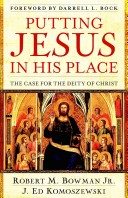
Putting Jesus in His PlaceA recent book by Robert Bowman and Ed Komoszewski titled Putting Jesus in His Place is a great confidence builder for those wrestling with this key doctrine. The book offers five lines of evidence with deep roots in the biblical material. The book is organized around the acronym H.A.N.D.S. It argues that the New Testament teaches that Jesus deserves the honors only due to God, He shares the attributes that only God possesses, He is given names that can only be given to God, He performs deeds that only God can perform, and finally, He possesses a seat on the throne of God.

Let’s look at the first line of evidence for the deity of Christ: Jesus deserves the honor that should only be given to God. To honor someone is to acknowledge “their place in the scheme of things—to speak about them and to behave toward them in a manner appropriate to their status and position.”{1} As creator of the universe, God deserves the highest level of honor and glory, since nothing can claim a higher degree of status or position. As a result, the Old Testament teaches that only God deserves the honor and glory that is part of human worship, and He will not share this honor with anything else. In Isaiah 42, God declares that “I am the LORD; that is my name! I will not give my glory to another or my praise to idols” (Isaiah 42:8).

So how does Jesus fit into this picture? In John 5, Jesus declares that the Father has entrusted judgment to the Son so that “all may honor the Son just as they honor the Father.” He adds that “He who does not honor the Son does not honor the Father” (John 5:22, 23). Referring to his pre-existence with the Father before creation, Jesus says, “And now, Father, glorify me in your presence with the glory I had with you before the world began” (John 17:5). In these passages, Jesus is claiming the right to receive the same honor and glory due to the Father; in effect, He is claiming to be God in the same way that the Father is God.

Jesus Shares the Attributes of God

If Jesus is honored in the New Testament in a manner reserved only for God, it follows that one who is given the honor and glory reserved for God is also worthy of worship. So it’s not surprising that the book of Hebrews tells us that Jesus is to be worshipped by the angels or that in Matthew’s Gospel the apostles worshipped him when he came to them walking on water (Hebrews 1:6; Matthew 14:33). Perhaps the most stirring image of Jesus being worshipped is in Revelation where every creature in heaven and on earth sing praises to the Father and to the Lamb, giving them both honor and glory and reporting that the four living creatures and the elders fell down and worshipped Him (Revelation 5:13-14).

The New Testament also teaches that Jesus shares divine attributes that only God possesses. When this claim is made, Muslims, Jehovah’s Witnesses, and others protest by pointing out that Jesus exhibited the very human attributes of hunger, fatigue, and pain. This valid observation does not conflict with the traditional Christian teaching that Jesus possessed two essential natures—one divine and one human. There is no reason to assume that one set of attributes cancels out the other. It should be added that although Jesus shares a divine nature with the Father, He does not share the same properties within the Godhead or trinity. The Father sent Jesus into the world; Jesus died on the cross and assumed the role of our permanent high priest.

Jesus clearly states in John 14 that to see him is to see the Father; both are equally God (John 14:10). In Colossians, Paul goes to great lengths to argue that all of God’s divine attributes are present in Christ. He writes that Jesus is “the image of the invisible God” and that “. . .God was pleased to have all his fullness dwell in him (Colossians 1:15, 19). He summarizes the same idea by adding that “in Christ all the fullness of the Deity lives in bodily form” (Colossians 2:9). The writer of Hebrews concurs in the opening paragraph of that book, saying that “the Son is the radiance of God’s glory and the exact representation of his being” (Hebrews 1:3).

Jesus shares the Father’s attribute of pre-existing the created universe and His own physical incarnation. John’s Gospel tells us that Jesus was with the Father in the beginning when the universe was created, and Paul adds that Jesus is before all things (John 1:1-3; Colossians 1:16-18). In other words, Jesus has always existed and is unchanging. He has been given all authority on heaven and earth (Matt. 28:18). He deserves the honor, praise, glory, and worship of all creation.

Jesus Shares the Names Given to God

Those who question the deity of Christ complain that the New Testament just doesn’t teach it, that it doesn’t come right out and say that Jesus is God. Is this really the case?

The New Testament uses two key words for God: theos, the general Greek word for deity, and kurios, usually translated as “lord.” Theos is the word most often used to designate God the Father and is also used a number of times in direct reference to Jesus, especially in the Gospel of John. John begins his book with the familiar proclamation that Jesus, the Word, was with God (theos) in the beginning, and that the Word (Jesus) was God (theos). Later in the chapter, John adds that “No one has ever seen God, but God (theos) the One and Only, who at the Father’s side, has made him known” (John 1:18). Jesus, the Word, is described by John as being with God in verse one, and at the Father’s side in verse eighteen, and in both cases is given the title theos or God.

The Gospel John also contains the confession by Thomas that Jesus is his Lord (kurios), and God (theos). John makes sure that we understand that Thomas was talking about Jesus by writing “Thomas said to Him,” that is, to Jesus, “’My Lord and my God.’”

Paul uses theos in reference to Jesus a number of times. In Romans 9:5 he describes Jesus as “Christ, who is God (theos) over all.” And in Titus he writes that we are waiting for our “blessed hope—the glorious appearing of our great God (theos) and Savior, Jesus Christ (2:13).” Peter portrays himself as a servant of Christ who is writing to those through whom “the righteousness of our God (theos) and Savior Jesus Christ have received a faith as precious as ours (2 Peter1:1).”

All four gospels begin with John the Baptist’s ministry of “preparing the way of the Lord” as fulfillment of Isaiah’s prophecy in Isaiah 40:3. The prophet wrote, “In the desert prepare the way for the LORD; make straight in the wilderness a highway for our God.” The Hebrew word translated LORD in this verse is the unspoken special word for God used by the Jews consisting of four consonants called the tetragrammaton. The New Testament Gospels are applying the word Lord to Jesus in the same way that the Old Testament referred to Yahweh as LORD.

Jesus Does the Deeds that Only God Can Do

It was universally recognized by the Jews of Jesus’ day that “God created the heavens and the earth (Genesis 1:1; cf. Isaiah 37:16).” So it might be surprising to some that the New Testament also gives Jesus credit for creation. Paul teaches in Colossians that Jesus created “all things.” To make sure that no one misunderstands his point, he adds that “all things” includes “things in heaven and on earth, visible and invisible, whether thrones or powers or rulers or authorities; all things were created by him and for him. He is before all things, and in him all things hold together” (Colossians 1:16-17). Paul wanted to be clear: Jesus is the creator God of the universe.

While Jesus’ role in creation is enough to establish his divine nature, He also exhibited supernatural divine power during His ministry on earth. Unlike the Old Testament prophets and New Testament apostles, Jesus did not have to petition a higher power to heal or cast out demons. He had inherent divine power to accomplish his will. Other than giving thanks, Jesus did not pray before performing miracles. In fact, the apostles reported that some demons obeyed them only when they invoked Jesus’ name. There were a number of occasions when Jesus realized that power had gone out from Him even without His intention to heal (Luke 6:19; Mark 5:30; Luke 8:46).

Jesus not only healed and cast out demons, but also had direct power over nature. When the disciples were frightened on a boat, He “rebuked the winds and the waves, and it was completely calm” (Matthew 8:26). When thousands were following him without food, He fed them miraculously (Matthew 14:20-21).

The New Testament teaching that salvation is possible through Jesus Christ alone would also have serious implications for Jewish readers. The Old Testament teaches that God is the only source of salvation. For instance, Psalm 62 teaches that “My soul finds rest in God alone; my salvation comes from Him. He alone is my rock and my salvation.” How then does one explain the numerous references claiming Jesus to be the source of salvation? Matthew points out that Mary will call her son Jesus because he will save his people from their sins (Matthew 1:21). Jesus declares of himself that “God did not send his Son into the world to condemn the world, but to save the world through Him (Jn. 3:17).” There are also instances where Jesus directly forgives the sins of individuals, thus attracting hostile attention from the Jews (Luke 7:47-49; Mark 2:5-7).

The Psalmist writes that it is the Lord God “who will redeem Israel from all its iniquities” and that “Salvation belongs to the Lord.” John summarizes nicely when he writes, “Salvation belongs to our God who is seated on the throne, and to the Lamb!”

Jesus Has a Seat on God’s Throne

Our last line of argument for the deity of Jesus Christ refers to his claim to have a place on the very throne of God. From this throne, Jesus rules over creation and will judge all of humanity. He literally possesses all authority to rule.

Jesus made this claim clear during His questioning by the high priest Caiaphas the night of his capture. Caiaphas asked him, “Are you the Christ, the Son of the Blessed One?” (Mark 14:61). If Jesus wasn’t God, this would have been a great opportunity for Him to clear up any misconceptions. But instead of denying His divinity, Jesus says “I am,” admitting to being God’s unique Son, and goes on to say, “you will see the Son of Man sitting at the right hand of the Mighty One and coming on the clouds of heaven” (Mark 14:62). The high priest’s response was dramatic; he tore his clothes and declared that those present had heard blasphemy from the lips of Jesus. They understood that Jesus was making a direct claim to being God, for only God could sit on the throne of the mighty one.

In His response to the high priest, Jesus draws from a number of Old Testament passages. The book of Daniel describes this “Son of Man” as having an everlasting dominion that will never be destroyed (Daniel 7:13-14). The passage adds that the Son of Man has been given authority to rule over all people and nations, and that men of every language will worship him. He is also described as coming with the clouds of heaven, imagery that is used a number of times in the Old Testament to indicate divine presence. Exodus describes a pillar of cloud that designated God’s proximity to the Jews, while the book of Psalms and the prophet Isaiah both picture God riding on clouds in the heavens (Psalm 104:3; Isaiah 19:1). The point here is that Jesus is connecting Himself to this “Son of Man” who will sit at the right hand of the Father, have everlasting dominion and authority, and will be worshipped by all men. This kind of language can only be used to describe God.

The New Testament makes it clear that there is nothing not under the authority and power of Jesus. John writes that the Father put all things under His power (John 13:3). Paul adds that the Father seated Jesus at His right hand in the heavenly realms, far above all rule and authority and power and dominion and above every name that is named (Ephesians 1:20-21). Jesus sits on the judgment seat, He sent the Holy Spirit, He forgives sinners, and is our perfect eternal high priest (2 Corinthians 5:10; Acts 2:33; 7:59-60; Hebrews 7-10).

The New Testament provides multiple lines of evidence to make the case that Jesus is God. The only question remaining is whether or not we will worship him as a full member of the triune Godhead, the only eternal, self-existing, creator God of the universe.

Note

1. Robert M. Bowman and J. Ed Komoszewski, Putting Jesus In His Place (Grand Rapids: Kregel, 2007), 31.

© 2010 Probe Ministries


The Epstein Files: 3 Important Ways For Christians to Respond Biblically

The release of the Epstein documents has sparked outrage, confusion, and intense public debate. While the world often responds with anger, speculation, or political blame, Christians must respond to the Epstein files differently–Biblically. Scripture provides a framework for understanding both human depravity and God’s justice. Here are three biblical responses believers should consider. 

1. Jesus promised that shameful and evil things like the Epstein files would be brought to the light.

The Bible states, “For there is nothing hidden that will not be disclosed, and nothing concealed that will not be known or brought out into the open.” (Luke 8:17)

Also, “Accordingly, whatever you have said in the dark will be heard in the light, and what you have whispered in the inner rooms will be proclaimed on the housetops.” (Luke 12:3)

 Epstein FilesEpstein, his grandiose lifestyle, potential co-conspirators, and the revelatory atrocities committed and recorded in the shadows against God’s image bearers, away from public view for years, eventually found their way to the light, where all could see and witness. The Epstein files highlight the true condition of the human heart apart from faith in Jesus Christ.
 

2. The Epstein Files affirms Biblical truth regarding the depths of human depravity.

“Pagans gonna pagan.”

Jeremiah 17:9 exposes the truth about the fallen and corrupted condition of humanity:

“The heart is deceitful above all things, and desperately wicked. . .”

Ecclesiastes 9:3 states, “This is an evil in all that is done under the sun, that the same event happens to all. Also, the hearts of the children of man are full of evil, and madness is in their hearts while they live, and after that they go to the dead.”

The temptation to look down our noses at people exists, as the world self-righteously exposes the Epstein files by exclaiming, “Well, I would never do such a thing!” But humility can allow this revelation to serve as a painful reminder that every single one of us has a heart so equally deceitful and desperately wicked that it required the torture and death of God’s Son, Jesus Christ.

Apart from the breathtaking grace of God, each of us has the capacity to do what is being revealed in the Epstein documents. Romans 8:17 reminds us that “nothing good dwells in me, that is, in my flesh.” The Fall broke every human being so much that the only good things in us come from the imago Dei, the image of God imprinted on us. And only the regenerated heart can transform us into people who wouldn’t think to engage in the kind of behaviors the Epstein Files are revealing.

3. The Epstein Files highlight the dark side of the love of money, power and idolatry.

Like the partridge that gathers a brood that she did not hatch, so is he who gets riches but not by justice; in the midst of his days they will leave him, and at his end he will be a fool.  (Jer. 17:11)

For the love of money is a root of all kinds of evils. It is through this craving that some have wandered away from the faith and pierced themselves with many pangs. (1 Tim. 6:10)

The files tell the story of the rich and famous seeking to rub shoulders with other rich and famous people. The thing that drives the attraction to celebrities might be the hope that fame and fortune will rub off on an insecure heart and fill it with vanity and emptiness. What a reminder that we are all born with a God-shaped hole in our hearts that nothing but God Himself will fill and satisfy.

Hope you find this helpful.

Sue Bohlin

For more articles examining culture through a Christian worldview, visit Probe Ministries.

Posted March 2026
© 2026 Probe Ministries


The Iran and Israel Conflict Crisis: 4 Insights Relating to the U.S., Israel, and the Middle East

Iran and Israel Conflict Crisis and Regional Security

Iran nuclear threat: Does it pose a threat to the U.S., Israel, and the Middle East? What can we learn about the Iran and Israel conflict?

Many Americans might wonder why the president has focused so much attention on Iran. After all, it is a country 6,000 miles away in the Middle East. Some may also conclude that military action against Iranian leadership might not be warranted since the previous administration did not deploy troops or significant military hardware to the region.

Two years ago, however, the Biden administration considered action after more than 160 attacks on U.S. troops took place in Iraq, Syria, and Jordan. There were also about 40 clashes with the Houthis in the Red Sea. Iran funded many of these attacks, either directly or indirectly. They were part of a mounting proxy battle between the U.S. and Iran.

At the time, reporters asked what President Biden would do. Some argued that the U.S. and Iran have essentially been at war for decades. Even the Pentagon press secretary acknowledged that this was true if one considers the larger conflict. To understand why reporters were asking this question, we need to review some history.

Modern History of Iran

The conflict between Iran and the United States can be traced back to 1953, when the U.S. cooperated in overthrowing Iranian Prime Minister Mohammad Mossadegh. Afterward, the Shah of Iran (Mohammad Reza Pahlavi) was placed in power.

The U.S. viewed the Shah as a key ally and a pillar of security in the Middle East. His pro-Western government advanced Western interests and served as a Cold War counterbalance to Soviet influence. The United States supported Iran through significant arms sales and strong economic ties, despite concerns about the Shah’s authoritarian rule.

The turning point came in 1979 when the Shah was overthrown by radical Islamic clerics led by Ayatollah Khomeini. The Iranian Revolution transformed the U.S. from an ally into “The Great Satan” in the eyes of the new regime.

This hostility became clear when the Iranian Revolutionary Guard seized the U.S. Embassy and took 52 American diplomats hostage. They were not released until President Reagan was sworn in on January 20, 1981. This crisis marked the beginning of what many view as a half-century-long undeclared conflict between Iran and the United States.

The U.S. strategy had been to promote stability in the Middle East. That effort became increasingly difficult because of Iran’s growing influence. Complicating matters further, Saudi Arabia supported anti-Western Islamic movements such as the Muslim Brotherhood, while Turkey—though a NATO member—began positioning itself as a leader of a renewed Islamic political vision in the region.

Iran has engaged in a proxy war against the U.S. for decades. In April 1983, Iranian-backed Hezbollah forces bombed the U.S. Embassy in Beirut, killing 63 people. Later that year, Hezbollah bombed the U.S. Marine barracks in Beirut, killing 241 service members.

Despite these attacks, decisive retaliation never fully materialized. Iranian influence continued to expand through proxy groups across the region.

During the Iraq War following 9/11, evidence showed that Iran was supplying weapons and support that contributed to American casualties. While the U.S. was focused on Iraq as the primary enemy, Iranian operatives and Iranian-manufactured munitions were also responsible for attacks on U.S. troops.

Iran is often described as the chief sponsor of terrorism in the Middle East. It funds groups such as Hamas, Hezbollah, and the Houthis, which regularly target Israel and U.S. interests. Israeli and American responses to these groups are now reshaping the balance of power in the region.

Missiles and Nuclear Weapons

Iran possesses the largest stockpile of ballistic missiles in the Middle East. Many of these missiles have a range of up to 2,000 kilometers, allowing them to strike Israel and other countries throughout the region.

Iran has also demonstrated its long-term intentions toward Western nations. Earlier this century, it launched ballistic missiles from ships in the Caspian Sea. Although the test missile did not carry a nuclear warhead, it demonstrated how such a weapon could be deployed.

A missile detonated high in the atmosphere could create an electromagnetic pulse (EMP), potentially destroying the U.S. electrical grid and causing catastrophic damage.

If Iran were to acquire nuclear weapons, it would destabilize the Middle East and surrounding regions. However, the latest assessment from Tulsi Gabbard suggests that Iran is not currently building a nuclear weapon and that its supreme leader has not authorized such a program since it was suspended in 2003. Some officials, however, dispute this assessment.

The Donald Trump administration resumed talks with Iran after withdrawing from the nuclear accord several years earlier. Initial negotiations produced few concrete results. Meanwhile, a United Nations nuclear watchdog reported that Iran violated nuclear nonproliferation agreements.

Iran maintains that its nuclear development is intended for civilian energy. However, the discovery of secret nuclear sites has raised concerns that the program may have military ambitions.

Tensions escalated when Iran launched a massive ballistic missile attack on Israel following Israeli strikes on Iranian targets.

In June 2025, Israel launched Operation Rising Lion, targeting key nuclear and military facilities, including an enrichment site. The strike lacked the bunker-busting capability needed to fully destroy the facility.

Soon afterward, the United States launched Operation Midnight Hammer, striking several Iranian nuclear locations. The administration announced that the sites had been “obliterated.” Yet satellite imagery later suggested Iran had begun rebuilding portions of its nuclear infrastructure.

Diplomatic talks between the United States and Iran have produced few breakthroughs. Negotiations aim to limit uranium enrichment, restrict missile development, and address human rights concerns within Iran.

Since diplomacy failed, the Trump administration began military endeavors. However, many Americans remain wary of another prolonged conflict in the Middle East. Limited strikes might damage nuclear facilities, but meaningful regime change would likely require a large-scale ground invasion.

Religious Component

Another reason Iran’s nuclear ambitions raise concern is the religious worldview of its leadership.

Most Iranians are Shia Muslims, and a significant branch follows the tradition known as the “Twelvers.” This sect recognizes twelve divinely appointed leaders known as Imams.

According to their belief system, the twelfth Imam—often called the Mahdi or messianic figure—is currently in hiding and will return during a time of global conflict.

Just as Christianity has an eschatology, or doctrine of the end times, Shia Islam also holds an apocalyptic worldview. However, its narrative is essentially the reverse of what Christians read in the book of Revelation.

Twelver theology teaches that global conflict may precede the arrival of the Mahdi. Some analysts fear that extremist interpretations of this belief could view large-scale conflict—including potential attacks on Israel or the United States—as a way to usher in that messianic era.

During the Cold War, the United States relied on the doctrine of Mutually Assured Destruction (MAD) to deter nuclear war. The Soviet Union would not launch nuclear weapons because retaliation would guarantee its destruction.

Critics argue that radical religious interpretations might weaken this deterrence model. Some Twelver believers might assume divine intervention would protect them from destruction.

Author Joel C. Rosenberg explored this scenario in his political thriller The Twelfth Imam.

Yet there is another side to this story. Reports indicate that Christianity is growing rapidly in Iran, with some describing the Iranian church as the fastest-growing Christian movement in the world.

Christians should continue praying for Iranian believers who often face persecution. We should also pray for U.S. leaders and their allies as they navigate these complex challenges.

The Persian people are an ancient civilization that deserves peace and freedom. Unfortunately, many Iranians suffer under economic sanctions and harsh authoritarian leadership.

They deserve both our prayers and our compassion.

For more articles by Kerby Anderson follow here: https://probe.org/author/kerbyanderson/


‘Return of the God Hypothesis’ for Regular People

Dr. Ray Bohlin provides an overview of Stephen Meyer’s book Return of the God Hypothesis, looking at how recent scientific discoveries provide evidence for an intelligent creator.

Was There a God Hypothesis Prior to Scientific Materialism of Today?

In this article I give an overview of Stephen Meyer’s Return of The God Hypothesis: Three Scientific Discoveries that Reveal the Mind Behind the Universe {1}. The three discoveries are first, the discovery in the 20th century of the Big Bang Model for the origin of the universe, second, the continuing discovery of the extreme fine-tuning of a universe that is friendly toward life, and third, the grand amount of genetic and cellular information needed for the origin of the first life and the Cambrian Explosion, where nearly all animal phyla suddenly appear with no ancestors.

download-podcastBut we need to cover a little history first. Meyer’s title is “Return of the God Hypothesis.” This implies that there was previously an accepted “God Hypothesis” in science. Then it was lost, and the time and evidence are right for that God Hypothesis to return. Early, Meyer quotes Richard Dawkins, “The universe we observe has precisely the properties we should expect if there is, at bottom, no design, no purpose, no evil, no good, nothing but blind pitiless indifference.”{2} So according to Dawkins, science has shown God to be superfluous.

This has been the position of most scientists since the late 19th century, when two authors detailed a long-standing warfare between science and religion. Most of the scientific community followed along to the present day.

But Meyer goes on to document that most if not all historians of science today agree that the Christian worldview greatly influenced, some say was even necessary for, the rise of modern science. Three key Christian concepts were, first, God’s ability to choose what kind of universe He wanted to create. That meant that we can’t just reason what nature should be like, we had to discover it. Second, nature is intelligible. Humans, being created in the image of God, could discover how nature operates (Romans 1:18-20). And last, human fallibility. Humans are sinful; therefore, one man’s conclusions about the operation of nature must be subject to review of other scientists to ensure they are accurate. Christianity is the only worldview capable of developing modern science.{3}

So, what happened? Well, the Enlightenment happened where philosophers began to think only human reason is necessary or even proper to use in discovering the nature of humanity and nature around us. In the next section, I begin to investigate the three scientific discoveries that warrant a return of the God hypothesis.

Scientific Discovery #1: The Big Bang

The subtitle of Stephen Meyer’s book, Return of the God Hypothesis is “Three Scientific Discoveries That Reveal the Mind Behind the Universe.” Now we will look at the first of these discoveries, the Big Bang.

First, I know that some of our readers don’t accept the concept of the Big Bang since they are convinced that our universe is much younger than 13.7 billion years. I understand your position, [please read my article “Christian Views of Science and Earth History at probe.org/christian-views-of-science-and-earth-history/] but let’s look at this then as an argument you can use with an atheist to show that his own dating of the universe and the Big Bang requires a Mind.

In the early 20th century, scientists like Edwin Hubble began to observe that the universe was not static as previously accepted, but was actually expanding. It took several lines of evidence, more powerful instruments, and many astronomers and mathematicians to come to this conclusion. The novel result was thinking about running the clock backwards. If the universe is expanding now, if you go back in time the universe gets smaller and smaller. Eventually you get to a point where they say the universe was contained in a “particle” that was infinitely dense and occupied no space.

We know now the universe had a beginning. Astronomers and cosmologists had assumed the universe was static and existed for eternity. This conclusion was disturbing to some astronomers. Some rejected the Big Bang for philosophical reasons not scientific. Mathematician Sir Arthur Eddington said,

“Philosophically, the notion of a beginning is repugnant to me. . .. I should like to find a genuine loophole.”{4} “We [must] allow evolution an infinite time to get started.”{5}

Edmund Whitaker wrote what many were thinking: “It is simpler to postulate creation ex nihilo—divine will constituting nature out of nothingness.”{6}

And finally, Robert Jastrow wrote, “For the scientist who has lived by his faith in the power of reason, the story ends like a bad dream.  He has scaled the mountains of ignorance; he is about to conquer the highest peak; as he pulls himself over the final rock, he is greeted by a band of theologians who have been sitting there for centuries.”{7} So, God creating matter and energy out of nothing explains the Big Bang, where any naturalistic idea simply cannot explain the evidence.

Scientific Discovery #2: The Fine-tuning of the Universe for Life

Let us now turn our attention to the second of the discoveries in Stephen Meyer’s book, the fine-tuning of the universe for life.

This has also been referred to as the “Goldilocks Universe,” meaning a lot of things turned out to be just right for the universe to be friendly to life. For instance, you may be aware that there are four
fundamental forces in the universe: gravity, electromagnetism, and the strong and weak nuclear forces. Each of these forces is expressed as an equation that contains a unique constant, and each one could have had a range of values at the Big Bang.

Meyer reveals that the gravitational constant alone is fine-tuned to 1/1035—that’s one chance in 100 billion trillion trillion. The other three constants are also fine-tuned, but even further, the constants are also fine-tuned in relation to each other. This adds another number of at least 1 part in 1050.

Meyer had the opportunity to hear Sir John Polkinghorne at Cambridge during his doctoral work in the history and philosophy of science. Polkinghorne used an illustration of a universe generating machine with numerous dials and adjustable sliders, each representing one of the many cosmological fine-tuning parameters.  Any slight change in the dials and adjusters of these parameters would render a universe hostile to life in any form. Polkinghorne would later say in an interview that a theistic designer provided a much better explanation than any materialistic hypothesis.{8}

Later, Meyer shows that including entities such as entropy and black holes, the odds of generating a life friendly universe are in this context 1 part in 10 to the power of 1 followed by 122 zeroes.{9} It would take several lines to write this number. This is an insanely impossible number to be arrived at by chance.

Nobel-Prize-winning physicist Charles Townes said, “Intelligent design as one sees it from a scientific point of view, seems to be quite real. This is a very special universe: it’s remarkable that it came out just this way.”{10} This intelligence is perfectly consistent with the God of the Bible.

Scientific Discovery #3: Genetic Information for the First Cell

In this section I’m discussing the third scientific discovery; the need for complex specified genetic information for the first cell and new groups of organisms throughout time.

In Darwin’s time, the first microscopes were being used and cells could be seen. Of course, scientists understood little of what they were seeing. Most of the cell appeared to be filled with something called protoplasm, a jelly-like substance that was thought to be easily derived from combining just a few substances. I’ve often said that if Darwin knew of the amazing complexity and the need for information storage, processing and regulation, evolution would have never been offered as a chance process.

Now we understand that the need for information to compose the first living, growing, and reproducing cell, is enormous. The first cell needed DNA to store information, specific proteins and RNA to produce additional proteins for the cell to function, and a controlled means to copy DNA accurately.

For instance, life uses 20 different amino acids to link together to form proteins, the workhorses of the cell. The number of combinations of two amino acids is 400. A four amino acid stretch has 160,000 different combinations. A small protein of “just” 150 amino acids has 10195 possible combinations. But how many of these could be a protein with some function? Just one in every 1077 sequences.

But also, new groups of organisms appear suddenly throughout the fossil record. Nearly all large groups of animals, or phyla, appear in the Cambrian explosion. Animal and plant phyla rapidly diversified in at least 13 more explosions within phyla and classes into new classes, orders and families with no precursors, from flowering plants and winged insects to mammals and birds. All these explosions would require massive amounts of new genetic and developmental information.

The evidence supports the need for an intelligent designing mind to create all the needed information. Minds create information all the time. Natural processes simply can’t do it.

Do These Three Evidences Point to Theism?

The three discoveries discussed in Stephen Meyer’s book, Return of the God Hypothesis: Three Scientific Discoveries that Reveal the Mind Behind the Universe are the Big Bang, the extreme fine-tuning of the laws of physics to provide a life-friendly universe, and the necessary complex and specified information for the origin of life and the progression of complex life-forms through the fossil record.

But where does that leave us? Do these discoveries warrant a return of the God Hypothesis? Meyer examines four different worldviews to ask, would the universe we have, be expected by any of these worldviews? He uses a scientific approach called “the inference to the best explanation.”

So, given a universe that is not only friendly toward life but contains living organisms, which worldview would best explain this universe? He begins with scientific materialism. Materialism has no explanation for the beginning of the universe. There was no matter or energy before the beginning, so matter and energy cannot account for the beginning of the universe. Moreover, for the origin of complex specified information needed for life, naturalism has no answer. In fact, only theism posits an entity, God, that has the causal power to produce genetic information.

Let’s move to pantheism. Pantheism does not propose a personal God but an impersonal god. This “god” is one and the same with nature. Then pantheism suffers the same fate as naturalism in that the beginning can’t be explained by what doesn’t exist yet, matter and energy.

But what about theism and deism? To explain the notion of a beginning, an entity outside the universe is required. Both theism and deism propose a transcendent, intelligent agent, God. Both can explain the beginning and the fine-tuning. But what about the appearance of complex specified genetic information on the earth? Deism and many forms of theistic evolution require a front-loaded beginning: all the information for life was present at the beginning and natural laws took over from there—God did not intervene. But how was this information retained over billions of years until life arose on earth? And natural laws simply can’t produce complex specified information. Deism and theistic evolution won’t work. Only theism remains.

On pg. 298, Meyer states, “As one surveys several classes of evidence from the natural sciences—cosmology, astronomy, physics, biochemistry, molecular biology, and paleontology—the God Hypothesis emerges as an explanation with unique scope and power. Theism explains an ensemble of metaphysically significant events in the history of the universe and life more simply, more adequately, and more comprehensively than major competing metaphysical systems.”

Notes

1. Stephen Meyer, Return of the God Hypothesis (New York: HarperCollins, 2021).
2. Richard Dawkins, River Out of Eden 133, quoted in Meyer, Return of the God Hypothesis, 14.
3. The Soul of Science: Christian Faith and Natural Philosophy (Wheaton, IL: Crossway Books, 1994) by Nancy Pearcey and Charles Thaxton.
4. Arthur Eddington, “The End of the World: From the Standpoint of Mathematical Physics” Nature, vol. 127 (1931) p. 450.
5. Arthur S. Eddington, “On the Instability of Einstein’s Spherical World,” Monthly Notices of the Royal Astronomical Society 90 (May 1930): 672. Quoted in Hugh Ross, ‘A Matter of Days: Resolving a Creation Controversy(Kindle Locations 484-485). RTB Press. Kindle Edition.
6. Cited in Robert Jastrow, 1978. God and the Astronomers. New York, W.W. Norton, p. 111-12.
7. Jastrow, God and the Astronomers. p. 113-114, 116.
8. Return of the God Hypothesis, p. 143-144.
9. Ibid., p. 150.
10. Bonnie Azab Powell, “’Explore as Much as We Can’: Nobel Prize Winner Charles Townes on Evolution, Intelligent Design, and the Meaning of Life,” UC Berkeley NewsCenter, June 17, 2005, www.berkeley.edu/news/media/releases/2005/06/17_townes.shtml. Cited in Meyer, Return of the God Hypothesis, p. 146.

©2022 Probe Ministries


Christian Nationalism and the Question of Racial Purity

Tom Davis examines how some Christian Nationalists call for racial purity despite the lack of a biblical basis for the idea.

In recent years, a new political movement has started within Christian circles. This movement, Christian Nationalism{1}, is theologically diverse. They have disagreements on issues like race, discipleship, and the relationship of church and state.

There is a group within Christian Nationalism that has become concerned about racial purity. They stop short of calling interracial marriages a sin, but they do claim that it is God’s norm for people to marry within their own race. Their view of race seems to be based on skin color more than anything else. My understanding is that they would be fine with a French man marrying a Norwegian woman, but they think that an Asian man should not marry a Hispanic woman. Granted, all these particular Christian Nationalists are white, so the conversation tends to focus on white people marrying outside the white race.

Christian Nationalists will use DNA markers to show that different races exist, but their reason for claiming that the races should not intermarry is an argument from scripture. They think it is unbiblical for a white woman to marry a man of another race. In this article, I will examine their argument and evaluate its strengths and weaknesses. Next, I will assess their understanding of the relevant biblical passages. Finally, I will consider the passages they reference and explore the biblical teaching on race.{2}

The Argument for Racial Segregation

The argument for racial segregation begins with creation (Genesis 1-2). Christian Nationalists admit that “all humanity descends from Adam and shares a common origin, essence, and dignity.”{3} Christian Nationalists admit that all human races descended from Adam. Biblically, all races bear the image of God and can be traced back to Adam and Eve. They are equal in dignity. However, God’s intention for humanity was for them to spread out throughout the earth, and the races would naturally occur in different regions of the world.

Their argument then proceeds to Genesis 10, which is known as the Table of Nations. Due to the sinfulness of humanity, God destroyed everyone except Noah and his family. Then Genesis 10 lists the descendants of Noah’s sons, Shem, Ham, and Japheth.

“These are the clans of the sons of Noah, according to their genealogies, in their nations, and from these nations spread abroad on the earth after the flood.” (Genesis 10:32).

The author’s understanding of this verse makes the separation of races and nations one of the norms that God wants people to live by.

The Genesis narrative proceeds to the rebellion at the Tower of Babel. The people will not disperse. They try to build a tower that will reach heaven, so God decides to confuse their language and to force the different nations to disperse throughout the land. Christian Nationalists claim:

“Biblically, God’s design post-Babel emphasizes diversity through separated nations and peoples (Genesis 10-11; Acts 17:26), with endogamy [Note: per Wikipedia, “Endogamy is the cultural practice of only marrying within a specific social group, religious denomination, caste, or ethnic group, rejecting any from outside of the group or belief structure as unsuitable for marriage or other close personal relationships.”] as the normative pattern in Israel’s laws (for example, Deuteronomy 7:3-4 warning against intermarriage with Canaanites to preserve covenant fidelity, though not solely racial).”{4}

Here, the author connects Genesis 11, the Flood, and the Tower of Babel incident with Acts 17:26, which states, “And he made from one man every nation of mankind to live on all the face of the earth, having determined allotted periods and the boundaries of their
dwelling place.” The Christian Nationalist understands Acts 17:26 to be reaffirming the Table of Nations in Genesis 10. This gives them an Old Testament verse and a New Testament verse that they think justifies their view that God desires the races to remain separate. The author also references Romans 9:3, “For I could wish that I myself were accursed and cut off from Christ for the sake of my brothers, my kinsmen according to the flesh,” to support his argument that the normal practice according to the Bible ought to be marrying within one’s own race.

A Critique of the Argument

This group of Christian Nationalists claims that God’s intent was for people to spread across the earth and naturally develop different nations. The issue is that there is no mention of nations prior to the Flood. If the concept and development of nations were something that God intended as part of his creation of mankind, why is it not mentioned before the Flood, or before the fall of Adam and Eve? The structure of the Genesis narrative indicates that nations did not develop until after the Flood, and this was a consequence of sin.

This position also does not address whether there will be nations after the return of Christ. Are the races still to remain segregated after Christ returns? Will there be nations on the New Earth that are ruled from Jerusalem? It seems that the Christian Nationalist answer to these questions would be yes, people will still be segregated into nations and races. If that is the case, the Christian Nationalist needs to explain why the races need to be segregated and the nations need to exist when Christ is ruling from Jerusalem. The Christian Nationalist also believes that this diversity was intended by God, that interracial marriages and multicultural nations are in violation of God’s command to subdue the earth, and that they violate God’s creation of diversity.

If people were not originally intended to divide into different nations and races, why are races and people divided? The consistent answer to the question for the Christian Nationalist would be to say that this segregation is God’s will. This seems to imply that the races would have to remain segregated after the return of Christ as well. The Christian Nationalist believes that interracial marriage somehow violates God’s creation of diversity. How can that be? When two people of different races have children, those children are not a pure race. This means that interracial marriage does not restrict racial diversity; it increases it.

The Christian Nationalist’s appeal to Deuteronomy 7:3-4, Acts 17:26, and Romans 9:3 simply takes these verses out of context. In Deuteronomy, the restriction from marrying people from the tribes in the land that the Israelites were about to invade is not about racial purity. This passage is about spiritual purity. Moses is telling the people that they are not to marry people who worship other gods. We see Rahab (Joshua 6), Deborah (Judges 4), and Ruth who reject their pagan gods, turn to the One True God, and join the Israelite society. God allowed this because they rejected other gods, which shows the issue was not racial purity.

In Acts 17:27 Paul is speaking in front of the philosophers in Athens. Paul tells the philosophers that God made the nations from one man. In Romans 9:3 Paul is explaining God’s sovereignty over all nations. These verses are irrelevant to the question of segregating the nations. The burden of proof is on the Christian Nationalist to show that these verses support their view of segregating races and nations. They have not met that burden.

The Biblical View of the Nations and Races

If the Christian Nationalist is wrong, then what does the Bible teach about nations? Things do start with God creating Adam and Eve and telling them to reproduce and subdue the earth (Genesis 1:28). God’s intent for humanity was for them to govern the earth as His local representatives.{5} However, things went wrong because Adam and Eve were disobedient and ate from the tree of life (Genesis 3:1-7). Adam and Eve gave in to the temptation of Satan instead of remaining faithful to God, which led to their banishment from the garden. The human family that God created was now broken. The Fall reveals that there is a conflict between spiritual beings, and between the people of God and the spiritual beings that followed Satan.

Humanity continues in their sin, which eventually leads to the Flood (Genesis 6), which is followed by the incident at the tower of Babel. The people were supposed to spread out and subdue the earth. Instead, the people stayed close together and built a tower. This tower was something like a ziggurat, which was meant to call gods down to earth. In building this tower, the people once again rejected their relation to God.{6} In response, God confused their languages and dispersed them throughout the earth. The dispersion of the people and the confusion of languages were the result of the rebellion of the people against God. Deuteronomy 32 is a record of the nations.

After the people were dispersed throughout the earth, the narrative of the Bible continues through the development, then the life of  Israel. Jesus comes and trains His apostles. Jesus has been crucified, resurrected, and ascended into heaven. His disciples are waiting for the coming of the Holy Spirit. In Acts 2, the event of Pentecost is recorded. At Pentecost each person hears the apostles speak in their own language. The apostles are most likely speaking in Aramaic, but the Greeks who are present hear them in Greek, the Romans hear them in Latin, etc. This is an undoing of the confusion and division of people that occurred at Babel. As a result of their rebellion at Babel the people were dispersed throughout the world. At Pentecost the undoing of Babel, as well as the original sin in the garden, begins.{7}

Conclusion

When we examine the Christian Nationalist case for racial purity and against interracial marriage, we can see that they have not met the burden of proof for their claim. They end up reading their view into the text of the Bible instead of allowing the text of the Bible to shape them. Will one face challenges in an interracial marriage? Yes, but those challenges come from what is ultimately a sinful attitude against one race or the other. The picture the Biblical narrative paints is one of people rebelling against God by refusing to spread out and care for the earth and trying to control God to get what they wanted. This rebellion resulted in a curse, and beginning with Pentecost, God is undoing the curse.

While the Christian Nationalist is mistakenly concerned about racial purity in marriage, Christians should be concerned about spiritual purity. Paul makes two points in his letters. First, Paul states, “Do not be unequally yoked with unbelievers. For what partnership has righteousness with lawlessness? Or what fellowship has light with darkness?” (2 Corinthians 6:14). What Paul points out here is that a marriage between two people that have different worldviews will often put the Christian in situations where they will have to choose between their spouse and faithfulness to Christ, including fellowship with other believers. I experienced this early on in my walk with Christ. I left the church when I was growing up. When I returned to Christ, I naturally started attending church. I was dating a woman who was not a Christian and was not interested in attending church. I went to church three times a week. Eventually my church attendance, along with other disagreements, led to us breaking up.

Second, if you are a Christian and are already married to someone who is not, you should not get divorced if the marriage relationship is healthy. Paul discusses this in 1 Corinthians 7:12-16. Paul teaches that if the unbeliever wants to remain married, the Christian should agree. If the couple has children, divorcing when the unbeliever does not want one can cause resentment among the children. Paul also teaches that the unbeliever can become “made holy” because of the spouse.

Christian Nationalists are correct in their view that people of all races are created in the image of God. They also admit that the lives of people of all races are valuable to God. Their error is in thinking that God is concerned with racial purity. They end up reading their view of racial purity into the Table of Nations and the Tower of Babel. God did create the races, and Scripture never commands or implies that the races should be separated.

Notes

1. Per Britannica, “Christian nationalism is an ideology that seeks to fuse a nation’s identity, laws, and public life with a particular vision of Christianity, treating the nation as if it should be explicitly Christian in character and governance.”
2. While I think I know who wrote the articles, they are technically anonymous, and I have not verified who the author is. Since I have not verified the identity of the author, I will not name him. I will say that I found the link to the substack with these articles on Joel Webbon’s account on X.
3. nxrstudios.substack.com/p/the-table-of-nations-and-the-biblical
4. nxrstudios.substack.com/p/a-historic-christian-view-of-interracial
5. Block, Daniel I. Covenant: The Framework of God’s Grand Plan of Redemption (Baker Academic, Grand Rapids) 2021, 24.
6. Heiser, Michael S. The Unseen Realm: Recovering the Supernatural Worldview of the Bible (Lexham Press, Bellingham WA) 2015, 114-115.
7. Heiser, 298-302.

©2026 Probe Ministries


Loneliness and the Lockdown

Kerby Anderson looks at the isolation and longing for human contact that has become endemic even before the pandemic.

America was already facing a crisis of loneliness, and then the coronavirus pandemic hit. People sheltering at home had even less human contact. That made the crisis of loneliness even worse. The best thing people could do to protect themselves from the virus was to isolate themselves. But that is not the best thing they could do for their physical or mental health.

download-podcastA study by Julianne Holt-Lunstad found that loneliness can be as bad for your health as smoking 15 cigarettes a day. Another study by the National Academies of Sciences, Engineering, and Medicine found that social isolation in older adults increased their risk of heart disease, stroke, dementia, high cholesterol, diabetes, and poor health in general.{1}

More than a quarter century ago (1994), I wrote a book (Signs of Warning, Signs of Hope) making a number of predictions for the future. Chapter eight set forth the case for a coming crisis of loneliness.{2} Years earlier Philip Slater wrote about The Pursuit of Loneliness. The US Census Bureau documented the increasing number of adults living alone. Dan Kiley talked about living together loneliness in one of his books. Roberta Hestenes coined the term “crowded loneliness.” The trend was there for anyone to see if they began reading some of the sociological literature.

In the last few years, many authors have written about the crisis of loneliness. Robert Putnam wrote about it in his famous book, Bowling Alone.{3} He argues that people need to be connected in order for our society to function effectively. Putnam concludes, “Social capital makes us smarter, healthier, safer, richer, and better able to govern a just and stable democracy.” Senator Ben Sasse, in his book, Them: Why We Hate Each Other—and How to Heal, laments that our traditional tribes and social connectedness are in collapse.{4}

Living Alone

The reasons are simple: demographics and social isolation. More people are living alone than in previous generations, and those living with another person will still feel the nagging pangs of loneliness.

In previous centuries where extended families dominated the social landscape, a sizable proportion of adults living alone was unthinkable. And even in this century, adults living alone have usually been found near the beginning (singles) and end (widows) of adult life. But these periods of living alone are now longer due to lifestyle choices on the front end and advances in modern medicine on the back end.

People have been postponing marriage and thus extending the number of years of being single. Moreover, their parents are (and presumably they will be) living longer, thereby increasing the number of years one adult will be living alone. Yet the increase in the number of adults living alone originates from more than just changes at the beginning and end of adult life. Increasing numbers are living most of their adult lives alone.

In the 1950s, about one in every ten households had only one person in them. These were primarily widows. But today, due to the three D’s of social statistics (death, divorce, and deferred marriage), more than a third of all households is a single person household.

In the past, gender differences have been significant in determining the number of adults living alone. For example, young single households are more likely to be men, since women marry younger. On the other hand, old single households are more likely to be women, because women live longer than men. While these trends still hold true, the gender distinctions are blurring as both sexes are likely to reject traditional attitudes toward marriage.

Marriage Patterns

The post-war baby boom created a generation that did not made the trip to the altar in the same percentage as their parents. In 1946, the parents of the baby boom set an all-time record of 2,291,000 marriages. This record was not broken during the late 1960s and early 1970s, when millions of boomers entered the marriage-prone years. Finally, in 1979, the record that had lasted 33 years was finally broken when the children of the baby boom made 2,317,000 marriages.

The post-war generations are not only marrying less; they are also marrying later. The median age for first marriage for women in 1960 was 20 and for men it was 22. Today the median age for women is 27 and for men it is 29.

Another reason for a crisis in loneliness is marital stability. Not only are these generations marrying less and marrying later; they also stay married less than their parents. When the divorce rate shot up in the sixties and seventies, the increase did not come from empty nesters finally filing for divorce after sending their children into the world. Instead, it came from young couples divorcing before they even had children. That trend has continued into the 21st century.

The crisis of loneliness will affect more than just the increasing number of people living alone. While the increase in adults living alone is staggering and unprecedented, these numbers are fractional compared with the number in relationships that leave them feeling very much alone.

Commitment is a foreign concept to many of the millions of cohabiting couples. These fluid and highly mobile situations form more often out of convenience and demonstrate little of the commitment necessary to make a relationship work. These relationships are transitory and form and dissolve with alarming frequency. Anyone looking for intimacy and commitment will not find them in these relationships.

Commitment is also a problem in marriages. Spawned in the streams of sexual freedom and multiple lifestyle options, the current generations appear less committed to making marriage work than previous generations. Marriages, which are supposed to be the source of stability and intimacy, often produce uncertainty and isolation.

Living-Together Loneliness

Psychologist Dan Kiley coined the term “living-together loneliness,” or LTL, to describe this phenomenon. He has estimated that 10 to 20 million people (primarily women) suffer from “living together loneliness.”{5}

LTL is an affliction of the individual, not the relationship, though that may be troubled too. Instead, Dan Kiley believes LTL has more to do with two issues: the changing roles of men and women and the crisis of expectations. In the last few decades, especially following the rise of the modern feminist movement, expectations that men have of women and that women have of men have been significantly altered. When these expectations do not match reality, disappointment (and eventually loneliness) sets in. Dan Kiley first noted this phenomenon among his female patients. He began to realize that loneliness comes in two varieties. The first is the loneliness felt by single, shy people who have no friends. The second is more elusive because it involves the person in a relationship who nevertheless feels isolated and very much alone.

To determine if a woman is a victim of LTL, Kiley employed a variation of an “uncoupled loneliness” scale devised by researchers at the University of California at Los Angeles. For example, an LTL woman would agree with the following propositions: (1) I can’t turn to him when I feel bad, (2) I feel left out of his life, (3) I feel isolated from him, even when he’s in the same room, (4) I am unhappy being shut off from him, (5) No one really knows me well.

Women may soon find that loneliness has become a part of their lives whether they are living alone or “in a relationship,” because loneliness is more a state of mind than it is a social situation. People who find themselves trapped in a relationship may be lonelier than a person living alone. The fundamental issue is whether they reach out and develop strong relationship bonds.

Crowded Loneliness

Loneliness, it turns out, is not just a problem of the individual. Loneliness is endemic to our modern, urban society. In rural communities, although the farmhouses are far apart, community is usually very strong. Yet in our urban and suburban communities today, people are physically very close to each other but emotionally very distant from each other. Close proximity does not translate into close community.

Dr. Roberta Hestenes at Eastern College has referred to this as “crowded loneliness.” She observed that “we are seeing the breakdown of natural community network groups in neighborhoods like relatives.” We don’t know how to reach out and touch people, and this produces the phenomenon of crowded loneliness.

Another reason for social isolation is the American desire for privacy. Though many desire to have greater community and even long for a greater intimacy with others, they will choose privacy even if it means a nagging loneliness. Ralph Keyes, in his book We the Lonely People, says that above all else Americans value mobility, privacy, and convenience. These three values make developing a sense of community almost impossible. In his book A Nation of Strangers, Vance Packard argued that the mobility of American society contributed to social isolation and loneliness. He described five forms of uprooting that were creating greater distances between people.

First is the uprooting of people who move again and again. An old Carole King song asked the question, “Doesn’t anybody stay in one place anymore?” At the time when Packard wrote the book, he estimated that the average American would move about 14 times in his lifetime. By contrast, he estimated that the average Japanese would move five times.

The second is the uprooting that occurs when communities undergo upheaval. The accelerated population growth along with urban renewal and flight to the suburbs have been disruptive to previously stable communities.

Third, there is the uprooting from housing changes within communities. The proliferation of multiple-dwelling units in urban areas crowd people together who frequently live side by side in anonymity.

Fourth is the increasing isolation due to work schedules. When continuous-operation plants and offices dominate an area’s economy, neighbors remain strangers.

Fifth, there is the accelerating fragmentation of the family. The steady rise in the number of broken families and the segmentation of the older population from the younger heightens social isolation. In a very real sense, a crisis in relationships precipitates a crisis in loneliness.

Taken together, these various aspects of loneliness paint a chilling picture of loneliness in the 21st century. But they also present a strategic opportunity for the church. Loneliness will be on the increase in this century due to technology and social isolation. Christians have an opportunity to minister to people cut off from normal, healthy relationships.

The Bible addresses this crisis of loneliness. David called out to the Lord because he was “lonely and afflicted” (Psalm 25:16). Jeremiah lamented that he “sat alone because your hand was on me and you had filled me with indignation” (Jeremiah 15:17). And Jesus experienced loneliness on the cross, when He cried out, “My God, my God, why have you forsaken me?” (Mark 15:34).

The local church should provide opportunities for outreach and fellowship in their communities. Individual Christians must reach out to lonely people and become their friends. We must help a lost, lonely world realize that their best friend of all is Jesus Christ.

Notes

1. Joanne Silberner, “In a time of distancing due to coronavirus, the health threat of loneliness,” looms, STAT, March 28, 2020.
2. Kerby Anderson, Signs of Warning, Signs of Hope (Chicago: Moody, 1994), chapter eight.
3. Robert Putnam, Bowling Alone: The Collapse and Revival of American Community (NY: Touchstone, 2001).
4. Ben Sasse, Them: Why We Hate Each Other—and How to Heal (NY: St. Martin’s Press, 2018).
5. Dan Kiley, Living Together, Feeling Alone: Healing Your Hidden Loneliness (NY: Prentice-Hall, 1989).

©2020 Probe Ministries