
A Biblical Point of View on Socialism

socialismSocialism is more popular today than anyone would have predicted a few years ago. A significant number of socialist characters can be found in Congress. Universities have many professors who are promoting socialism. And more young people than ever believe socialism is superior to capitalism.

The Promise of Socialism

Why is socialism so appealing to so many Americans? Young people are drawn to the siren song of Bernie Sanders and Alexandria Ocasio-Cortez. Part of the reason is that it appeals to their sense of
fairness. Another reason is that it promises lots of free stuff. Before we address those issues, it’s worth mentioning why socialism and communism appealed to so many in the 19th century.
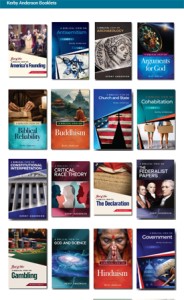
Check out all the Kerby Anderson booklets

When Karl Marx first proposed the concepts of socialism and communism, he enjoyed an intellectual advantage. He could talk about the problems with capitalism the modern world was going through as they were adapting to the difficult process of industrialization. He could contrast the reality of capitalism with the utopian ideal of socialism.

Utopian visions will always win out over the harsh reality of the world. But we now have the terrible record of socialism. Unfortunately, socialism’s death toll never quite gets factored into any equation. The late columnist Joseph Sobran said, “It makes no difference that socialism’s actual record is terribly bloody; socialism is forever judged by its promises and supposed possibilities, while capitalism is judged by its worst cases.”{1}

Dinesh D’Souza reminds us that many countries have tried socialism and all failed. The first socialist experiment was the Soviet Union, then came lots of countries in eastern Europe (Poland, Yugoslavia, Albania, Czechoslovakia, Hungary, Romania, and East Germany). Add to that countries in Asia (Vietnam, Laos, Cambodia, North Korea, and China) and countries in South America (Cuba, Nicaragua, Bolivia, and Venezuela) and Africa (Angola, Ghana, Tanzania, Benin, Mali, Mozambique, Zambia, and Zimbabwe). By his count, there are 25 failed experiments in socialism.{2}

The typical answer to these failures is that each of these wasn’t done correctly. The failure of these socialist experiments was a failure of implementation. But this time, they say, we will get it right. Believing in socialism apparently means never having to say you’re sorry.

On the other side are all the promises of socialism that are so appealing to young people. Free college tuition and student loan forgiveness are examples. The millennial generation (Generation Y) and the iGen generation (Generation Z) have lots of student debt. They see the need but forget that someone would have to pay for this new massive entitlement. And they rarely stop and think about why someone who didn’t go to college and took a blue-collar job should pay for their university education. These may be the most educated generations in history, but they don’t seem to spend too much time reflecting on what they supposedly learned in economics.

The cost of some of these policies is enormous. Just covering the cost of tuition at public colleges and universities is estimated at $70 billion a year. One study of the cost of government-run health care (called “Medicare for All”) was estimated to cost $32 trillion during the first ten years. Some estimate the cost of the “Green New Deal” to be $93 trillion. We can certainly debate how accurate some of those estimates are, but we can’t ignore that these programs would be very expensive once implemented.

A Different Kind of Socialism

Proponents of socialism not only argue that it was not implemented correctly in the past but also argue that what they are proposing is “democratic socialism.” They usually point to the Scandinavian countries as examples.

In one of his videos, Anders Hagstrom asks, “What does socialism mean to him?” He says that conversations about socialism often go like this: “A liberal says we should be socialist. A conservative points to Venezuela, and says socialism doesn’t work. A liberal says, What about Sweden and Norway? The conservative then points out that those countries aren’t actually socialist.”{3}

He says that even if we accept the comment by liberals, there is a problem. “Nordic countries have tiny populations of less than 10 million. And copying and pasting their policies to a country of 330 million isn’t going to work.” These Nordic countries were successful before they adopted the redistributive policies they have now. Here’s a reality check: if Sweden were to join the US as a state, Sweden would be poorer than all but 12 states.

Hagstrom also explains that the policies of true socialists like Senator Bernie Sanders and Alexandria Ocasio-Cortez go far beyond what the Nordic countries have. For example, Bernie Sanders wants a planned economy. None of the Nordic states have this. Alexandria Ocasio-Cortez wants to abolish profit. None of the Nordic countries have done that. And both of them want a universal minimum wage.

None of the Nordic states have that.

There’s another problem with the argument. These countries aren’t socialist. John Stossel, in one of his videos, interviewed a prominent Swedish historian.{4} Johan Norberg makes it clear that “Sweden is not socialist—because the government doesn’t own the means of production. To see that, you have to go to Venezuela or Cuba or North Korea.” He does admit that the country did have something that resembled socialism a few decades ago. The government heavily taxed the citizens and spent heavily. That was not a good period in Swedish history, especially for the economy.

One example he uses is Astrid Lindgren, author of the popular children’s books, Pippi Longstocking. Because her books were popular and sold well, she experienced something Americans cannot even imagine. She had to pay a tax of 102 percent on any new book she sold.

Yet even with the high Swedish taxes, there was simply not enough money to fund Sweden’s huge welfare state. Norberg explains that “People couldn’t get the pension that they thought they depended on for the future.” At this point, the Swedish people had enough and began to reduce the size and scope of the government.

John Stossel says, “They cut public spending, privatized the national rail network, abolished certain government monopolies, eliminated inheritance taxes and sold state-owned businesses like the maker of Absolut Vodka.” While it is true that Sweden does have a larger welfare state than the US and higher taxes than the US, there are many other areas where Sweden is actually more free market.

Nevertheless, the argument persists that these Scandinavian countries demonstrate the success of socialism. That is one reason why Dinesh D’Souza dedicated an entire chapter in his book on the subject of socialist experiments, Venezuela, and the Scandinavian illusion, in order to answer the arguments and rebuttals used to advance the idea of democratic socialism.{5}

Doesn’t the Bible Teach Socialism?

If you have ever been teaching through the book of Acts, you know when this question will surface. In Acts 4, we find a statement that the believers in Jerusalem “had all things in common.” It also says that those who possessed land or houses sold them and brought the proceeds to the apostles’ feet. They distributed these gifts to anyone in need. This looks like socialism to many who are already predisposed to believe it should be the economic system of choice.

First, we need to realize that this practice was only done in Jerusalem. As you read through the rest of the book of Acts and read the letters of Paul and Peter, you see that most believers in other parts of the Roman world had private property and possessions. Paul calls upon them to give voluntarily to the work of ministry.

Second, the word voluntary applies not only to Christians in other parts of the world, but it also was a voluntary act by the believers in Jerusalem to give sacrificially to each other in the midst of persecution. This one passage in the book of Acts is not a mandate for socialism.

If you keep reading in the book of Acts, you can also see that the believers in Jerusalem owned the property before they voluntarily gave the proceeds to the apostles. The next chapter (Acts 5) clearly teaches that. When Peter confronted Ananias, he clearly stated that “While it remained, was it not your own? After it was sold, was it not in your own control?”

Owning property contradicts one of the fundamental principles of socialism. In the Communist Manifesto, “the abolition of property” is a major item in the plan for moving from capitalism to socialism and eventually to communism.

By contrast, the Ten Commandments assume private property. The eighth commandment forbidding stealing and the tenth commandment about coveting both assume that people have private property rights.

In fact, we can use biblical principles to evaluate economic systems like capitalism and socialism. Although the Bible does not endorse a particular system, it does have key principles about human nature, private property rights, and the role of government. These can be used to evaluate economic systems.

Socialism and Equality

One of the moral arguments for socialism is that it creates a society with more social and economic equality. Proponents want us to consider the fairness argument when applied to a free market. How fair is it that basketball star Lebron James makes more than $37 million when a social worker starting out only makes about $30,000? Even more extreme is the estimate that Jeff Bezos makes more than $320 million a day while the average Amazon salary is around $35,000 a year.

Of course, this is what happens in a free society where people with different skills, different abilities, and different motivations are allowed to participate in a free market. You will get inequality, but you also have a free society where people can use their gifts to pursue their calling and still receive a good income.

We don’t have to guess what will happen in a socialist economy because we have lots of historical examples. In a desire to bring equality, socialism doesn’t bring people up out of poverty. Instead, it
drives them into poverty. Consider two test cases (Germany and Korea).

After World War II, Germany was divided into two countries: West Germany was capitalist, while East Germany was socialist. Throughout the time they were divided, there was a striking difference between the two countries. When the two countries were reunified, the GDP of East Germany was a third of the GDP of West Germany. In fact, even the poorest parts of West Germany (Schleswig-Holstein) were more than twice as wealthy as the richest region of East Germany (Saxony).

An even better example is North and South Korea, because it has lasted longer and continues to this day. South Korea is now more than 20 times richer than North Korea. Of course, people in South Korea are also freer than North Korea. They are also taller and live about 12 years longer than people in North Korea.{6}

By contrast, capitalism provides every person a chance to influence the society. In his book, United States of Socialism, Dinesh D’Souza doesn’t ignore the issue of justice but actually embraces it. Capitalism, he says, “far more than socialism, reflects the will of the people and expresses democratic consent.” A consumer is like a voter. As a citizen, we get to vote in an election every two to four years. But a consumer gets to vote every day with his or her dollar bills. That money represents the time and effort put in to get those dollar bills.

Citizens participate in a system of representative democracy (where their views are filtered through politicians who represent them). But a consumer votes in a system of direct democracy. You can choose Coke or New Coke or Pepsi or Dr. Pepper. You choose Fox over MSNBC and prefer an iPhone to another cell phone. You exercise your preferences by paying for it yourself.

The free market provides you a level of popular participation and democratic consent that politics can never provide. You get to vote every day with your dollars and send economic signals to people and companies providing goods and services. Essentially, capitalism, like democracy, is a clear form of social justice.

These are just a few arguments used to promote socialism. If we are to win the war of ideas, we need to understand how to respond to these arguments and make a convincing case for the free market. This booklet, and the previous one on A Biblical View on Capitalism and Socialism, are resources to use in that battle over these economic ideas.

Additional Resources

Kerby Anderson, A Biblical View on Capitalism and Socialism, 2018.
Dinesh D’Souza, United States of Socialism, New York: All Points Books, 2020.
F.A. Hayek, The Road to Serfdom: Text and Documents, the Definitive Edition, ed. Bruce Caldwell. Chicago: University of Chicago Press, 2007.
Jay Richards. Money, Greed, and God. New York: Harper One, 2009.
Kevin Williamson, The Politically Incorrect Guide to Socialism, Washington, DC: Regnery Publishing, 2011.

Notes
1. Joseph Sobran quoted by Robert Knight, “Bernie’s siren song of socialism,” Washington Times. September 13, 2015, www.washingtontimes.com/news/2015/sep/13/robert-knightbernie-sanders-siren-song-of-sociali/
2. Dinesh D’Souza, United States of Socialism, New York: All Points Books, 2020, 3.
3. Anders Hagstrom, “When you are forced to argue socialism with a liberal,” www.facebook.com/watch/?v=234493017230024.
4. John Stossel, “Sweden is not a socialist success,” www.facebook.com/watch/?v=407319650027595.
5. Souza, 135-217
6. Ibid., 5.

Point of View Ministries • PO Box 30 • Dallas, TX 75221
800-347-5151
A Biblical View on Socialism
© Point of View Ministries 2021

Used by permission


Influential Intellectuals

Kerby Anderson examines four famous intellectuals—Rousseau, Marx, Russell and Sartre, looking for reasons they are worth following and not finding much.

download-podcastOver the last two centuries, a few intellectuals have had a profound impact on Western Culture. British historian Paul Johnson writes about many of these influential intellectuals in his book, Intellectuals: From Marx and Tolstoy to Sartre and Chomsky. In this article, we will look at four of the better-known intellectuals whose influence continues to this day.

Paul Johnson reminds us that over the past two centuries, the influence of these secular intellectuals has grown steadily. He believes it is the key factor in shaping the modern world. In fact, this is really a new phenomenon. It was only the decline of clerical power in the eighteenth century that allowed these men to have a more significant influence in society.

Each secular intellectual “brought to this self-appointed task a far more radical approach than his clerical predecessors. He felt himself bound by no corpus of revealed religion.”{1} For the first time, these intellectuals felt they alone could diagnose the ills of society and cure them without a need to refer to religion or past tradition.

One important characteristic of these new secular intellectuals was their desire to subject “religion and its protagonists to critical scrutiny.” And they pronounced harsh verdicts on priests and pastors about whether they could live up to their precepts.

After two centuries in which the influence of religion has declined and secular institutions have had a greater influence, Paul Johnson believes it is time to examine the record and influence of these secular intellectuals. In particular, he focuses on their moral and judgmental credentials. Do they have the right to tell the rest of us how to run our lives? How moral and just were they in their financial dealings and their sexual relationships? And how have their proposed systems stood up to the test of time?

I will give you a preview. These secular intellectuals lived decadent lives and mistreated so many people in their lives. Their proposed systems of politics, economics, and culture have been a failure and devastated
millions of lives.

What a contrast to the Christian message. Jesus lived a sinless life (1 John 3:5) even though He was tempted as we are (Hebrews 4:15). Jesus called on His disciples to follow Him (Matthew 4:19). Even the Apostle Paul encouraged Christians to follow his example as he followed the example of Christ (1 Corinthians 11:1).

Paul Johnson concludes his book with a number of examples of how some of these secular intellectuals addressed current political and social issues. He also points out that these intellectuals saw no incongruity in moving from their own discipline (where they are masters) to public affairs (where they have no expertise). In the end, we discover that they “are no wiser as mentors, or worthier as exemplars, than the witch doctors or priests of old.”{2}

Jean-Jacques Rousseau

Jean-Jacques Rousseau is a very influential intellectual. Many of our modern ideas of education were influenced to some degree by his treatise Émile. And even to this day many indirectly refer to some of his ideas found in the Social Contract that encapsulated his political philosophy.

Rousseau rejected the biblical narrative and instead believed that society was the reason we humans are defective. He argued, “When society evolves from its primitive state of nature to urban sophistication, man is corrupted.”{3}

Rousseau believed that you could improve human behavior (and even completely transform it) by changing the culture and the forces that produced it. In essence, he believed you can change human beings through social
engineering.

He was, no doubt, a difficult person to be around and very egotistical. Paul Johnson explains that “part of Rousseau’s vanity was that he believed himself incapable of base emotions.”{4} He also had a great deal of self-pity for his circumstances and had “a feeling that he was quite unlike other men, both in his sufferings and his qualities.”{5}

Paul Johnson also reminds us that Rousseau “quarreled, ferociously and usually permanently, with virtually everyone with whom he had close dealings, and especially those who befriended him; and it is impossible to study the painful and repetitive tale of these rows without reaching the conclusion that he was a mentally sick man.”{6}

Apparently, he cared little for those around him. For example, his foster-mother rescued him from destitution at least four times. But later when he did much better financially, and she became indigent, he did little for her.{7} His five children born to his mistress were abandoned to the orphanage hospital. He did not even know the dates of their births and took no interest in them.

Rousseau even acknowledged “that brooding on his conduct towards his children led him eventually to formulate theory of education he put forward in Émile. It also clearly helped to shape his Social Contract,
published the same year.”{8}

The only woman who ever loved Rousseau summed him up this way: “He was a pathetic figure, and I treated him with gentleness and kindness. He was an interesting madman.”{9}

In this article we are studying some of these secular intellectuals because they have had such a profound impact on our world even today. But as we can already see from the life of Rousseau and will see from some of the other men we will discuss below, they lived decadent lives. They really had no business telling the rest of us how to live our lives.

Karl Marx

Paul Johnson concludes that Marx “has had more impact on actual events, as well as on the minds of men and women, than any other intellectual in modern times.”{10}

Marx claimed that his philosophy was scientific. Paul Johnson disagrees and says it was not scientific. “He felt he had found a scientific explanation of human behavior in history akin to Darwin’s theology of evolution.”{11} Although Marx obtained a doctorate in philosophy he really wasn’t a scholar, at least in the traditional sense. He actually spent more time organizing the Communist League and collecting material.

Paul Johnson says there were three strands in Marx: the poet, the journalist, and the moralist. He used poetic imagery which actually became part of his political vision. He was also a journalist and fairly good one at that. He also made use of aphorisms. Many of the most famous were borrowed from others. Two of the best known are: “The proletarians have nothing to lose but their chains,” and “Religion in the opium of the people.”

The moral impulse of Marx began with “his hatred of usury and moneylenders.”{12} He believed that Jews had corrupted Christianity. His solution, therefore, was to abolish the Jewish attitude toward money. Ultimately, the Jews and the corrupted version of Christianity would disappear. Later Marx broadened his critique to blame the bourgeois class as a whole.

How did Marx treat others? “Marx quarreled with everyone with whom he associated” unless “he succeeded in dominating them completely.”{13} He also collected elaborate dossiers about his political rivals and enemies.”{14} Also, Marx “did not reject violence or even terrorism when it suited his tactics.”{15} Later Lenin, Stalin, and Mao would practice such violence on an enormous scale.

Central to his hatred of capitalism was probably his incompetence in handling money. He never seriously attempted to get and hold down a job. Instead, Engels became the primary source of income for Marx and his family. In fact, Engels nearly ended the relationship when he once received a letter from Marx that virtually ignored the death of a woman Engels loved and focused the rest of the letter asking for money.

Life for his wife Jenny and their children was a nightmare. In time her jewelry ended up at the pawnshop. “Their beds were sold to pay the butcher, milkman, chemist and baker.”{16} He even denied his daughters a satisfactory education. After his wife’s death, the family nursery-maid became his mistress and conceived a child whom Marx would never acknowledge. Once again, we see the decadent lives of these secular intellectuals.

Bertrand Russell

Paul Johnson says that “No intellectual in history offered advice to humanity over so long a period as Bertrand Russell.”{17} His first book was published when Queen Victoria was still alive, and his last book came out the year Richard Nixon resigned because of Watergate. He also wrote countless newspaper and magazine articles. He wrote so much because he found writing to be so easy, and he was well paid for it.

Russell was an orphan, but his parents (who were atheists) left instructions for him to be brought up on the teaching of John Stuart Mill.His grandmother, however, would have none of it and raised him in an atmosphere
of Bibles and Blue Books, taught by governesses and tutors. Nevertheless, he rejected religion as a teenager and remained an unbeliever the rest of his life.

“No man ever had a stronger confidence in the power of intellect, though he tended to see it almost as an abstract, disembodied force.”{18} For much “of his life he spent in telling the public what they ought to think and do, and this intellectual evangelism completely dominated the second half of his long life.”{19} On a number of occasions, he found himself in trouble with the law, being sued and fined for articles he wrote.

Paul Johnson remarked that “No one was more detached from physical reality than Russell. He could not work the simplest mechanical device or perform any of the routine tasks which even the most pampered man does without thinking.”{20}

He said that the First World War caused him to revise the views he held about human behavior, in part because he could not understand how people’s emotions function in wartime. Reading him produced “a sense of wonder in the normal reader that so clever a man could be so blind to human nature.”{21}

Bertrand Russell believed “that the ills of the world could be largely solved by logic, reason, and moderation.” But here was his inconsistency. “When preaching his humanist idealism, Russell set truth above any other consideration. But in a corner, he was liable—indeed likely—to try to lie his way out of it.”{22}

As we have documented with other secular intellectuals, Russell also exploited women (especially his wives) as well as others who worked with him. This does seem to be a pattern. When students are required to read the works of many these men, they are never told about their lives. Although we are supposed to respect their intellect, once we study their lives we find that there was very little to respect.

Jean-Paul Sartre

Paul Johnson concludes that “no philosopher this century has had so direct an impact on the minds and attitudes of so many human beings, especially young people, all over the world.”{23} Existentialism was a popular philosophy for decades. His plays were hits. His books sold in the millions.

He grew up as a spoiled child (his father dying when he was fifteen months), with his grandfather giving him the run of his library and his mother providing for him a childhood “paradise.” He enjoyed one of the best educations
and had a habit of reading three hundred books a year.

In some ways, World War II made Sartre, though the people around him found little use for him. He “was notorious for never taking a bath and being disgustingly dirty. What he did was write.”{24} He didn’t do anything to save the Jews. Instead, he “concentrated relentless on promoting his own career. He wrote furiously, plays, philosophy and novels, mainly in cafés.”{25}

Sartre is known for the philosophy of existentialism, though the word was not his. The press invented it, and he came to embrace it. He proposed his philosophy of human freedom at a time when people were hungry for it. But he also meant that the existentialist individual must live without excuses. That is the why he wrote that “Man is condemned to be free.”

Sartre’s companion through life was Simone de Beauvoir, who was a brilliant writer and philosopher. But he treated her “as a mistress, surrogate wife, cook and manager, female bodyguard, and nurse.”{26} He was “the archetype of what in the 1960s became known as a male chauvinist.”{27} He had numerous sexual liaisons that came and went with some regularity.

Paul Johnson concludes that “Sartre, like Russell, failed to achieve any kind of coherence and consistency in his views on public policy. No body of doctrine survived him.”{28} Apparently he stood for very little other than to be linked to the liberal Left.

In this article we have taken a brief look at the lives of some of the secular intellectuals who have had an influence in the world. They still have some influence, and so it is worth asking if we should accept their prescriptions.

These men all lived decadent lives. Most of them mistreated people in their lives. But even more disturbing is the fact that they proposed systems of politics, economics, and culture that have been a failure and devastated millions of lives. They do not deserve the prominence they are often given in our universities today. We are expected to revere them, but there is little in their lives to respect.

Notes

1. Paul Johnson, Intellectuals: From Marx and Tolstoy to Sartre and Chomsky (New York: Harper-Collins, 1988), 1.
2. Ibid., 34.
3. Ibid., 3.
4. Ibid., 10.
5. Ibid.
6. Ibid., 14.
7. Ibid., 19.
8. Ibid., 23.
9. Ibid., 27.
10. Ibid., 52.
11. Ibid.
12. Ibid., 57.
13. Ibid., 70.
14. Ibid., 71.
15. Ibid.
16. Ibid., 77.
17. Ibid., 197.
18. Ibid., 199.
19. Ibid.
20. Ibid., 202.
21. Ibid.
22. Ibid., 203.
23. Ibid., 225.
24. Ibid., 229.
25. Ibid., 230.
26. Ibid., 235.
27. Ibid., 236.
28. Ibid., 253.

©2018 Probe Ministries


A Famous Revolutionary’s Surprising Past

Written by Rusty Wright

Quiz: What famous revolutionary, born in May, wrote the following words? (The answer may surprise you.)

“Says Christ… ‘I am the vine, you are the branches; he who abides in Me and I in him, he bears much fruit, for apart from Me you can do nothing….’ Our heart, our reason, history itself, and the word of Christ, all call to us loudly and decisively that a union with Him is an absolute necessity, that… only He can save us.”

Was it Pope John Paul II? Martin Luther? Billy Graham? Mother Teresa?

A seventeen-year-old German student wrote this as part of a school essay. Descended from a long line of rabbis, his father had become a nominal Christian for social and economic reasons. The lad went off to study at the University of Berlin where he became enamored of the writings of the recently deceased dialectical philosopher Hegel as well as of other law and philosophy professors.

Soon he became disenchanted with Christianity, viewing it as a means of oppression and social control. His doctoral dissertation expressed his disdain with religion. A few years later he affirmed that “man makes religion, religion does not make man” and saw religion as “the opium of the people.” He felt “the social principles of Christianity are hypocritical.”

Thirteen years after his touching essay on union with Christ, Karl Marx wrote (with Frederick Engels), “A specter is haunting Europe–the specter of Communism. . . . The proletarians have nothing to lose but their chains. They have a world to win. Workingmen of all countries, unite!”

Now, over 150 years after The Communist Manifesto was first published, we might say, “A specter is haunting Europe–the specter of democracy” (albeit with a few bumps). During the collapse of the Soviet Union, Moscow demonstrators held up a banner reading “Workers of the World, We Apologize.”

Ironically, much of the democratic fervor that swept former Communist states during the last decade was fueled by religious commitment. Influence by the Catholic Church in Poland and the Protestant church in East Germany and Romania were but a few examples. Prayer meetings led to demonstrations that eventually brought down despots. A “revolution by candlelight”, some have called it.

The hunger for spiritual fulfillment is a deep human longing. The dedication that filling a spiritual void can bring has sparked social reforms too numerous to detail. Eighteenth century British parliamentarian William Wilberforce spent decades opposing the slave trade. He endured ridicule and ill health as he took on the moneyed establishment on an issue that affected their pocketbook but apparently not their conscience. Wilberforce’s Christian conviction drove and sustained him to a successful end.

One of Wilberforce’s chief encouragers was John Newton, a pastor and former slave trader who found faith during a storm at sea. He is perhaps best known for writing the ever-popular song, “Amazing Grace.”

Another supporter was John Wesley, founder of Methodism. The last letter Wesley ever wrote was to Wilberforce encouraging him to continue his uphill fight: “O be not weary of well doing! Go on, in the name of God and in the power of his might, till even American slavery (the vilest that ever saw the sun) shall vanish away before it.”

Karl Marx learned to hate Christianity. How might history have differed had the young Marx met intelligent but sensitive believers who could have explained the faith’s intellectual roots while demonstrating Jesus’ concern for the poor and suffering? Could knowing Wilberforce or Newton or Wesley have made a difference?

What about today’s socially concerned? As they watch spiritual leaders, will they see the compassion and passionate dedication to justice and truth that past heroes of the faith displayed? Or will they see moral compromise and indifference? Might a future Karl Marx be watching?

©2000 Rusty Wright. Used by permission. All rights reserved.