The Council of Nicea and the Doctrine of the Trinity

Don Closson argues that Constantine did not impose the doctrine of the Trinity on the church, demonstrating the actual role of church leaders and Constantine.

This article is also available in Spanish.

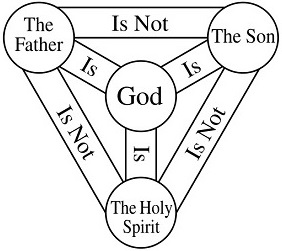
The doctrine of the Trinity is central to the uniqueness of Christianity. It holds that the Bible teaches that “God eternally exists as three persons, Father, Son, and Holy Spirit, and each person is fully God, and there is one God.”{1} So central is this belief that it is woven into the words Jesus gave the church in His Great Commission, telling believers to ” . . . go and make disciples of all nations, baptizing them in the name of the Father and of the Son and of the Holy Spirit . . .” (Matthew 28:19).

It is not surprising, then, that the doctrine of the Trinity is one of the most denigrated and attacked beliefs by those outside the Christian faith. Both Mormons and Jehovah’s Witnesses reject this central tenet and expend considerable energy teaching against it. Much of the instruction of the Jehovah’s Witness movement tries to convince others that Jesus Christ is a created being, not having existed in eternity past with the Father, and not fully God. Mormons have no problem with Jesus being God; in fact, they make godhood available to all who follow the teachings of the Church of Latter-day Saints. One Mormon scholar argues that there are three separate Gods–Father, Son, and Holy Spirit–who are one in purpose and in some way still one God.{2} Another writes, “The concept that the Father, Son, and Holy Ghost are one God is totally incomprehensible.”{3}

Among the world religions, Islam specifically teaches against the Trinity. Chapter four of the Koran argues, “Say not ‘Trinity’: desist: it will be better for you: for Allah is One God: glory be to Him: (far Exalted is He) above having a son” (4:171). Although Muhammad seems to have wrongly believed that Christians taught that the Trinity consisted of God the Father, Mary the Mother, and Jesus the Son, they reject as sinful anything being made equivalent with Allah, especially Jesus.

A common criticism by those who reject the doctrine of the Trinity is that the doctrine was not part of the early church, nor a conscious teaching of Jesus Himself, but was imposed on the church by the Emperor Constantine in the early fourth century at the Council of Nicea. Mormons argue that components of Constantine’s pagan thought and Greek philosophy were forced on the bishops who assembled in Nicea (located in present day Turkey). Jehovah’s Witnesses believe that the Emperor weighed in against their view, which was the position argued by Arius at the council, and, again, forced the church to follow.

In the remaining portions of this article, we will discuss the impact the three key individuals–Arius, Constantine, and Athanasius–had on the Council of Nicea. We will also respond to the charge that the doctrine of the Trinity was the result of political pressure rather than of thoughtful deliberation on Scripture by a group of committed Christian leaders.

Arius

Let’s look first at the instigator of the conflict that resulted in the council, a man named Arius.

Arius was a popular preacher and presbyter from Libya who was given pastoral duties at Baucalis, in Alexandria, Egypt. The controversy began as a disagreement between Arius and his bishop, Alexander, in 318 A.D. Their differences centered on how to express the Christian understanding of God using current philosophical language. This issue had become important because of various heretical views of Jesus that had crept into the church in the late second and early third centuries. The use of philosophical language to describe theological realities has been common throughout the church age in an attempt to precisely describe what had been revealed in Scripture.

Alexander argued that Scripture presented God the Father and Jesus as having an equally eternal nature. Arius felt that Alexander’s comments supported a heretical view of God called Sabellianism which taught that the Son was merely a different mode of the Father rather than a different person. Jehovah’s Witnesses argue today that the position held by Arius was superior to that of Alexander’s.

Although some historians believe that the true nature of the original argument has been clouded by time and bias, the dispute became so divisive that it caught the attention of Emperor Constantine. Constantine brought the leaders of the church together for the first ecumenical council in an attempt to end the controversy.

It should be said that both sides of this debate held to a high view of Jesus and both used the Bible as their authority on the issue. Some have even argued that the controversy would never have caused such dissension were it not inflamed by political infighting within the church and different understandings of terms used in the debate.

Arius was charged with holding the view that Jesus was not just subordinate to the Father in function, but that He was of an inferior substance in a metaphysical sense as well. This went too far for Athanasius and others who were fearful that any language that degraded the full deity of Christ might place in question His role as savior and Lord.

Some believe that the position of Arius was less radical than is often perceived today. Stuart Hall writes, “Arius felt that the only way to secure the deity of Christ was to set him on the step immediately below the Father, who remained beyond all comprehension.”{4} He adds that whatever the differences were between the two sides, “Both parties understood the face of God as graciously revealed in Jesus Christ.”{5}

Emperor Constantine

Many who oppose the doctrine of the Trinity insist that the emperor, Constantine, imposed it on the early church in 325 A.D. Because of his important role in assembling church leaders at Nicea, it might be helpful to take a closer look at Constantine and his relationship with the church.

Constantine rose to supreme power in the Roman Empire in 306 A.D. through alliance-making and assassination when necessary. It was under Constantine’s Edict of Milan in 313 A.D. that persecution of the church ended and confiscated church properties were returned.

However, the nature of Constantine’s relationship to the Christian faith is a complex one. He believed that God should be appeased with correct worship, and he encouraged the idea among Christians that he “served their God.”{6} It seems that Constantine’s involvement with the church centered on his hope that it could become a source of unity for the troubled empire. He was not so much interested in the finer details of doctrine as in ending the strife that was caused by religious disagreements. He wrote in a letter, “My design then was, first, to bring the diverse judgments found by all nations respecting the Deity to a condition, as it were, of settled uniformity; and, second to restore a healthy tone to the system of the world . . .”{7} This resulted in him supporting various sides of theological issues depending on which side might help peace to prevail. Constantine was eventually baptized shortly before his death, but his commitment to the Christian faith is a matter of debate.

Constantine participated in and enhanced a recently established tradition of Roman emperors meddling in church affairs. In the early church, persecution was the general policy. In 272, Aurelian removed Paul of Samosata from his church in Antioch because of a theological controversy. Before the conflict over Arius, Constantine had called a small church synod to resolve the conflict caused by the Donatists who argued for the removal of priests who gave up sacred writings during times of persecution. The Donatists were rebuked by the church synod. Constantine spent five years trying to suppress their movement by force, but eventually gave up in frustration.

Then, the Arian controversy over the nature of Jesus was brought to his attention. It would be a complex debate because both sides held Jesus in high regard and both sides appealed to Scripture to defend their position. To settle the issue, Constantine called the council at Nicea in 325 A.D. with church leaders mainly from the East participating. Consistent with his desire for unity, in years to come Constantine would vacillate from supporting one theological side to the other if he thought it might end the debate.

What is clear is that Constantine’s active role in attempting to resolve church disputes would be the beginning of a new relationship between the empire and the church.

Athanasius

The Council of Nicea convened on May 20, 325 A.D. The 230 church leaders were there to consider a question vital to the church: Was Jesus Christ equal to God the Father or was he something else? Athanasius, only in his twenties, came to the council to fight for the idea that, “If Christ were not truly God, then he could not bestow life upon the repentant and free them from sin and death.”{8} He led those who opposed the teachings of Arius who argued that Jesus was not of the same substance as the Father.

The Nicene Creed, in its entirety, affirmed belief “. . . in one God, the Father almighty, Maker of all things visible and invisible. And in one Lord Jesus Christ, the Son of God, begotten of the Father, Light of Light, very God of very God, begotten, not made, being of one substance with the Father; by whom all things were made; who for us men, and for our salvation, came down and was incarnate and was made man; he suffered, and the third day he rose again, ascended into heaven; from thence he shall come to judge the quick and the dead. And in the Holy Ghost.” {9}

The council acknowledged that Christ was God of very God. Although the Father and Son differed in role, they, and the Holy Spirit are truly God. More specifically, Christ is of one substance with the Father. The Greek word homoousios was used to describe this sameness. The term was controversial because it is not used in the Bible. Some preferred a different word that conveyed similarity rather than sameness. But Athanasius and the near unanimous majority of bishops felt that this might eventually result in a lowering of Christ’s oneness with the Father. They also argued that Christ was begotten, not made. He is not a created thing in the same class as the rest of the cosmos. They concluded by positing that Christ became human for mankind and its salvation. The council was unanimous in its condemnation of Arius and his teachings. It also removed two Libyan bishops who refused to accept the creed formulated by the Council.

The growing entanglement of the Roman emperors with the church during the fourth century was often less than beneficial. But rather than Athanasius and his supporters seeking the backing of imperial power, it was the Arians who actually were in favor of the Emperor having the last word.

Summary

Did Constantine impose the doctrine of the Trinity on the church? Let’s respond to a few of the arguments used in support of that belief.

First, the doctrine of the Trinity was a widely held belief prior to the Council of Nicea. Since baptism is a universal act of obedience for new believers, it is significant that Jesus uses Trinitarian language in Matthew 28:19 when He gives the Great Commission to make disciples and baptize in the name of the Father, Son, and Holy Spirit. The Didache, an early manual of church life, also included the Trinitarian language for baptism. It was written in either the late first or early second century after Christ. We find Trinitarian language again being used by Hippolytus around 200 A.D. in a formula used to question those about to be baptized. New believers were to asked to affirm belief in God the Father, Christ Jesus the Son of God, and the Holy Spirit.

Second, the Roman government didn’t consistently support Trinitarian theology or its ardent apologist, Athanasius. Constantine flip-flopped in his support for Athanasius because he was more concerned about keeping the peace than in theology itself. He exiled Athanasius in 335 and was about to reinstate Arius just prior to his death. During the forty-five years that Athanasius was Bishop of Alexandria in Egypt, he was banished into exile five times by various Roman Emperors.

In fact, later emperors forced an Arian view on the church in a much more direct way than Constantine supported the Trinitarian view. Emperors Constantius II and Julian banished Athanasius and imposed Arianism on the empire. The emperor Constantius is reported to have said, “Let whatsoever I will, be that esteemed a canon,” equating his words with the authority of the church councils.{10} Arians in general “tended to favor direct imperial control of the church.”{11}

Finally, the bishops who attended the Council of Nicea were far too independent and toughened by persecution and martyrdom to give in so easily to a doctrine they didn’t agree with. As we have already mentioned, many of these bishops were banished by emperors supporting the Arian view and yet held on to their convictions. Also, the Council at Constantinople in 381 reaffirmed the Trinitarian position after Constantine died. If the church had temporarily succumbed to Constantine’s influence, it could have rejected the doctrine at this later council.

Possessing the freedom to call an ecumenical council after the Edict of Milan in 313, significant numbers of bishops and church leaders met to consider the different views about the person of Christ and the nature of God. The result was the doctrine of the Trinity that Christians have held and taught for over sixteen centuries.

Notes

1. Grudem, Wayne, Bible Doctrine (Zondervan, 1999), p. 104.
2. Blomberg, Craig L., & Robinson, Stephen E., How Wide the Divide, (InterVarsity Press, 1997), p. 128.
3. Bruce McConkie in Mormonism 101 by Bill McKeever & Eric Johnson (Baker Books, 2000), p. 52.
4. Hall, Stuart G., Doctrine and Practice in the Early Church, (Eerdmans, 1991), p. 135.
5. Ibid.
6. Hall, Stuart G., Doctrine and Practice in the Early Church, p. 118.
7. Noll, Mark, Turning Points: Decisive Moments in the History of Christianity, (InterVarsity Press, 1997), p. 51.
8. Ibid., 55.
9. Ibid., 57.
10. Ibid.
11. Ibid., 60.

© 2003 Probe Ministries.

“Jesus Was Only Representing Jehovah”

I read your letter concerning Jehovah’s Witnesses and the Trinity. Like you, I like to get my facts straight, that’s why I did a little research.

I found out something concerning the Alpha and the Omega. If you turn your bible to the first chapter of Revelations, you will see something that maybe the witnesses you’ve talked to haven’t. In my version it states, “A revelation by Jesus Christ, which God gave him, to show his slaves the things that must shortly take place.” So here you clearly see that when Jesus said he was the Alpha and the Omega, he was representing God, Jehovah God.

I am yet to do some more research concerning that other verse of yours, but please take into consideration that I’m not trying to be rude, and I am listening to what you are saying, what I’m trying to do is help another one in understanding the deep things of God.

I welcome your comments and discussions, and I might be writing to you again. My e-mail is enclosed.

And please don’t get the point that I’m some snobby religious person trying to get back at another. I’m 14 yrs old and I read and study the bible everyday so don’t think that I’m not coming from anywhere.

Anyway, Good Day!

Thank you for writing. I have read your response to my article and I am glad you are interested in searching for the truth. As you do, let me encourage you to seek answers from the Bible alone, not the Watchtower organization.

In regards to your response, it does not change the argument that Jesus is God the Son in any way. I agree that this message is given by God and mediated through Christ. In 1:8 God the Father is speaking. We know this because after He states, “I am the Alpha and the Omega,” He states, “Who is, and who was, and is to come, the Almighty.” The phrase “who was, who is, and is to come” refers to God the Father.

When we look at Revelation 22:12-21, Jesus is speaking about himself, not on behalf of God the Father. How do we know this? 22:12 states, “Behold, I am coming soon and my reward is with me.” When scripture refers to the coming of the king to earth, it is referring to Jesus. Jesus is the one who is coming. God the Father is not referred to as the one who is coming soon. Jesus is the one coming soon in all occasions. (Matthew 16:27, 24:30-31) Revelation 1:7 makes it clear once again that Jesus is coming because it states that the one who is coming is “pierced.” So when Jesus says, in 22:7 and 12, “Behold I am coming soon,” He is not quoting God the Father, He is referring clearly to himself. He, Jesus, is coming soon. In 22:16 Jesus states again, “I Jesus have sent my angel…” It therefore does not fit if you look at the grammar of the discourse to say in verse 22:12 Jesus is referring to Himself, then in the same discourse He suddenly switches to quote God in verse 13 and then switches back to refer to Himself in verses 14-21. This is an attempt by the Watchtower organization to manipulate the text to fit their interpretation.

However, if you look at the grammatical context, in verse 22:12 Jesus refers to himself, for He is the one who is coming. And verses 13-21 refer to Jesus. To say verse 13 suddenly refers to God the Father and not Jesus is being dishonest to the grammar and context of the passage.

I would recommend you read through the entire book of Revelation, outline it and state what the theme of the entire book is. Do not simply accept what the Watchtower teaches you, study the scriptures for yourself. The record of 100 years of false prophecy from the Watchtower clearly displays their record of false interpretation for over a century. God commands us to study His word, not the teachings of an organization. God says, “Blessed is the one who reads the words of this prophecy,” (Rev. 1:3) and He is not referring to the Watchtower magazines.

Thanks for writing. Keep studying God’s word.

Patrick Zukeran
Probe Ministries


“I Have Questions About the Trinity”

I still have questions about the Trinity from your article The Jehovah’s Witnesses and the Trinity–here are some of them:

John 17:1-3 The Emphatic Diaglott reads this this way: “Jesus spoke these things, and lifted up his eyes to heaven, and said, Father, the HOUR is come: glorify THY son, that the son may glorify thee as thou didst give him Authority over all flesh, so everything which thou hast given to him, he may give to them even aionian life. And this is the AIONIAN life, that they may know thee, the ONLY TRUE God, and him whom thou didst send, Jesus Christ.”

If Jesus Christ is God Almighty, then who was he praying to?

When you quoted Rev. 1:16 and 17, you were taking them out of context, surely, because the first few verses show that God sent his angel (Jesus Christ) to John to give him the Revelation. I am assuming you are going to say that it was Jesus Christ who gave the Rev. to John. If so, then Jesus was quoting the words of God, his Father.

Are you saying that Jesus is God–equal in every way to God–or that he a powerful spirit being as God is? In the page dealing with the Trinity you mentioned that Jesus is the same nature as God, that is why I ask?

I have never believed the Trinity, but if I am wrong in not doing so, I want to find out.

Hello and thank you for your question.

Who is Jesus praying to? He is praying to God the Father. Many people misunderstand the doctrine of the Trinity. The Bible shows that there is one God who has revealed himself in three distinct and separate persons, God the Father, God the Son and God the Holy Spirit. What JW’s and others misunderstand is that Jesus, the Father and Holy Spirit are all the same person. The Trinity does not teach Jesus is the Father or that the Father is the Holy Spirit or the Son is the Holy Spirit. The Trinity means there exists one God revealed in three distinct persons. As seen at the Baptism of Jesus in Matthew 3, the Father spoke from heaven, the Son arose from the water, and the Holy Spirit descended like a dove.

So who was Jesus praying to in John 17:1-3? It was God the Son praying to God the Father. I hope you go on to read the rest of the verse. 17:5 states, “And now Father, glorify me in your presence with the glory I had with you before the world began.” Jesus shared in the glory of the Father. What a significant statement in light of Isaiah 42:8, where God the Father states, “I am the Lord, that is my name. I will not give my glory to another or my praise to idols.” The glory of God is His alone. It is evident that this is the glory that belongs to God alone. Why does Jesus have it? Because He is God.

Let us look at Revelation 1:16-17. We are sure this is Jesus speaking because of the context. Verse 1:13 states, “And among the lampstands was someone like the son of Man.” Is God the Father ever called the son of man? No, this is the title of Jesus (Daniel 7:13, Matthew 12:8, 32, and 20:18.) Jesus is not quoting the Father in 1:17-18, He is stating what is true of Himself. Look at the context. Verses 1:17-18 go together. The quote begins at 1:17b, “Do not be afraid. I am the first and the last.” Then it connects to verse 18, “I am the living one; I was dead, and behold I am alive for ever and ever!” Is this statement true of the Father or the son? Was the Father once dead and resurrected to life? No, that is clearly true only of God the Son, Jesus who died on the cross and rose from the dead. Jesus would not be quoting a statement from the Father that was not true of the Father. The Father was never dead and resurrected to life. Context shows verses 1:17-18 are one quote and it is Jesus speaking about what is true of Himself.

Thanks for your question. Keep studying the Bible and the Bible only.

Patrick Zukeran
Probe Ministries


What Difference Does the Trinity Make?

Greg Crosthwait examines the Christian teaching of the Trinity—one God in three Persons—with a view toward how it impacts one’s daily life.

How much do you love the Trinity? Strange question, isn’t it? Well, it certainly struck me as strange the first time I read it. But James R. White, in his article Loving the Trinity,{1} both asks the question and then addresses why it’s so important.

On the issue of the Trinity in the contemporary church, he writes, “For many Christians, the Trinity is an abstract principle, a confusing and difficult doctrine that they believe, although they are not really sure why in their honest moments. They know it is important, and they hear people saying it is ‘definitional’ of the Christian faith. Yet the fact of the matter is . . . little is taught about the relationship of the divine Persons and the Triune nature of God. It is the great forgotten doctrine.”{2}

When I hear that, it prompts me to ask two questions. First of all, to what extent as Christians are we consciously Trinitarian? Well, that softens the question. Perhaps I should ask more accurately, To what extent as Christians are we relentlessly, doggedly, and fervently Trinitarian? Secondly, why should we be?

In this article I’ll examine why the Trinity is important. And hopefully we’ll lay some groundwork so that we may happily realize that to be truly Christian is to be consciously Trinitarian.

Why the Trinity is Important: An Overview

Perhaps some find it easier to think that the Trinity is the “secret handshake” of Christian theologians. Or maybe some may consider the Trinity of value only so we can sing the hymn Holy, Holy, Holy. At the root of these notions is the idea that the Trinity serves no place in the real life of one who holds a Christian worldview. But that’s a mistake. A. W. Tozer begins his book The Knowledge of the Holy saying, “What comes into our minds when we think about God is the most important thing about us.”{3} This statement follows his comment in the preface that reads, “It is impossible to keep our moral practices sound and our inward attitudes right while our idea of God is erroneous or inadequate. If we would bring back spiritual power to our lives, we must begin to think of God more nearly as He is.”{4}

Before moving on in our discussion, though, it may be helpful to give a brief explanation of what I mean when I refer to the Trinity. Of course, we could borrow a short phrase from Holy, Holy, Holy, “God in three persons, Blessed Trinity.” Another handy definition is this, “Although not itself a biblical term, ‘the Trinity’ has been found a convenient designation for the one God self-revealed in Scripture as Father, Son, and Holy Spirit. It signifies that within the one essence of the Godhead we have to distinguish three ‘persons’ who are neither three gods on the one side, nor three parts or modes of God on the other, but coequally and coeternally God.”{5}

Even though it’s short, this definition is both a mouthful and a mind full. But let’s settle on four basic concepts before we move on to the implications. At the heart of the definition of the Blessed Trinity we have: one God, three Persons, who are coequal and coeternal. With this sketch in place, then, we are ready to move out and survey the importance of the Trinity with respect to the Christian worldview and its practical aspects for the Christian life. At the end of our discussion I truly hope that we can affirm together our love for the Trinity.

The Trinity and the Christian Worldview

Having established a short, working definition of the Trinity–one God, three Persons, who are coequal and coeternal–let’s look at the implications of the Trinity on your worldview.

When it comes to discussing worldviews the starting point is the question, Why is there something rather than nothing?{6} As you may already know, there are three basic answers to this question. The pantheist would generally answer that all is one, all is god, and this “god with a small g” has always existed. Second, the naturalist would say that something, namely matter, has always existed. Third, the theist holds that a personal, Creator-God is eternal and out of nothing He created all that there is.

When we look around at what exists, we see an amazing collection of seemingly disparate elements such as gasses, liquids, and solids, planets and stars, horses, flowers, rocks, and trees. And seeing all of these things we notice that they all exist in some sort of equilibrium or unity. How is it that such diversity exists in such apparent unity? And are we as human beings any more important than gasses or ants?

Because the pantheist believes that everything melds into a gigantic oneness, he ultimately has no place for individual things or people. As Scott Horrell argues, “When a worldview begins with an all-inclusive, apersonal deity, there is no final place for the human being or for ethics on either an individual or a social level.”{7}

The pantheist’s commitment to an all-inclusive oneness leaves no room for the real world in which people live, where I am not you and neither of us is one with a tree or a mountain. The naturalist has no problem accepting the reality of the physical world and the diversity present in it. However, there is no solid ground for understanding why it is all held together. In short, there is no infinite reference point so we are left with the circular argument: everything holds together because everything holds together; if it didn’t, we wouldn’t be here to see it. What a coincidence! In fact, coincidence, or chance, is the only basis for anything. As a result human beings are left with an absurd existence. “Without a unifying absolute, everything exists by chance and chance alone. . . . The human being is reduced to either a cog in a cosmic machine or an astronaut adrift in space. . . . If there is no infinite, absolute reference in the universe, then all of the particulars . . . have absolutely no meaning.”{8}

Trinitarian theism is the only option that contains within itself an explanation of both the one and the many while saying that people are important. In the Trinity, God has revealed Himself as the eternal, infinite reference point for His creation. Moreover, the Trinity provides the only adequate basis for understanding the problem of unity and diversity since God has revealed Himself to be one God who exists in a plural unity. Ultimately then, as Horrell concludes, “Every thing and every person has real significance because each is created by and finally exists in relationship to the Triune God.”{9}

The Trinity and Salvation

In reference to the Christian worldview I used the term Trinitarian theism. I used that term because the doctrine of the Trinity separates Christianity from any other type of theism. And, most importantly, it’s the only view that adequately describes God’s work in salvation.

There are other religions beside Trinitarian theism that believe in one God. Judaism, Islam, and so-called Unitarian Christianity (an oxymoron to be sure) all hold to a mono-personal God. This understanding of “God in one person” suffers in two important respects.

First of all, if we understand God to be self-existent, eternal, and personal, characterized by such an action as love, then a mono-personal God cannot be adequate, for love demands an object. Consider Deuteronomy 6:4-5: “Hear, O Israel! The LORD is our God, the LORD is one! And you shall love the LORD your God with all your heart and with all your soul and with all your might.” The first part of this passage is one of the great texts affirming the essential unity of God. And love is the proper human response to Him. This love is not some squishy feeling, but rather an expression of devotion from someone to someone. Love has a source and love has an object. Since human beings are created in the image of God, then He must be capable of love in His very self. So, when we hear, “God is love,” (1 John 4:16) we must realize that in Himself God must be at least two. Scott Horrell writes, “In short, it seems from every vantage that for God to be infinitely personal and to be love, he must exist as at least two persons. A mono-personal God is not ‘big enough’ to be God.”{10}

The other area in which a strictly mono-personal God is inadequate is in the relationship between God’s mercy and His justice. In Romans 3:25-26 we read of Jesus Christ, “a sacrifice of atonement” (NIV) and God the Father who is “just and the justifier of the one who has faith in Jesus.” Simply stated, a mono-personal God cannot be both just and the justifier. Horrell argues, “[I]f God, as Moral Absolute of the universe, shows mercy and forgives the sinner, then he has violated his righteous justice. And if God exercises justice against the sinner, then he has denied his mercy. For a mono-personal God, compassion contradicts holiness, forgiveness is finally contrary to justice. God’s judgment and mercy are arbitrary, if not capricious.”{11}

So far we have seen the work of God the Father, the righteous judge, and God the Son, the only One who can satisfy the judgment of God the Father, and therefore the only worthy object of saving faith. The Trinity is complete as we understand that the Holy Spirit is the One who, in Jesus’ words, “when He comes, will convict the world concerning sin and righteousness and judgment” (John 16:8). The Holy Spirit is the active agent in the hearts of men and women, and He “works in the fallen world convicting and leading sinners to salvation. With God’s absolute holiness satisfied at the cross, true forgiveness can be freely offered to all who believe.”{12}

So we see that the gospel, the story of the God who saves His people, is Trinitarian at its very core. Otherwise God would not be truly just, in which case grace would be far less than amazing.

The Trinity and the “Everydayness” of Everyday

What greater reality can be contained within the Christian confession of the Trinity than that of a God who is able to exercise perfect justice and perfect mercy perfectly? Such a self-revelation from God regarding His activity in salvation should encourage confessing Christians to focus on and revel in the Trinity rather than ignoring or dismissing it as though it were some eccentric, old uncle at a family reunion. And according to James R. White, this is what is happening in parts of the church.

Entire sections of the modern church are functionally “non-Trinitarian.” I did not say “anti-Trinitarian,” for that would involve a positive denial of the doctrine. Instead, while maintaining the confession that the Trinity is true, many today function as if the Trinity did not exist. It has no impact on their theology, their proclamation, prayer, or worship.{13}

This observation leads us into the final section of our discussion. Since we covered the importance of the Trinity with regard to the Christian worldview and the gospel, let’s not leave it on the shelf or in the text book. Let’s dress the doctrine of the Trinity in some work clothes and allow this blessed truth to change our lives where we live them, in the everydayness of everyday.

Trinitarianism impacts three important areas: worship, prayer, and the local church.

Worship

Worship is a debated topic these days. But in the midst of the opinions and preferences about drums, organs, guitars, hymns, praise choruses, and seeker sensitivity, how often does someone declare that our worship is not Trinitarian enough?

Though it seems like a dry, academic issue this is an important question in two ways. First of all, if our worship is not Trinitarian enough, then we fail to worship the God of the Bible. And in biblical terms worshiping anything other than the Most High God is idolatry. As Isaiah records, “Remember the former things long past, For I am God, and there is no other; I am God, and there is no one like me” (Isa. 46:9).

Would a visitor to a typical worship service realize that a Christian church confesses and worships the Triune God? Most certainly someone would realize that we worship Jesus. That person might even hear Him called God’s Son. But would this person hear prayers addressed to the Father, in the name of the Son, by the power of the Holy Spirit? Would this visitor hear songs to the different Persons of the Trinity, about the different Persons of the Trinity?

Good examples of this type of song are the classic hymn Holy, Holy, Holy and the chorus There is a Redeemer, with the refrain, “Thank you, O my Father, for giving us Your Son; And leaving Your Spirit ’til the work on earth is done.” That last example is not foggy theology, but an expression of gratitude to the Living God for who He is and what He has done, is doing, and will do.

I am not arguing that all Christian worshipers must hold doctorates in theology, but simply that we exercise care in the content of our worship so that we truly worship the one true God in three Persons. We can focus on Jesus, and indeed we ought to for He is our Savior. But we must not exclude confession and adoration of the Father and the Holy Spirit, much less the blessed Trinity.

Prayer

In his book, God: Who He Is, What He Does, How to Know Him Better, J. Carl Laney includes a helpful section on prayer. He writes, “Although God is one divine essence, He is also three persons. Which of these should we address in our prayers?”{14} Though this question may seem like an unnecessary trifle, we must be informed by Scripture. We are taught by Jesus to address God the Father, “Pray, then, in this way: Our Father who is in heaven, hallowed be Your Name” (Matt. 6:9). In another statement on prayer Jesus says, “Truly, truly, I say to you, if you ask the Father for anything in My name, He will give it to you” (John 16:23). We see that, in Laney’s words, “Christian prayer involves requesting the Father on the basis of the Son’s merits, influence, and reputation”{15}–that is to say, ask of the Father in the name of the Son. We can also address our prayers to Jesus, who says, “If you ask Me anything in My name, I will do it” (John 14:14).{16}

The Spirit is also active when we pray. Paul writes, “In the same way the Spirit also helps our weakness; for we do not know how to pray as we should, but the Spirit intercedes for us with groanings too deep for words” (Rom. 8:26). So then we pray to the Father, in the name of the Son, by the power of the Spirit who assists us in our weakness. What a wonderful provision from the Triune God who not only desires us to ask of Him, but also enables us to do it.

The Local Church

As we seek to apply the Trinity in the everydayness of everyday, let’s consider life in the local church. And here we encounter an important application of Trinitarian theology.

The Trinity serves as a model for the local church. For as there are three Persons united in the Godhead, all of whom are equally God, so also those who are children of God, united in Christ, and members of the church universal are all equally sons and daughters of God and coheirs of His promises. As Scott Horrell writes, “Believers are to be given real value and dignity by the local church, not left as anonymous spectators amidst professional performances.”{17} The foundation of the value and dignity of believers, regardless of gender or training, rests in the Trinity.

However, this does not negate the need for order in the church. For, though each member of the Trinity is equally God, we see that there is a functional order within the Trinity. The Father sends the Son, the Son glorifies the Father, the Father and the Son together send the Spirit, and the Spirit bears witness of the Son. So also we have a functional order in the local church. There are those who are responsible to exercise authority, elders and deacons, and those who are responsible to submit to authority. But it’s important that we realize that submission does not imply inferiority. The Trinity models this truth. “Whether in the church, family, or society, submission to another does not admit inferiority any more than the Son, by his obedience, is inferior to the Father.”{18}

Though brief in some respects, I hope this discussion has been profitable for you. It’s only a beginning point, and I encourage you to press on, for the deep well of the greatness of our Triune God can never run dry. May we then remove the concept of the Trinity from our dusty shelves and proudly display it as the jewel of God’s revelation that it is.

Notes

1. James R. White, “Loving the Trinity,” Christian Research Journal, Volume 21, Number 4.
2. Ibid., 22.
3. A. W. Tozer, The Knowledge of the Holy (San Francisco: Harper & Row, 1961), 1.
4. Ibid., viii.
5. G. W. Bromily, “Trinity” in Evangelical Dictionary of Theology (Grand Rapids, MI: Baker Books, 1984), 1112.
6. For a fuller discussion on worldviews see Worldviews by Jerry Solomon at www.probe.org.
7. J. Scott Horrell, In the Name of the Father, Son and Holy Spirit: Constructing a Trinitarian Worldview (1998), 1.
8. Ibid., 8.
9. Ibid., 8.
10. Ibid., 11.
11. Ibid., 11.
12. Ibid., 12.
13. White, 22.
14. J. Carl Laney, God: Who He Is, What He Does, How to Know Him Better (Nashville, TN: Word, 1999), 122.
15. Ibid.
16. Ibid.
17. J. Scott Horrell, The Self-Giving Triune God, The Imago Dei and the Nature of the Local Church: An Ontology of Mission, 13.
18. Ibid.

©2000 Probe Ministries


“God is One, Not Three”

Many questions remain unanswered [concerning the article “What Difference Does the Trinity Make?“]. Why just three? Is not three not big enough also according to your own logic to contain all that God is? Is he not only Father, Son, Spirit as well as healer, brother, provider, salvation etc.? The list goes on as you well know. Consider this–that it pleased the Father that the fullness of the Godhead dwelt in him (Jesus) bodily. Again your logic would say that Jesus would not be big enough to contain all that God is. Why bring human logic into this at all? It is human logic that cannot contain all that God is. The Father of Jesus is the Spirit since it was the Spirit that overshadowed Mary. God is a spirit according to Jesus himself. All things were created by Jesus according to Colossians. God robed himself in flesh according to John 1:14. Why do you have a problem believing that Jesus is God? Jesus told Peter to baptize in the name of the Father and of the Son and of the Holy Spirit in Matthew. Peter then according to his instruction baptized in Jesus’ name on the day of Pentecost. You are mistaking all the attributes of God for persons of God. There is no scripture to justify you claim that God is more than one person. You quoted “Hear ye O Israel the Lord our God the Lord is one.” There are no other Gods besides me. there is none like me. I alone created the heavens and the earth. Do not let logic cloud your reasoning. God is not logical in human terms. His ways are above our ways. God/Jesus both said I am alpha and omega. Once you get a revelation of who God is and the duality of the man/God Jesus you will understand that God cannot be relegated to any number of persons but one.

Thanks for your patience in waiting for me to reply to your email regarding my article on the Trinity.

Many questions remain unanswered [concerning the article “What Difference Does the Trinity Make?”]. Why just three? Is not three not big enough also according to your own logic to contain all that God is? Is he not only Father, Son, Spirit as well as healer, brother, provider, salvation etc.? The list goes on as you well know. Consider this–that it pleased the Father that the fullness of the Godhead dwelt in him (Jesus) bodily. Again your logic would say that Jesus would not be big enough to contain all that God is.

With regard to, Why just three? I’ll have to say, because that is all that biblical revelation gives us. Your question centers on a confusion between the ontological Trinity (who God is) and the economic Trinity (what God does). The orthodox formulation of the Trinity is concerned with who God is, not what he does. Therefore, your categories of healer, brother, provider, salavation, etc. could not be designations of the persons within the Trinity, for to an extent all of the Godhead is involved in all that the Godhead does.

Why bring human logic into this at all? It is human logic that cannot contain all that God is. The Father of Jesus is the Spirit since it was the Spirit that overshadowed Mary. God is a spirit according to Jesus himself. All things were created by Jesus according to Colossians. God robed himself in flesh according to John 1:14. Why do you have a problem believing that Jesus is God?

I agree with you that human logic cannot contain all that God is. We are dependent, created creatures and His ways are indeed higher than ours. I wouldn’t exactly say that the Spirit is the Father of God, but that the entire Trinity participated in the Incarnation. And finally, I don’t have any problem believng that Jesus is God. He is God. The Scriptures plainly teach this and it is one of the most important aspects that motivated the development of the doctrine of the Trinity.

Jesus told Peter to baptize in the name of the Father and of the Son and of the Holy Spirit in Matthew. Peter then according to his instruction baptized in Jesus’ name on the day of Pentecost. You are mistaking all the attributes of God for persons of God.

If you are arguing against the Trinity based on Peter’s call, that would be insufficient evidence. Granted, Matthew’s formulation is unique, but its uniqueness in no way disqualifies the Trinity. Early in the same speech Peter says, “God has raised this Jesus to life and we are witnesses of the fact. Exalted to the right hand of God, he (Jesus) has received from the Father the promised Holy Spirit and has poured out what you now see and hear.” Peter clearly had more than Jesus only in mind on the day of Pentecost.

There is no scripture to justify you claim that God is more than one person. You quoted “Hear ye O Israel the Lord our God the Lord is one.” There are no other Gods besides me. there is none like me. I alone created the heavens and the earth.

If by this you mean that there is no single Scripture that says, “God exists in Trinity: one God, three persons who are coequal and coeternal,” you are exactly right. There is also no Scripture in which Jesus says, in as many words, “I am God.” However there are clearly passages where Jesus claims to do things that only God can do. Likewise with the Trinity, we are collecting Scriptural “data” by which we can conclude that the Father is God, the Son (Jesus) is God, the Holy Spirit is God, yet God is One (Deut. 6:4). That’s just doing theology, an inescapable process for anyone who reads the Bible.

Do not let logic cloud your reasoning. God is not logical in human terms. His ways are above our ways. God/Jesus both said I am alpha and omega. Once you get a revelation of who God is and the duality of the man/God Jesus you will understand that God cannot be relegated to any number of persons but one.

I disagree with you. While God is not reducible to the point where we can understand Him, He does “make sense” or “make Himself known to us.” He is, to some degree, understandable and we know this because He has condescended to make Himself known. We understand things through our rational faculties. This does not give us comprehensive knowledge of God, but it does give us intelligible knowledge of God. As far as your conclusion goes, the two natures of Christ are precisely what motivated the kind of theological reflection that lead to the doctrine of the Trinity. Finally, God is not relegated to anything. God has revealed Himself and we must respond to what He has said. If you’re holding to a mono-personal God, the burden of proof is on your side. The church as confessed the trinity for over 1500 years and it has done so for good reason.

Thanks for your interest in dialogue, and thank you for reading the article. I hope that this has been of some help or interest to you. Feel free to write back. Keep reading and thinking.

Greg Crosthwait

© 1999 Probe Ministries


Why We Should Believe in the Trinity

Dr. Pat Zukeran directly confronts unorthodox teaching on the Trinity, confirming the historic Christian formulation of one God in three persons—and examining John 1:1 in detail.

How the Doctrine of the Trinity Developed

The doctrine of the Trinity separates orthodox Christian teaching from heresy. This essential teaching of Christianity states that we believe in one God who exists in three separate and distinct persons–God the Father, God the Son, and God the Holy Spirit. Each member is equal in nature and substance. (For a biblical defense of the Trinity, see Jehovah’s Witnesses and the Trinity.)

A common question raised by heretical groups is, When and how did this doctrine develop? According to the Watchtower tract Should You Believe in the Trinity? this doctrine was not held by the church fathers. Rather, it was imposed on the church by the pagan emperors who had “converted” to Christianity at the Council of Nicea in A.D. 325  and the Council of Constantinople in A.D. 381. The bishops in attendance were overawed by the emperor and signed the creed against their inclination. Let’s take a careful look at what really happened at these two key church councils.

The Council of Nicea was the first church council ever called. Until this time, the church was under severe persecution from the Roman Empire. Early in the fourth century, the emperor Constantine showed an interest in Christianity and was tutored by Hosius of Cordova who held to the doctrine of the Trinity. With peace in the empire, Christianity spread all across the world. However, in Alexandria a presbyter named Arius gathered a significant following around his teaching that Jesus was a created being and not God. As his teachings spread, the controversy grew and Constantine realized it needed to be addressed. He thus called for the first universal church council at Nicea to debate the matter.

Although the doctrine of the Trinity itself was not discussed, the doctrine of the deity of Christ was confirmed. In attendance were approximately 300 bishops, many of whom were divided over the issue. Arius with his supporters, Theonas, Secundus, and Eusebius of Nicomedia, held the view that Jesus was an inferior creature to God the Father. The orthodox camp was led by Bishops Hosius, Alexander of Alexandria, Eusebius of Caesarea, and Athanasius who argued that Jesus is God.

After hours of debate, the council concluded the following in their creed:

“We believe . . . in one Lord Jesus Christ, the Son of God, begotten from the Father, only-begotten, that is from the substance of the Father, God from God, light from light, true God from true God, begotten, not made, of one substance (homoousios) with the Father. . . .”

While the deity of Christ—a crucial aspect of the doctrine of the Trinity—was affirmed, Arius nevertheless continued to teach his doctrine of Christ’s inferiority, and Arianism came back into favor for a short time. Fifty years later, in A.D. 381, the Council of Constantinople was called by Emperor Theodosius. Here the Nicene Creed was reaffirmed and further clarified. It is at this council that the Holy Spirit was declared equal in divinity with the Father and the Son.

The councils of Nicea and Constantinople did not establish a new creed. The councils clarified and formalized the belief in the deity of Christ and the Holy Spirit, views already held by the apostles and church fathers. However, Jehovah’s Witnesses contest this point. Let’s see if the church fathers who lived before the Council of Nicea, the ante-Nicene fathers, held to the deity of Christ.

What Did the Church Fathers Say About the Trinity?

According to the Jehovah’s Witnesses, the deity of Christ and the doctrine of the Trinity were never a part of the theology of the church fathers. In the article Should You Believe in the Trinity? several church fathers are cited as denying the orthodox view of Jesus. They include Justin Martyr who died in A.D. 165, Irenaeus A.D. 200, Clement of Alexandria A.D. 215, Tertullian A.D. 230, Hippolytus A.D. 235, and Origen who died in A.D. 250. The Watchtower list quotes from each theologian, claiming that they believed the inferiority of the Son to the Father. But the article contains no footnotes citing the source of these quotations.

Did these significant figures in church history really deny the divine nature of Christ? Let us take a careful (and referenced) look at what the ante-Nicene fathers stated in their original writings.

Justin Martyr: “…the Father of the universe has a Son; who being the logos and First-begotten is also God” (First Apology 63:15).

Irenaeus: (referencing Jesus) “…in order that to Christ Jesus, our Lord, and God, and Savior, and King, according to the will of the invisible Father, . . .” (Against Heresies I, x, 1).

Clement of Alexandria: “Both as God and as man, the Lord renders us every kind of help and service. As God He forgives sin, as man He educates us to avoid sin completely” (Christ the Educator, chapter 3.1). In addition, “Our educator, O children, resembles His Father, God, whose son He is. He is without sin, without blame, without passion of soul, God immaculate in form of man accomplishing His Father’s will” (Christ the Educator Chapter 2:4).

Tertullian: “…the only God has also a Son, his Word who has proceeded from himself, by whom all things were made and without whom nothing has been made: that this was sent by the Father into the virgin and was born of her both man and God. Son of Man, Son of God, …” (Against Praxeas, 2).

Hippolytus: “And the blessed John in the testimony of his gospel, gives us an account of this economy and acknowledges this word as God, when he says, ‘In the beginning was the Word, and the Word was with God and the Word was God.’ If then the Word was with God and was also God, what follows? Would one say that he speaks of two Gods? I shall not indeed speak of two Gods, but of one; of two persons however, and of a third economy, the grace of the Holy Ghost” (Against the Heresy of One Noetus. 14).

Origen: (with regard to John 1:1) “…the arrangement of the sentences might be thought to indicate an order; we have first, ‘in the beginning was the Word,’ then ‘And the Word was with God,’ and thirdly, ‘and the Word was God,’ so that it might be seen that the Word being with God makes Him God” (Commentary on John, Book 2, Chapter 1).

Not only in these instances, but also throughout their writings the ante-Nicene fathers strongly defend the deity of Christ.

What Did the Apostle John Say?

To summarize our argument thus far, we discovered that the doctrine of the Trinity was formally adopted as the official teaching of Christianity after the Council of Nicea in A.D. 325. I argued against opponents who state that the doctrine was imposed on the church by Constantine in a political move. Rather, the Nicene Creed was a formal statement of a doctrine already articulated by the church fathers even before Nicea. Now, let us take a look and see what the apostle John teaches.

John opens his Gospel with, “In the beginning was the Word, and the Word was with God, and the Word was God.” In the beginning was the Word shows that the Word was eternally with the Father and not a created being. The second phrase, and the Word was with God, shows that the Word is a distinct person from the Father. Thirdly, and the Word was God reveals that although separate and distinct, the Word in nature and substance is fully God.

Throughout his Gospel, John demonstrates that Jesus possesses the attributes which qualify Him to be God. Jesus displays power over nature, over disease, and even death. He has a grasp of the Law of God which He, though not formally trained, teaches with such authority as had never been seen before (7:14-16). Testimony from John the Baptist (1:29; 3:26-36) shows His authority to be God. Jesus also accepted the worship of men (9:38).

Jesus also makes several statements revealing His divinity. In John 5:22-23 Jesus says, “Moreover, the Father judges no one, but has entrusted all judgment to the Son, that all may honor the Son just as they honor the Father. He who does not honor the Son does not honor the Father who sent Him.” Here, Jesus commands followers to honor Him as they honor the Father. To do this, one must acknowledge Jesus as being equal in nature to God.

John 8:58 states, “‘I tell you the truth,’ Jesus answered, ‘before Abraham was born, I am.’” The term I am is the term God used when He spoke to Moses in Exodus 3:14. Here is a clear statement of Christ declaring His divinity.

In John 10:30 Jesus says, “I and the Father are one.” Jesus did not mean “I am one in purpose with God.” He was claiming to be God. The verses that follow His declaration make that clear: “Again the Jews picked up stones to stone Him, but Jesus said to them, ‘I have shown you many great miracles from the Father. For which of these do you stone me?’ ‘We are not stoning you for any of these,’ replied the Jews, ‘but for blasphemy, because you, a mere man, claim to be God” (vv. 31-33). The Jews clearly understood His statement and Jesus does not deny their accusation.

The culmination of John’s testimony of Jesus’ deity is in 20:28, which is the conclusion he desires all his readers to come to. “Thomas said to him, ‘My Lord and my God!’” John argues throughout his entire Gospel for the purpose that all who read it might come to believe that Jesus is God incarnate.

John 1:1

In spite of the overwhelming testimony throughout the entire Gospel of John, there are some who argue about the translation of John 1:1. The New World Translation of the Jehovah’s Witnesses reads, “In the beginning was the word and the word was with God and the word was a god,” which makes Jesus to be an inferior being to God. In refutation of this translation, I will explain the Greek rules behind the proper translation and argue that the Greek word God (theos) in John 1:1c must be translated in the definite or qualitative sense–written God with a capital G—rather than indefinitely—a god—as the NWT has done. This discussion will get a little technical, but the importance of the subject deserves careful attention.

Let me first define some key terms of Greek grammar. An anarthrous noun is a noun without the definite article, the English equivalent of the word the. A noun in the nominative case in Greek often signifies that this is the subject of the sentence. A predicate nominative noun is a noun in the same case and is equivalent to the subject. The Greek construction of John1:1c looks like this, theos ēn ho logos, and is literally translated “God was the Word.”

The subject of this phrase is the Word (ho logos). We know this because it is in the Greek nominative case and it possesses the definite article ho. God (theos) is in the nominative case and does not have an article. It precedes the equative verb “was” (ēn), and therefore is the predicate nominative.

The Jehovah’s Witnesses argue that since God (theos) does not have the article before it, it must be translated indefinitely. So we get their translation, “a god.” However, there are other possibilities available for translation.

According to a Greek grammar rule called Colwell’s rule, the construction in John 1:1c—anarthrous predicate nominative (theos)-equative verb (ēn)-articular noun (ho logos)—does not automatically mean that the predicate nominative must be indefinite. Colwell’s rule, in summary, states that an anarthrous predicate nominative preceeding an equative verb can be translated as either (1) definite, (2) qualitative, or (3) indefinite. Thus, (1) as a definite noun the Word equals God, (2) as a qualitative the Word has the attributes and qualities of God, or (3) as an indefinite noun the Word is a god. Context determines which one it will be.

In the vast majority of cases in the New Testament, especially in the Gospel of John, this construction is translated as a qualitative or definite noun. Greek Scholar Dan Wallace writes, “an anarthrous pre verbal PN [predicate nominative] is normally qualitative, sometimes definite and only rarely indefinite. . . . We believe there may be some in the NT, but this is nevertheless the most poorly attested semantic force for such a construction.”{1}

Furthermore, the translators of the New World Translation are not even consistent with their own rule of translation. Throughout John we find instances of an anarthrous God (theos) translated not as “a god,” but as “God.” John 1:6 and 1:18 are clear examples of this. Therefore, to argue that God (theos) in John 1:1c must be translated as indefinite solely because it has no article is clearly incorrect.

In an effort to insure that our decision agrees with the overall context of John’s Gospel, we must see if the Gospel of John argues that Christ is inferior to God. As I showed previously, this is certainly not the case.

We must conclude that grammar and context argue against an indefinite translation that makes the Word an inferior being to God. The noun God (theos) should be translated “God,” as a definite or qualitative, thus upholding the fact that Jesus is 100 percent God and 100 percent man.

Alleged Objections from the Gospel of John

To close this discussion, I will address several problem verses in the Gospel of John that are used in attempts to deny the deity of Christ.

In some translations like the King James Version and New American Standard, John 1:14 reads that Jesus is “the only begotten from the Father.” Some cults understand the Greek word translated only begotten to mean “to procreate as the Father.”{2} In other words, God created Jesus. However, this definition would be inconsistent with John 1:1a, 17:5, and 17:24 which declare the eternal nature of the Word.

The term, translated in some versions as “only begotten,” may sound to English ears like a metaphysical relationship. However, in Greek it means no more than unique or only. Elsewhere in the New Testament it is used of the widow of Nain’s “only” son and Jairus’ “only” daughter (Luke 7:12, 9:38 and 8:42). Its use in Hebrews 11:17 with reference to Isaac is particularly insightful. Isaac, we know, was not Abraham’s only son. According to Genesis 16 and 25:1, Abraham fathered several other sons. Isaac is the “only begotten” in that he was unique; he was the only son given to Abraham by God’s promise. Therefore, when only begotten is used of Jesus, He is the only begotten in the sense that He is unique. No other is or can be the Son of God. The unique relationship the Son has with His Father is one of the great themes in the Gospel of John.

The next controversial verse is John 14:28. Jesus states, “. . . I am going to the Father for the Father is greater than I.” Here the Jehovah’s Witnesses understand the term greater to mean “superior in nature.” Thus they assert that Jesus is stating His inferiority to God. Once again, however, this would argue against John’s consistent theme of the deity of Christ. Greater here refers to position, not to nature. For example, we would agree with the statement that the President of the United States is greater than you or I. As the chief executive of the country he is greater due to his position. However, we would disagree with a statement that says the President is by nature better than you or I. In other words, is he a superior being to the rest of the citizens of the United States? No, we are all human and equal in nature. Greater refers to position, not to nature.

There is an established economy in the Trinity. The Father is the head who sends the Son. The Son sends the Spirit. All three are equal in nature, but different in position. This is called “functional subordination.” We see the same principle in 1 Corinthians 11:3, “. . . and the head of every woman is man, and the head of Christ is God.” The husband is greater than his wife, her head by position. However, he is not a superior being to his wife. The same applies to Jesus. The Father is greater by position, not by nature.

It is essential that we defend the doctrine of the Trinity, the foundation of Christian theology. Many of the great church fathers courageously defended this truth. Let us follow in their footsteps.

Notes

1. Dan Wallace, Greek Grammar Beyond the Basics (Grand Rapids, MI: Zondervan), 262.

2. Watchtower Bible and Tract Society, Should You Believe in the Trinity? (Brooklyn: Watchtower Bible and Tract Society, 1989), 15.

©1999 Probe Ministries.


Learning About God

The God Who Would Be Known

Recently my wife and I took a few hours off to visit a local nature preserve. You know how quiet and peaceful that can be. Imagine you’re out there in nature enjoying your walk, and talking with . . . God. That’s what Adam and Eve did, wasn’t it?

We don’t walk and talk with God the same way Adam and Eve did, but the God of the universe Who holds our very existence in His hand wants to show Himself to us as well; He wants us to know Him. He not only wants us to know Him, though; He wants us to know about Him.

Sometimes Christians will say they don’t need a lot of doctrine; they just want to know God personally, to just experience Him, without complicating things by adding all that theological gobbledy-gook. With a little bit of reflection, however, one can see how important knowing about God is to knowing God.

If my wife were to try to talk to me about her interests or desires or anything about herself, and I were to say, “You know, dear, I hate to get confused with all that information. I just want to experience your presence; I just want to relate to you personally,” you might understand if she experienced some confusion! What does it mean to “know” someone in our experience without knowing things about the person? The most it could mean is that I just want the feelings that come with being near someone I love.

My own joy in her presence, however, rests on certain knowledge about her. How much joy would any of us experience in the presence of, say, a known axe-murderer?! It’s amazing what a little knowledge can do for one’s “experience!”

Resisting any knowledge about my wife would also indicate that I don’t really have much interest in her; I’m only concerned with myself and my experience. What greater way is there to let someone know you really care and are interested than to want to learn about him or her?

Have I convinced you of the need to know about God in order to truly know God? If so, I hope you’ll invest some time in studying theology. You needn’t read a massive work on systematic theology. A writer whose work I’m benefiting from is Alister McGrath. He’s a well-respected theologian who makes theology accessible for the layperson. R.C. Sproul and J. I. Packer are two others from whose writings you would benefit. In fact, Packer’s popular book, Knowing God, would be a great place to start.

You might still be hesitant because you know that it’s possible to substitute the “knowing about” for the “knowing personally.” How can we let what we know about God feed our personal knowledge of Him? Listen to this suggestion from J. I. Packer: “The rule for doing this is demanding but simple. It is that we turn each truth that we learn about God into matter for meditation before God, leading to prayer and praise to God.”(1)

In this essay we’ll just touch on a few subjects of importance in knowing about God: revelation; the Trinity; God’s sovereignty; and idolatry. I hope this will be helpful to you as you continue the wonderful journey of knowing God.

The God Who Can Be Known

In a debate on the existence of God between Christian philosopher J.P. Moreland and atheist philosopher Kai Nielsen, Nielsen argued that, for the educated person, “it is irrational to believe in God.”(2) Why? Because there is nothing in our experience to refer to when we say “God” that gives meaning to the word. If we want to argue, for example, that a certain table exists, we can point to the table or we can describe it in terms we understand. Since we can’t point to God and we can’t understand what God is in Himself, we can’t talk about Him meaningfully, Nielsen says.

So, where does this leave Christians? Does it leave us with an irrational faith? Can we know about God? If so, how so?

We are able to know God because of revelation. Revelation means “disclosure.” As New Testament scholar Leon Morris says, “Revelation is not concerned with knowledge we once had but have forgotten for the time being. Nor does it refer to the kind of knowledge that we might attain by diligent research. It is knowledge that comes to us from outside ourselves and beyond our own ability to discover.”(3) The last book of the Bible is called Revelation because it reveals the plans of God which were otherwise unknowable.

Revelation is necessary because of the nature of God. He can’t be seen by us (Jn. 1:18; I Tim. 6:16; I Jn. 4:12); we can’t know his depths or His limits, Zophar told Job (Job 11:7; cf. Rom. 11:33); and no one knows His thoughts except the Spirit (I Cor. 2:11). Jesus said, “No one knows the Father except the Son and anyone to whom the Son wills to reveal Him” (Mt. 11:27). Thus, if God and His ways are to be known, they must be revealed by Him to us. As Deut. 29:29 says, “The secret things belong to the Lord our God, but the things revealed belong to us and to our sons forever. . .”

How has God revealed Himself to us? Rom. 1:20 says that we know God exists through what He has made (i.e., nature). We see the hand of God in the historical events recorded in the Old Testament, such as the Exodus and the establishment of Israel and the regathering of God’s people under Ezra and Nehemiah (cf. Ps. 9:16; 77:14; Eze. 20:9). Our own conscience bears witness through a knowledge of moral law (Rom. 2:15). God has made Himself known specially through Jesus and through the written Word of God (Jn. 15:15; Mt. 11:27). Recall Heb. 1:1,2: “In the past God spoke to our forefathers through the prophets at many times and in various ways, but in these last days he has spoken to us by His Son.”

Through revelation we know of God’s glory (Is. 40:5), His righteousness (Is. 56:1), and His righteous judgment (Rom. 2:5). We know his plans (cf. Dan. 2:28,29; Eph. 3:3-6) and what He desires of us (cf. Micah 6:8). Even the message of the Gospel is referred to as a mystery now made known (Mt. 13:35; Rom. 16:25; I Cor. 2:7; Eph. 3:3-6).

If atheists like Prof. Nielsen refuse to acknowledge the reality of God, that doesn’t negate what we know to be true. Our belief in God doesn’t depend upon the confirmation of others. Besides, God has made Himself known in a tangible way in Jesus as well as in nature, history, conscience and Scripture. At the day of judgment, those who rely upon the excuse “Not enough evidence!” will be in for an awful surprise. God has revealed Himself, and we can know Him.

The Trinity

There’s probably no more baffling doctrine taught in Scripture than that of the Trinity. Christians say that God is three in one. How can that be? How can there be one God, and yet we name three persons– Father, Son, and Spirit–as God?

Attempts have been made to find some comparison in our own experience that can make this truth understandable, but they all fail at some point. Some say the Trinity might be like steam, water and ice–three forms which H2O takes. But this analogy fails because the same quantity of H2O doesn’t assume all three forms at one time. The analogy of an egg also fails because the three components–yolk, white and shell–are completely different. God isn’t three separate parts in one unit. The Bible teaches that there is only one God, and that He is unified in His being. It also teaches that there is God the Father, God the Son, and God the Spirit, distinct from one another, all existing at the same time. One being, three persons. A mystery, for sure, but not a contradiction.

Theologian Alister McGrath offers a helpful illustration. If a scientist takes a sample of air for some kind of testing, he has real air in his sample but not all of the air. He just has a sample, but he expects that what can be found in the rest of the air can be found in the sample; they are identical in nature. As McGrath says, “Jesus allows us to sample God.”(4) When people saw Jesus, they saw God. This is a better illustration, but it still isn’t perfect.

Is this doctrine important? As McGrath notes, it is the foundational reality underlying our belief that “God was in Christ reconciling the world to Himself” (II Cor. 5:19). God could reach out to us effectively because He reached out Himself. It was God in Christ who acted on our behalf; it wasn’t some mere human emissary who brought us a good word from God. And it is the Holy Spirit–God again–who continues to minister in us while we wait for the glory which is to come.

The doctrine of the Trinity isn’t only a difficulty for Christians: it’s also a favorite target of critics who seek to undermine our faith by finding flaws in it. Apart from the logical question of how one God can be three persons, critics also point to the fact that it was centuries after Christ that the doctrine was formulated. They say it was an invention of the church.

It shouldn’t seem surprising that there was a delay in the development of the doctrine of the Trinity. As noted earlier, it’s the theological explanation of the teaching that was present from the beginning, that “God was in Christ reconciling the world to Himself.” As the church came under attack and as Christians thought through scriptural teaching, they gradually developed fuller and more sophisticated doctrines. They weren’t making up new beliefs; they were more fully explaining what they already believed.

The doctrine of the Trinity is a necessary component of Christian belief. Any description of God which doesn’t include all that this doctrine includes is inadequate. Far from being theologically burdensome, the doctrine of the Trinity is an essential part of Christianity.

The Sovereignty of God

Along with the doctrine of the Trinity, an issue that is equally baffling is that of God’s sovereignty and man’s free will. The Bible indicates that God is fully in control of this universe, yet it also makes clear that we have real freedom. Our decisions are significant. Our prayers, for example, do make a difference. How can we be free and our actions be meaningful while God determines the course of history?

In recent years a view of God called the “open view” has gained a hearing among evangelicals. According to this view, “God does not control everything that happens.”(5) God often changes His plans to meet the changing situation brought about by our decisions and actions. As one writer says, “God’s will is not the ultimate explanation for everything that happens; . . . history is the combined result of what God and his creatures decide to do.”(6) Among other things, this means that God doesn’t know everything that is going to happen in the future; He is learning as we are.(7)

What do we learn from Scripture about this subject? First, we learn that God is unchanging in His being and perfections or attributes. In Malachi 3:6 God says “For I, the Lord, do not change; therefore you, O sons of Jacob, are not consumed.” James tells us that in God “there is no variation or shifting shadow.” (Jam. 1:17)

Second, we learn that God is unchanging in His purposes. “The counsel of the Lord stands forever, the plans of His heart from generation to generation,” says Ps. 33:11. In Is. 46:9-11 God says clearly that what He has planned from long ago He will bring about.

Third, we learn that God knows the future already. Is. 46:10 says He “[declares] the end from the beginning.”

While acknowledging God’s control of history leading to His own ends, we must also acknowledge that He does respond to our actions and petitions. In Gen. 6 we read that God was “grieved in His heart” that He had made man, so He acted to wipe out everyone except Noah and his family. In Numbers 14 we read of a time when God said He would wipe out the Israelites, but He relented after Moses interceded for the people.

What are we to make of this? As writer Mark Hanna has noted, we tend to make adjustments in our theology to compensate for this tension between God’s sovereignty and our free will. To do this, however, only creates problems elsewhere in our theology. What we must do is leave the tension where the Bible does.(8)

Why is the reality of God’s sovereign control important? It’s because God is unchanging in His being that we can trust Him to be “the same yesterday, today, and forever” (Heb. 13:8). It’s because God has knowledge of the future which is settled that predictive prophecy is possible. It’s because God knows in advance what people will do that he isn’t blind-sided by evil. Thus we can trust Him to know what is ahead of us; our future is ultimately in His hands, not the hands of people.

Although some people have theological problems with this, for others the problem might be personal. In other words, maybe we just don’t like the idea that anyone else–even God–has ultimate control over us. For those who are truly and joyfully submitted to God, however, the doctrine of God’s sovereignty and complete foreknowledge is a source of comfort, not of annoyance.

A Jealous God

In Isaiah 44 we read about a man who makes an idol from a tree. Part of the tree he worships; he calls on it to deliver him. The other part he burns for cooking and for warming himself. Isaiah 44:19 shows the ridiculousness of what he is doing with these words:

No one recalls, nor is there knowledge or understanding to say, “I have burned half of it in the fire and also have baked bread over its coals. I roast meat and eat it. Then I make the rest of it into an abomination, I fall down before a block of wood!”

Idolatry is setting something up in place of God. Paul sums it up in one simple phrase: “For they exchanged the truth of God for a lie, and worshiped and served the creature rather than the Creator, who is blessed forever” (Rom. 1:25). Those things to which we devote ourselves and which end up ruling our lives, thus taking precedence over God, become our idols.

Writer Richard Keyes speaks of nearby idols which give us a sense of control over our lives, things as ordinary as a clean house or even a stamp collection. Keyes also speaks about faraway idols, those things that give a sense of meaning to our lives such as financial security or progress in science. Nearby idols give us an immediate sense of security; they’re substitutes for the immanent activity of God in our lives. Faraway idols give us a sense of purpose and meaning; in them we put our hope. They are substitutes for the transcendent rule of God over our world.(9)

In response to the unfaithfulness of the Israelites, God often revealed Himself to be a jealous God. “They have made Me jealous with what is not God,” He said. “They have provoked Me to anger with their idols” (Deut. 32:21). Why would God respond this way? Because first, God deserves all glory, for all good things come from Him (Jam. 1:17). And second, because created things can’t do what God can and wants to do for us. In Is. 42 we read: “Thus says God the Lord, Who created the heavens and stretched them out, Who spread out the earth and its offspring, Who gives breath to the people on it and spirit to those who walk in it. . . . ‘I am the Lord, that is My name; I will not give My glory to another, nor My praise to graven images.’” (42:5-8). He is the creator and life- giver. There is no one and nothing like Him.

In contrast to this, idols are created, they aren’t eternal, and they are incapable of providing what we really need. Theologian Carl Henry brings to mind Elijah and the prophets of Ba’al when he refers to idols as “the false gods who never show.”(10) Ba’al couldn’t respond to his prophets no matter how much they shouted and danced and prayed (I Ki. 18:17-40). As the psalm writer said, “They have mouths, but they cannot speak; They have eyes, but they cannot see” (115:5). The problem is that idols by nature are not gods at all (Jer. 2:11; 5:7; Acts 19:26; Gal. 4:8). Thus it is that when such things as money or power or athletic prowess become our idols, we find that they cannot deliver us from everything that would destroy us.

We began this essay talking about the God Who would be known. To set up an idol in His place is to reject what He has told us about Himself and His desires. Today there are many other gods which call for our allegiance. We must continually recommit ourselves to the One Who won’t share His glory with others.

Notes

1. James I. Packer, Knowing God (Downers Grove, Ill.: InterVarsity Press, 1973), 18.
2. J.P. Moreland and Kai Nielsen, Does God Exist? The Great Debate (Nashville: Thomas Nelson, 1990), 48.
3. Leon Morris, I Believe in Revelation (Grand Rapids, Mich.: Eerdmans, 1976), 10.
4. Alister McGrath, Studies in Doctrine,(Grand Rapids, Mich.: Zondervan, 1997), 205.
5. Pinnock, Clark, Richard Rice, John Sanders, William Hasker, and David Basinger, The Openness of God (Downers Grove, Ill.; InterVarsity Press, 1994), 7.
6. Ibid., 15.
7. Ibid., 16.
8. Mark Hanna, Crucial Questions in Apologetics (Grand Rapids, Mich.: Baker, 1981), 59-60.
9. Richard Keyes, “The Idol Factory,” in No God But God: Breaking With the Idols of Our Age, ed. Os Guinness and John Seel (Chicago: Moody Press, 1992), 37-48.
10. Carl F. H. Henry, The God Who Shows Himself (Waco, Tex.: Word Books, 1966), 5.

©1998 Probe Ministries.


Jehovah’s Witnesses and the Trinity: A Christian Perspective

Dr. Pat Zukeran provides Christians with a biblical perspective on countering the false teaching of Jehovah’s Witnesses regarding the nature of God and the Trinity.  Countering these non-Christian views will enable you to get to the heart of the matter in sharing Christ with members of this cult.

The Trinity

In another essay (Jehovah’s Witnesses: Witnessing to the Witnesses) I discussed effective evangelistic strategies when sharing the faith with Jehovah’s Witnesses. We covered some effective techniques such as the Witnesses’ record of false prophecy, the name “Jehovah”, the bodily resurrection of Christ, and the personality of the Holy Spirit. In this essay I would like to teach you how to defend the doctrine of the Trinity, a truth clearly denied by Jehovah’s Witnesses. Before we can defend this doctrine, however, we must have a clear understanding of the Trinity. Too many Christians lack a solid understanding of the Triune nature of God.

The doctrine of the Trinity is the belief that there is one God who has revealed Himself in three persons, the Father, the Son, and the Holy Spirit. These three persons make up the one true God. These three persons are of the same substance, equal in power and glory. It is important we understand this doctrine because the wrong Jesus or the wrong God cannot save us from eternal death. Paul makes a clear warning of this in 2 Corinthians 11:4.

The Bible clearly states that there is only one God. Deuteronomy 6:4 states, “Hear O Israel, the Lord is our God, the Lord is one.” Isaiah 44:6 states, “I am the first and I am the last, and there is no God besides me.” Clearly, these verses reveal that there is only one God. Yet, there are three separate persons in the Bible who are called God and have the characteristics only God can have. The Trinity is a difficult concept to grasp, because we are finite beings trying to explain an infinite God who is beyond our understanding.

Let’s take a look at some verses that back up our doctrine of the Trinity. The Father is obviously called God as seen throughout the Bible. No one will argue that point. So there is one member of the Trinity, the Father. Jesus the Son, is a separate person but He is also called God. John 1:1 says, “In the beginning was the Word, and the Word was with God, and the Word was God.” Titus 2:13 says, “Looking for the blessed hope and the appearing of the glory of our great God and Savior, Christ Jesus.” So here we see clearly, the Son is also called God.

The Holy Spirit is also a separate person, and He is also called God. First, let us understand, the Holy Spirit is not an impersonal force. He is a person and has the characteristics of a person. He can be grieved (Eph. 4:30), He speaks (Acts 13:2), and He can be lied to (Act 5:3-4). In Acts 5:3-4 the Holy Spirit is called God, “But Peter said, ‘Ananias, why has Satan filled your heart to lie to the Holy Spirit?…You have not lied to men, but to God.’”

So we see clearly that there are three persons in the Bible, and all three are called God. Yet, we must remember, there is only one God according to the verses we looked at Deuteronomy 6:4 and Isaiah 44:6. Therefore, we come to the conclusion that the Trinity is made up of three separate persons who are the one true God. At this point we need to look at verses Jehovah’s Witnesses use to attempt to disprove the Trinity and learn how to refute these arguments. Then we will look at the best verses to use in demonstrating the truth of the Trinity to Jehovah’s Witnesses.

Jehovah’s Witnesses and the Bible

I run in to many Christians who tell me, “The Jehovah’s Witnesses know their Bible so well, and they’ve got so many verses memorized.” The truth is, they don’t know their Bible well, it’s just that we Christians are lacking in our Bible knowledge. When it comes to the Trinity, Witnesses only know about 8 verses to defend their view. We’ll be studying the main verses they use to try to disprove the Trinity.

In one approach they attempt to show that Jesus cannot be God because He was created. The verse they use here is Colossians 1:15, “And He is the image of the invisible God, the first-born of all creation.” Here the Witnesses say Christ is the first-born which they say means, “first created being of God.” Therefore, they conclude Jesus cannot be God since He was created.

The key to understanding this verse is understanding the term first-born, what does it mean? The Greek word for “first created” is the word Protoktioti. If Paul wanted to say Christ was the first created being, he would have used this word but he does not. He uses another term, Prototokos. Paul is referring to the Jewish use of the word first-born which not only means first one born but also is used as a title of sovereignty and pre-eminence.

Here’s an example of the meaning of the word. In Psalm 89:27 God says of David, “I also shall make him My first-born, the highest of the kings of the earth.” Let’s take a good look and see how first- born is used here. Is David the first-born son of Jesse? No, he is the eighth and youngest son of Jesse. Then how is it that David is the first-born? In the Old Testament use of the word, he is first- born in that he is pre-eminent or sovereign of all the kings of the earth.

Now stick that usage of first-born into the context of Colossians 1:15, and it fits perfectly. Not only that, have the Witnesses read on with you to verse 18. Verse 18 shows that Paul is clearly talking about the pre-eminence of Christ for he says, “He is also the head of the body” and “the first-born” for the purpose, “that in everything he might be pre-eminent.” If we were to replace first-born in verse 18 with the term pre-eminent, it would fit perfectly in the context. However, if we replaced it with first created, it would not fit in that context.

Another verse the Witnesses use to show Jesus was created is Revelation 3:14, “And to the angel of Laodicea write: ‘The Amen, the faithful and true witness, the Beginning of the creation of God….’” Here the faithful witness is Jesus and He is called, “The Beginning of the creation.”

The Greek word for beginning is arche, which is used in many ways. It is used to mean “origin or source of, or ruler,” but not first creation. Turn with the Witness to Revelation 21:6. In these two verses, Jehovah calls Himself the beginning. Does that mean Jehovah was created? No. Therefore, the Witnesses use of the term beginning, is incorrect.

Jesus was never created. John 1:1 states, “In the beginning was the Word” Jesus was with God from eternity past; Jesus has no beginning because He is the eternal God.

Is Jesus Inferior to God?

Is Jesus inferior to God? Another way the Witnesses try to disprove the deity of Christ is to show that Christ is inferior in nature to God. The verses they use here are John 14:28 and 1 Corinthians 11:3.

John 14:28 reads, “You heard that I said to you, ‘I go away, and I will come to you.’ If you loved Me, you would have rejoiced because I go to the Father; for the Father is greater than I.” They will ask you, “How can Jesus be equal to God if here He states ‘the Father is greater than I’?”

The term greater refers to position, not nature. The term better refers to nature. Here is a good example I use in illustrating this passage. The President is greater than you or I, correct? Yes, as Chief Executive Officer of the United States he is greater than you or I. The Jehovah’s Witness will agree. But, is the President better than you or I? What I mean is, is there anything about the President that makes him a superior being to you or me? No.

You see, greater refers to position, not nature. We see in Philippians 2:6-8, that Christ though He was in the form of God, did not consider equality with God a thing to be grasped but emptied Himself and submitted Himself to the Father and took on the form of a servant. Though Jesus emptied Himself, He was always in nature God and equal to the Father in nature. If Jesus wanted to say He was inferior to God in nature, He would have said, “The Father is better than I.”

Here is an example of the use of the term better in Hebrews 1:4 (NAS); it says speaking of Jesus, “having become as much better than the angels, as He has inherited a more excellent name than they.” The NI V reads, “So he became as much superior to the angels….” Here we see that Jesus is a being superior to the angels, so the term better, is used. Remember, in explaining this verse, the term greater refers to position, not nature.

Another verse the Witnesses will use is 1 Corinthians 11:3, “But I would have you know, that the head of every man is Christ; and the head of the woman is the man; and the head of Christ is God.” Here they say since the head of Christ is God, Jesus must be inferior to God.

Once again you use the same concept of equal in nature, but Christ submitted Himself to the Father. Here the principle of headship and submission established by God is displayed both in marriage and in the Trinity. Now show the Jehovah’s Witnesses that in this passage, the head of the woman is man. “Does this mean that the husband is a superior being to his wife?” The answer is obviously, “No.” The husband is greater than his wife by way of position but not by nature. The same applies to the Father and the Son. The Father is greater by position, but not better by nature.

Remember when you’re Witnessing, you are not there to win an argument, but to show them the error of their ways in a loving and Christ-like manner, but also you are not to be afraid to boldly defend the faith.

Proving the Deity of Christ

One of the best defenses is a good offense. When defending the Trinity to Witnesses, take charge of the conversation. Don’t let the Witnesses run you in circles. You pick the topic and keep them on the topic you choose, instead of having them ask you all the questions, you have some questions ready for them to answer.

The best way to do this, when they appear at your doorstep, is ask them, “What organization are you with?” They will reply, “We are Jehovah’s Witnesses.” Then ask them, “Whom do you say is the God of the Apostles?” They will reply, “Jehovah.” You then reply, “How do you explain the fact that Jesus is the God of the Apostles?” They will be surprised and say, “No, that’s not true, where do you find that?” Here you have taken over the conversation. Now, stay in charge of the conversation and don’t let them break off on another tangent.

Next, you turn to the first text John 20:28, where Thomas, after seeing the resurrected Lord, proclaims to Jesus,” My Lord and My God.” Here, Thomas calls Jesus God. The Witnesses have two responses to this. One, they may say, “Well, Thomas was so surprised at seeing Jesus that he shouted, ‘My Lord and My God,’ in surprise just as we shout, ‘Oh, my God,’ when we’re surprised.” There’s a problem with that. Thomas was a devout Jew and never would have shouted “my God” in surprise for that would be blasphemy for a Jew. A second response they have is, Thomas looked at Jesus and said, “My Lord,” then looked to heaven and said, “My God.” There’s a problem with that too because the context does not say that. If you look at the passage, Thomas says, “My Lord and My God” to Jesus. So Thomas saw clearly that Jesus was God.

The next verse to turn them to is John 1:1. Now here the Witnesses will think you’re falling into their trap for they have a different translation. Their translation says, “In the beginning was the Word and the Word was with God and the Word was a god.”

Well, the first thing to do is to show them that both translations can’t be right. Someone is wrong. Ask them, “If we were to go to the local library here, we would find over thirty translations of the Bible. How many would translate it your way?” The truth is only one would, theirs. Then ask them, “Are you willing to say all the translators for the past centuries have been wrong and only yours is correct?” If they’re honest, they’ll think about it. Others will say, “Yes, ours is the only true translation.”

It is then you say, “Let’s say your translation is correct and mine is wrong, you still have a problem. How many gods do you have in that verse?” Then you take their Bible and count the number of gods with them. Say, “Well, here is one God with a capital G, what kind of god is He?” They’ll say, “A true god.” Then you go on and say, “Here’s another god with a small g, what kind of god is He?” They must say,” a true god.” Then you ask them, “How many gods do you have?” This is where they get stuck for they must either say two gods and be polytheists or deny their translation. These are two great verses to use when witnessing to Jehovah’s Witnesses.

The Alpha and the Omega

As I have witnessed to many Jehovah’s Witnesses, I have found some verses that work most effectively in proving the deity of Christ. Here are two of my favorite combination of verses.

The first verse is Revelation 1:8. I am reading from the Jehovah’s Witness Bible, and it reads, “I am the Alpha and the Omega,” says Jehovah God. Ask the Witness, “What does Alpha and Omega mean?” They’ll reply,”The beginning and the end.” Then ask them, “How many Alphas and Omegas can you have?” They’ll answer, “Only one.” Make sure you get this point across, there is only one Alpha and Omega.

Then turn to Revelation 22:12-13 which says, “Look I am coming quickly, and the reward I give is with me….I am the Alpha and the Omega, the first and the last, the beginning and the end.” Ask the Witnesses, “Who do you say the Alpha and Omega is?” They will say, “Jehovah.” Now take a careful look. The Alpha and Omega in verse twelve is coming quickly. Let’s see who is speaking in verse twelve.

Look at verse sixteen, “I Jesus, sent my angel to bear witness to you people of these things for the congregations. I am the root and the offspring of David, the bright morning star.” It is Jesus speaking in verse twelve. If there is any doubt go to verse 20 which says, “He that bears witness of these things says, ‘Yes; I am coming quickly’ Amen come Lord Jesus.” So it is clear that the Alpha and the Omega in verse twelve is Jesus. Here is a strong proof text that Jesus is God because both Jehovah and Jesus are called the Alpha and the Omega.

Another pair of verses that are effective when used together are Isaiah 44:6 and Revelation 1:17-18. Isaiah 44:6 says, “This is what Jehovah has said, ‘The king of Israel and the Repurchaser of him, Jehovah of armies, I am the first and I am the last.’” Ask the Witnesses how many firsts and lasts can you have? It’s obvious to anyone you can only have one first and one last. Ask them, “Who is the first and the last?” They will say, “Jehovah.” Now turn to Revelation 1:17-18 which says, “Do not be fearful; I am the First and the Last, and the living one; and I became dead but look! I am living forever.” Who is speaking here? Obviously, it is Jesus for He died but is now alive, and guess what? He is called the First and the Last. Here again we see Jesus is God.

These are my favorite verses, and I have never had Witnesses refute these arguments. Remember, the Witnesses at your door won’t convert right then and there. The key is to get them to start thinking and questioning the organization, and down the road, maybe in several years, they will seek answers and that will lead them out of the organization. Don’t give up or be discouraged when sharing with Witnesses. Though they may be rude and show no signs that they are thinking, the Word of God is powerful and is working in their hearts even if we can’t see it.

Remember Dr. Walter Martin (author of Kingdom of the Cults) went fifteen years without a convert, but he never gave up. Today we know of hundreds he pulled out of the organization. Continue to study the Word, and God bless you as you defend the faith.

©1994 Probe Ministries.


Jesus’ Claims to be God – Yes, Jesus Said He is God

Sue Bohlin answers the question about Jesus claims to be God by reviewing the major scripture passages where Jesus did so. This study clearly shows that Jesus was God and openly claimed to be so. Bottom line: Jesus clearly communicated that He and the Father are one and are God.

[Note: The following essay was written in response to a friend’s request: “Can you tell me where in the Bible Jesus claimed to be God?”]

This article is not an exhaustive list of Christ’s claims to be God, but it does cover the major ones. I suggest you read this with a Bible open, as I have not posted all the scriptures listed.

1. Mark 2:1-12–Jesus heals a paralytic. He had authority to forgive sins, which is something only God Himself can do. Then, to authenticate His claim, He demonstrated His power by healing the paralytic.

2. The miracles Jesus performed are a very strong indication of His divinity (because no mere human can work actual miracles by his own power). Jesus referred to the miracles in John 10:24-39 as proof that he was telling the truth. This passage is Christ’s own response to the unbelieving Jews’ charge of blasphemy (dishonoring God by claiming to be God). Incidentally, this section also includes a beautiful promise that once you are saved/born again/become a Christian, you can never lose your salvation. Verses 28-29 say we will “never perish; no one can snatch them out of My hand. My Father, who has given them to me, is greater than all; no one can snatch them out of my Father’s hand. I and the Father are one.” (Here is another strong statement that He is God.) We can have the assurance of eternal security because we didn’t earn salvation in the first place; it is a free gift (Ephesians 2:8,9).

3. During Christ’s trial, the chief priests asked Him point blank, “Tell us if you are the Christ, the Son of God.” And He said,

• “I am.” (Mark 14:60-62)
• “Yes, it is as you say.” (Matthew 26: 63-65)
• “You are right in saying I am.” (Luke 22:67-70)

These are all ways of saying the same thing, written by different authors.

In John’s gospel, he recounts Jesus’ interview with Pontius Pilate (John 18:33-37). Pilate wanted to know if He were the King of the Jews. Jesus then talked about how His kingdom was not of this world. Pilate said, “You are a king, then!” Jesus answered, “You are right in saying I am a king…” The truth is, he is King of the whole universe.

4. Jesus says in John 10:11-18 that he is the Good Shepherd. When you read this passage along with Ezekiel 34:1-16, you can see that Jesus was identifying Himself with God, who pronounced Himself Shepherd over Israel. The Jewish people, being an agrarian and shepherding society, knew and dearly loved this section of the Old Testament because God was using a metaphor they lived every day. So when Jesus said, “I am the Good Shepherd,” and that whole John passage so clearly parallels the Ezekiel passage, there was no doubt that He was claiming to be God.

5. John 4:25-26. This is where the Samaritan woman, whom Jesus went to meet at the well, gets into a discussion of “living water” with Jesus. He pinpoints her sinful lifestyle (knowledge He would not have had as a mere human passerby), then He admits that He is the long-awaited Messiah: “I who speak to you am He.”

6. John 5:1-18. Jesus heals a lame man on the Sabbath, which the unbelieving Jews gave Him a hard time about. His answer was, “My Father is always at His work to this very day, and I too am working.” It was a well-known Jewish line of thought that, although God rested on the seventh day after Creation week, He continued to “work” in being loving, compassionate, and just, as well as keeping the earth producing, keeping the sun moving, etc. In other words, although the creating had stopped, the maintenance went on—even on the Sabbath, and that was the only “work” allowed on that day. So Jesus is putting Himself on the same level as his Father in working on the Sabbath. And by calling God “My Father” (instead of “Our Father”), He was claiming an intimate relationship with God that far exceeded anyone else’s. So in these two ways, He was making Himself equal with God.

7. John 16:28. “I came from the Father and entered the world; now I am leaving the world and going back to the Father.” What Christ is saying here is that He existed along with the Father before being born. He “entered the world” by wrapping Himself in human flesh and being born as a baby. He grew up, fulfilled His mission/ministry, was crucified and raised from the dead (all part of the “mission”) and then left the world to go back to the Father in heaven, where He is now seated at the right hand of God (the place of honor). He is the only person who ever existed before conception. That Christ was in a “pre-incarnate state” means that He is God.

8. (This is many people’s favorite argument for the deity of Christ, including mine.)

First, turn to Exodus 3, where Moses encounters God in the burning bush. God tells Moses that he is the one He has chosen to lead the Israelites out of Egypt. Moses says to God, “Suppose I go to the Israelites and say to them, ‘The God of your fathers has sent me to you,’ and they ask me ‘What is His name?’ Then what shall I tell them?” God replies to Moses, “I AM WHO I AM. This is what you are to say to the Israelites: ‘I AM has sent me to you.’” God has said that His own name, His personal name, is “I AM.”

Now…

a) Turn to John 8:56-58. Jesus is talking to the unbelieving Jews. “Your father Abraham rejoiced at the thought of seeing My day; he saw it and was glad.” “You are not yet 50 years old,” they said to Him, “and you have seen Abraham?” “I tell you the truth,” Jesus announced, “before Abraham was, I AM!” Jesus was the great I AM from before the beginning of time; He existed before Abraham ever was. He is claiming here to be the I AM of the Old Testament. Verse 59 says the Jews picked up stones to stone Him, but the Lord Jesus slipped away. The reason they wanted to stone Him was because stoning was the death penalty for blasphemy. He was claiming to be Yahweh—Jehovah—Almighty God—I AM. (Of course, it wasn’t blasphemy when Christ claimed to be who He truly was!)

b) John 8:24. “I told you that you would die in your sins; if you do not believe that I AM, you will indeed die in your sins.” In your Bible, it may read “if you do not believe that I am the one I claim to be….” The extra words are supplied by the editors; they’re not in the original text. If you’re familiar with Exodus 3 you don’t need the extra words for it to make grammatical sense. The Lord Jesus is again claiming to be God.

c) John 18:4. In the Garden of Gethsemane, Judas and some priests and soldiers are about to take Jesus prisoner. “Jesus, knowing all that was going to happen to Him, went out and asked them, ‘Who is it that you want?’ ‘Jesus of Nazareth,’ they replied. ‘I AM,’ Jesus said. When He said, ‘I AM,’ they drew back and fell to the ground.” (Again, in your Bible the editors may have supplied “I am [he]” to make it grammatically correct. The Greek just says, “I AM.”)

The force of Jesus’ claim to be Yahweh (I AM) was so powerful that it literally knocked the arresting officers and the Jewish priests off their feet!


The above points are by no means exhaustive, and are given to contribute to the reader’s understanding that Jesus Christ is Lord because He is God. In this vein, I would like to close with one of the most powerful quotes ever written on the subject, by noted author C.S. Lewis in his classic, Mere Christianity:

I am trying here to prevent anyone saying the really foolish thing that people often say about Him: “I’m ready to accept Jesus as a great moral teacher, but I don’t accept his claim to be God.” That is the one thing we must not say. A man who was merely a man and said the sort of things Jesus said would not be a great moral teacher. He would either be a lunatic—on a level with the man who says he is a poached egg—or else he would be the Devil of Hell. You must make your choice. Either this man was, and is, the Son of God; or else a madman or something worse. You can shut Him up for a fool, you can spit at Him and kill Him as a demon, or you can fall at His feet and call Him Lord and God. But let us not come away with any patronizing nonsense about His being a great human teacher. He has not left that open to us. He did not intend to.

©1992 Probe Ministries.