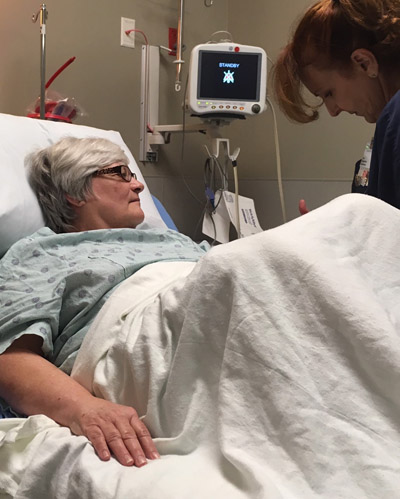
 In the last several months, both of my severely arthritic hips were replaced. In addition to the wonderful blessing that I am out of pain, the surgeries and recoveries were full of lessons pointing me to spiritual truths I am so very thankful for:
For a long time, I needed help getting in and out of my car. To be blunt, it was always noisy with involuntary gasps and screams of pain. And while my family and friends were so very glad to be of assistance, it was hard on them to witness me hurting so badly. Now that the pain is behind me, I keep hearing comments like, “Wow! It’s so great not to see your face contorted!” or, “Oh man! You’re not making the horrible sounds you used to make when you were getting into the car!” I told my husband the other day, “I have a feeling all that was a lot worse than I had any idea.” He nodded his head, “Oh yeah. It was bad.” While I am truly sorry that my sweet helpers had to see and hear what they did, it touches me that their compassion ran so deep. I have a new appreciation of what “rejoicing with those who rejoice, and weeping with those who weep” (Romans 12:15) looks like, and how powerful it is to enter into another person’s highs and lows.
We have an amazing community group who love each other incredibly well. The night before my first surgery, they prayed over me. One of the men, with a twinkle in his eye, admonished me: “Sue, you may think this surgery is about getting a new hip, but it’s not. It’s about the people you’re going to meet and minister to in the hospital. I just want you to remember—it’s not about you, OK?” I know he said it to make me laugh, but his counsel bounced around in my head during both hospital stays. It allowed me to stay aware of the various people who came into my room, from doctors to nurses to housekeepers to the people delivering meal trays, praying, “How can I bless and encourage this person today, Lord?” It really WASN’T all about me!
I had heard from three different doctors, “You have two bad hips and they both need to be replaced.” But I didn’t sense the timing was right, especially with the expense of such huge surgeries and recovery. I learned yet again the importance of trusting God’s timing; in February I turned 65 and crossed the amazing Medicare threshold, which covered basically everything. God’s provision has been a huge part of this “adventure,” including an exceptionally generous outpouring of gifts to a GoFundMe campaign for an expensive stem cell treatment that we had hoped would replace surgery, but it didn’t. I learned again that the Lord is Jehovah Jireh, the God Who Provides (Genesis 22).
This adventure provided minute-by-minute practice in developing an “Attitude of Gratitude.” During the first surgery, it seemed that every time I turned around there was another reason to say, “Thank You, Lord!” From the marvelous shock of waking up in the recovery room in no pain, to walking on my walker a couple of hours after surgery, to the joy of being able to stand again for the simple pleasure of brushing my teeth and washing my hands at the sink, to the delicious hospital food, to the lovely flowers friends brought, to the blessing of being able to fall back asleep after every nighttime “visitor”—I was immersed in nonstop thankfulness.
The day after my second surgery, the Director of Food and Nutrition visited me to check on how the hospital was doing with the quality of the food and service. We had a delightful visit in which I was able to tell him about my immersion in thankfulness during my first hospital stay, but unfortunately I wasn’t able to remember a lot of the things I was thankful for because pain meds made my brain fuzzy. “So,” I pointed to my journal next to my bed, “this time I brought my gratitude journal so I could record the many blessings despite the pain meds. And your food is one of them!” The director grinned and said, “Ah, so that’s where the joy is coming from!” I loved that I was able to recognize a brother in Christ, and that he was able to recognize the connection between gratitude and joy.
The second surgery was a challenge for the surgeon because my hip bones are deformed from polio. I learned that there wasn’t enough hip bone to anchor the new socket with screws, so she had to use surgical cement. She has high hopes that it will hold, but warned me that if the cement doesn’t work over the long haul, “We’ll be in big trouble.” So I started praying that the Lord would literally hold me together. Some of my astute friends pointed out that that is Jesus’ job in Colossians 1:17: “In Him all things hold together.” The context is all of creation, so He can certainly handle one little hip!
I’ve already shared some of the other lessons I’ve learned in this adventure, about how to handle fear by sharing it with others and inviting the Lord into it and how to handle unexpected grief.
But I’m pretty sure there are more lessons ahead. I just pray to keep my eyes open so I don’t miss any of them.
Next Day Addendum:
I was right about there being more lessons, and I remembered one of them this morning as I easily stood up from my scooter to grab the coffee beans and mug from the cabinet for my morning cup of wake-up juice. After several years of not walking or standing because of the pain, I got out of a number of habits. Now I have to remind myself, “Hey! You can do ______ again!” I need to renew my thinking about what I can and can’t do, and in order to make these new ways of thinking permanent, I need to practice thinking differently. That’s how we experience spiritual transformation as well. One of my favorite verses is Romans 12:2, “Do not be conformed to this world, but be transformed by the renewing of your mind. . .” We are transformed by intentionally submitting how we think and interpret life to the authority of God’s word. But we have to practice new ways of thinking in order to be transformed (as opposed to a momentary flicker of a thought).
This blog post originally appeared at blogs.bible.org/engage/sue_bohlin/lessons_from_a_hospital_bed on November 13, 2018.
 Years ago I encountered a word of wisdom: “At the end of our lives, what we will regret is far more about what we didn’t do, than what we did.” And then recently, in a conversation about what “youngers” want to learn from “olders,” a colleague said he wanted to know what we regret so he can learn from our lessons the wiser way (observation) instead of the hard way (personal experience). So I’ve been asking.
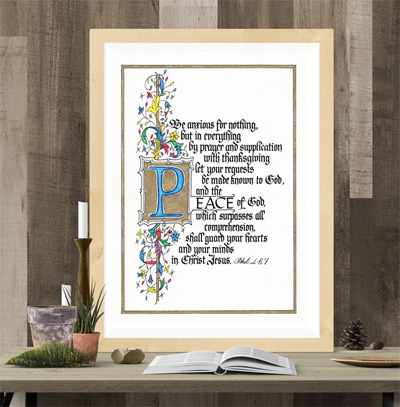 So I was doing my part, by confessing Psalm 56:3—”When I am afraid, I will trust in You,” and reminding myself of the power of Philippians 4:6-7—”Be anxious for nothing, but in everything by prayer and supplication with thanksgiving, let your requests be made known to God; and the peace of God, which surpasses all comprehension, will guard your hearts and your minds in Christ Jesus.”
 “You’ve made this day a special day by just your being you. There is no person in the whole world like you, and I like you just the way you are.” —Mister Rogers, to every person as we watched his show.
 As a polio survivor since I was an infant, living with a disability has been my “normal.” But, like most polio survivors, I just gritted through the limitations and inconveniences, trying to keep up with everyone else.